Flying a Drone Over a Crowd: Why You Don’t and What It Costs If You Do
Drone photography for events looks effortless from the outside. A sweeping shot over a packed field, the stage lit up, thousands of people below. What you do not see is that flying a drone over a crowd is one of the most tightly restricted things you can do in UK airspace, and getting it wrong is not a small mistake. It is a criminal offence, it can void your insurance, and if you are the event organiser it lands on your desk as well as the pilot’s.
If you are planning an event and picturing that aerial shot, here is what actually sits behind it.
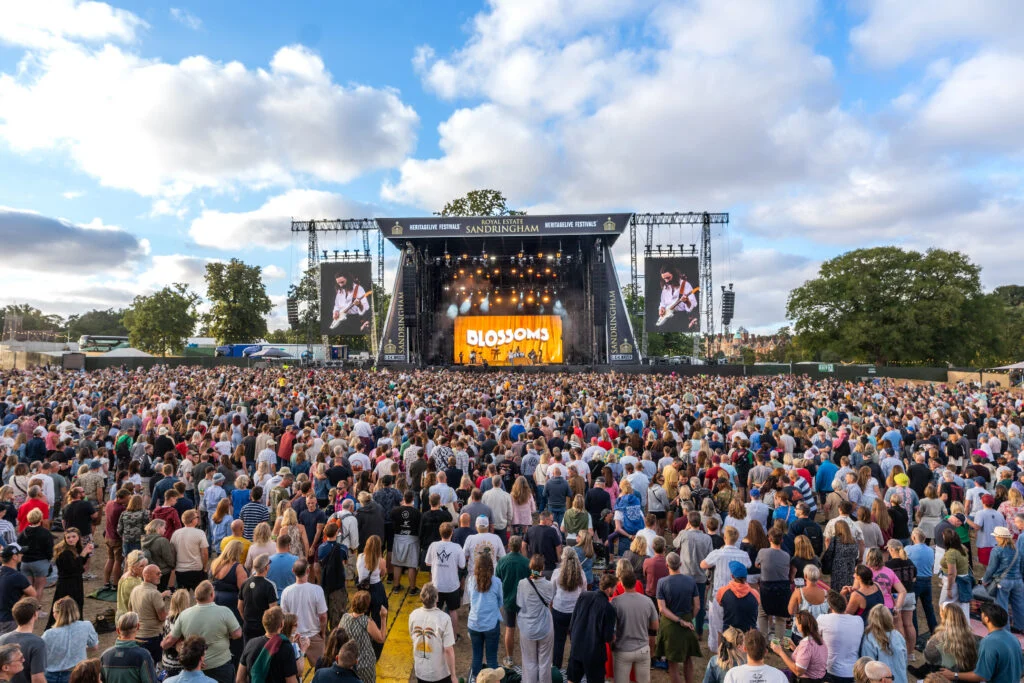
Flying a drone over a crowd in the UK Can you do it?
No. Not in the everyday Open category, and not with any drone, whatever it weighs and whatever class mark it carries.
This is the part people get wrong most often. The Open category is split into three sub-categories based on how close you can get to people, and the lightest sub-category is genuinely permissive. A sub-250g aircraft can work close to people who are not involved in the flight, and in some situations over them, which is exactly why we reach for one on a lot of jobs.
What none of those sub-categories relax is the crowd ban. flying a drone over a crowd or assemblies of people are off limits across the whole of the Open category.
A 249g drone is in precisely the same legal position as a 900g one the moment a crowd is underneath it. “But it is only a little one” is not an argument that survives contact with the Drone Code.
What counts as a crowd?
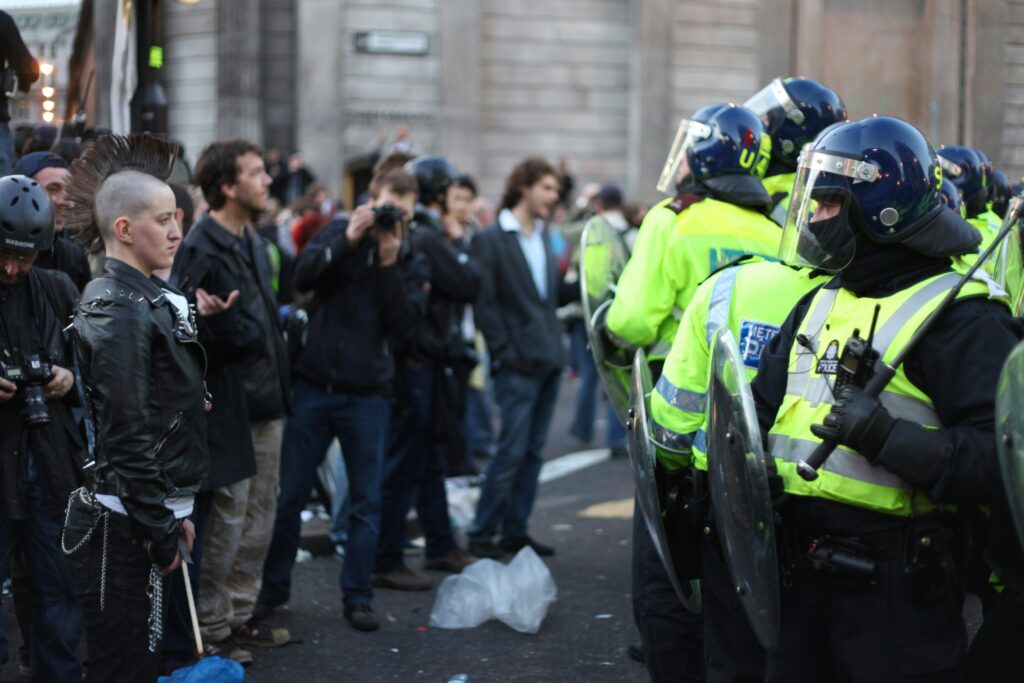
The CAA does not go by a headcount. An assembly of people is a gathering where the density is such that people cannot easily move away from it. That is a useful test, because it puts the focus on the thing that matters: if something falls out of the sky, can the people underneath get out of the way? Flying a drone over a crowd will always have inherent risks.
More than you think if the wheel falls off and something happens.
By that definition a festival crowd at the barrier is an assembly. So is a packed market, a race start line, a queue outside a venue, a crowded beach on a hot day.
A handful of people spread across an open field is not.
Part of the job on site is judging where that line sits at any given moment, because at an event it moves. Ground that is empty at four in the afternoon is an assembly by seven. Flying a drone over a crowd. You can’t do it. When the are is unpopulated. Possibly, once risk assessed.
You will still see the old “150 metres from crowds of more than 1,000 people” figure quoted online. That wording comes from a superseded part of the rules. If an operator quotes it at you, they are working from a version of the law that no longer applies.
Does an Operational Authorisation allow flying a drone over a crowd?
Not on its own, and this trips up plenty of otherwise competent operators.
The next step up from the Open category is the Specific category, and the most common route into it is PDRA01, a pre-defined Operational Authorisation issued by the CAA.
It buys you a lot: reduced separation from uninvolved people, work in built-up areas, the sort of tight urban flying the Open category will not allow.
What it explicitly does not buy you is crowd overflight. PDRA01 requires 50 metres of horizontal separation from assemblies of people and states that overflight of assemblies must not be conducted. So a PDRA01 holder with a professional camera drone is in the same position as everyone else when a crowd is below.
Flying close to or over a crowd sits outside PDRA01 entirely. It needs a bespoke Operational Authorisation applied for through UK SORA, the Specific Operations Risk Assessment process that replaced the old Operating Safety Case route in April 2025. That means a full risk assessment, an operations manual written for that operation, aircraft and containment measures that stand up to scrutiny, and CAA approval before anyone takes off. It is not a form you fill in the week of the show.
Here is the honest version, and it is worth an event organiser hearing it plainly. On the overwhelming majority of UK events, nobody is flying over the crowd. The shot you are picturing is achieved from beside it, above the stage, along the site perimeter, over open ground, with the crowd in frame rather than underneath the aircraft. That is a planning decision made before the day, not a compromise made on it. Any operator who promises you an over-crowd flight without mentioning a UK SORA authorisation is either not going to deliver it or is about to break the law on your site.
What happens if you get it wrong
This is the part the industry tends to skate over. Breaching the drone rules is not a slap on the wrist and a stern word.
- It is a criminal offence. The Air Navigation Order 2016 sits behind enforcement. Article 241 covers recklessly or negligently causing an aircraft to endanger any person or property, and your drone is the aircraft in that sentence. Article 240 covers endangering a manned aircraft, which carries a maximum of five years’ imprisonment.
- Police can stop the flight on the spot. Officers can require you to land, demand your Flyer ID and Operator ID, stop and search where they suspect an offence, and seize the aircraft as evidence. Those powers were widened by the Air Traffic Management and Unmanned Aircraft Act 2021.
- Enforcement scales. It runs from warnings through confiscation to fines and prosecution, depending on how serious the breach was and what was underneath.
- Your insurance goes with it. Third party cover is written against the authorisation you hold. Fly outside it and you are very likely uninsured for the incident you have just caused, which is when a small mistake turns into a personal financial one.
- Everyone has a camera. A drone over a festival crowd gets filmed by hundreds of phones and is on social media within the hour. Enforcement action on this stuff frequently starts with a video posted by a member of the public.
And there is the consequence that has nothing to do with the CAA: the event itself. An incident involving a drone over your crowd goes into your safety report, your insurance record and your licensing relationship with the local authority. That is the bit that follows an event around for years.
The airspace around an event is busy too
The crowd is only half of it. Events bring their own airspace complications. Temporary restrictions, danger areas, other operators working the same site, air ambulance movements, and sometimes a flat no fly. On top of that sits the venue’s own set of rules, the licensing conditions and the event safety plan that everything has to fit inside.
An operator who has not done this before will not know what they do not know, and that is precisely where things go wrong.
What drone work at an event actually looks like when it is done properly
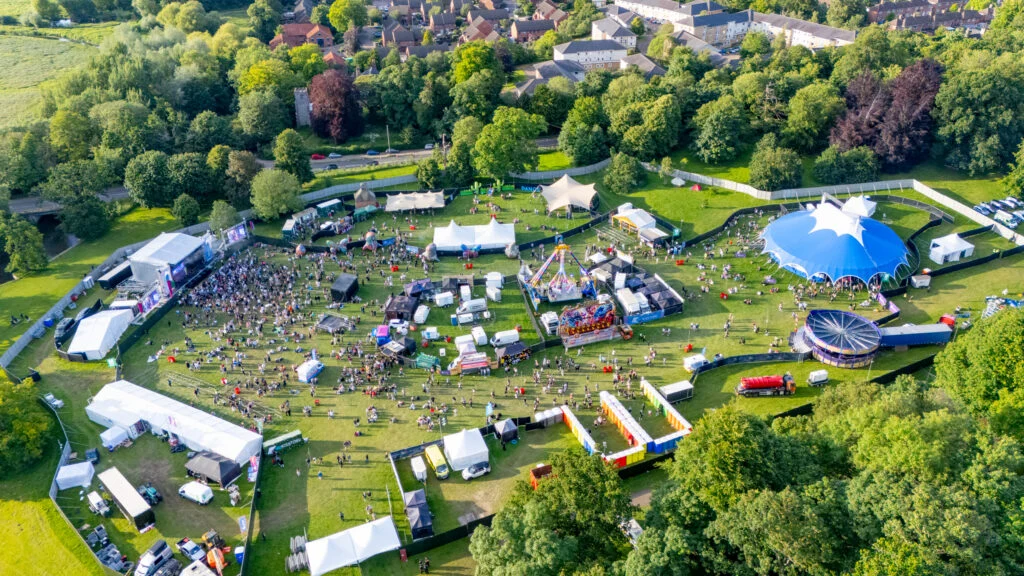
Done properly, it is methodical rather than reckless. It involves:
- The correct authorisation for the type of flight, held before the booking is confirmed, not applied for afterwards.
- Cordoned, controlled take-off and landing zones, set well away from the public and agreed with the site team.
- Flight paths planned over the stage, the structures or open ground, with separation from assemblies designed in rather than judged on the fly.
- A written, site-specific flight risk assessment, plus proper third party insurance.
- Airspace checks, NOTAMs and any temporary restrictions confirmed for the date, not the week before.
- Real liaison with the event safety team, the production crew and the other contractors on site, so the aircraft is on the plan rather than a surprise.
- Contingency for the thing that actually happens, which is the crowd moving. Sound checks, headline changeovers and weather all shift where people stand.
It is the same discipline we describe in what actually happens before we take off, turned up a notch for the scale and the audience.
What to ask any drone operator before they fly at your event
If you take one thing from this page, take this list. Ask for all of it in writing, before the contract is signed.
- Their CAA Operator ID and the Flyer ID of the person actually at the controls.
- Which category the flight sits in, and if it is the Specific category, a copy of the Operational Authorisation with the expiry date visible.
- Their qualification: A2 Certificate of Competency or General VLOS Certificate, as appropriate to the flight.
- A certificate of third party public liability insurance that covers drone operations, with the limit stated.
- A written site-specific risk assessment for your venue, not a generic template with your name typed into it.
- A plain answer to the question “will you be flying over the crowd at any point, and under what authorisation”.
An operator who has this to hand will send it the same day. One who has to go away and think about it has told you something useful.
Why experience counts here
This is not the place to learn on the job. I have spent over a decade in the photography pit at live events, including fourteen years as the official photographer at Forest Live in Thetford, five years at Sundown Festival in Norwich, and official videography for Kisstory. Blanc Creative is the official videography and music photography partner for Rock N Roll Circus in Norwich in 2026.
That matters because it means we know how an event runs from the inside. How the schedule moves, where the pressure points are, when the crowd density changes and by how much, and how to get the shot without ever becoming the problem the safety team has to manage. That is the difference between an operator who slots quietly into a busy site and one who creates a headache nobody needed. If you are the organiser, this is your risk too
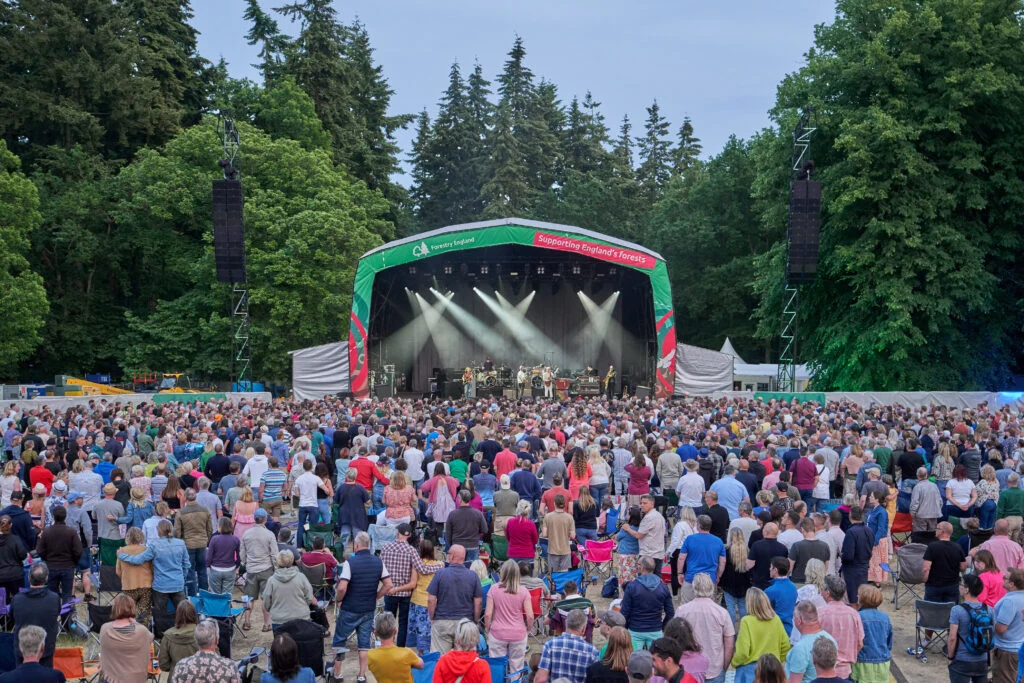
Here is the part worth holding on to. As the organiser you carry responsibility for what happens in your airspace just as much as on your ground.
An unqualified flyer over your crowd is not their risk alone, it is yours, and it will be your event safety plan that gets picked apart afterwards.
It is the same liability trap we set out in letting a mate with a drone film your business, only with thousands more people underneath it.
So treat aerial coverage as part of your safety planning rather than an afterthought, and hire someone who treats it the same way.
Flying a drone over a crowd: common questions
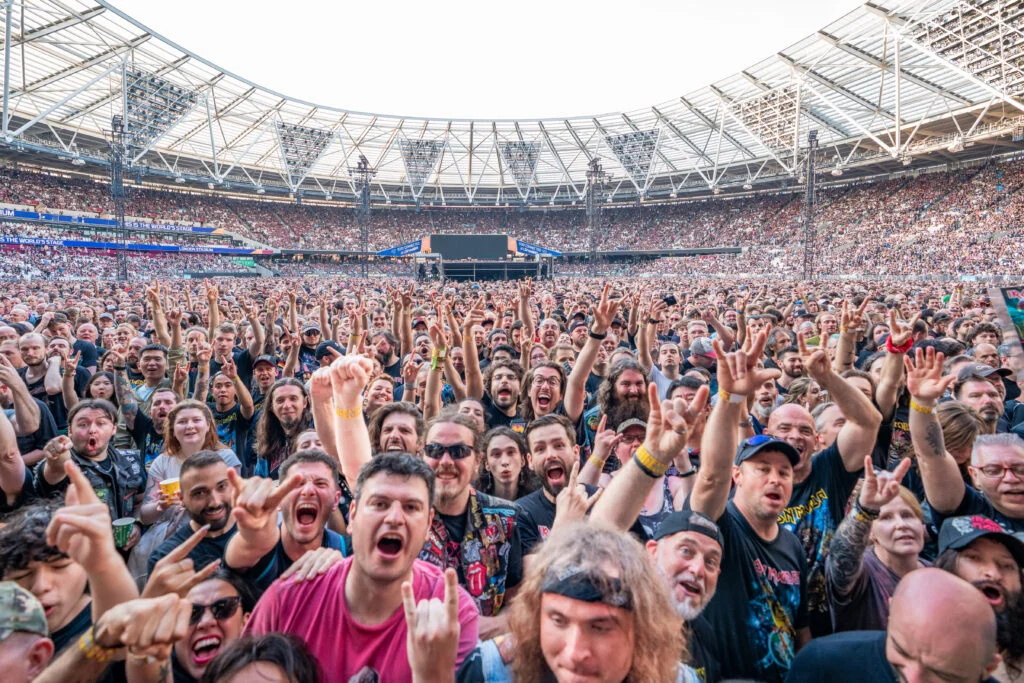
Is it illegal to fly a drone over a crowd in the UK?
Yes, in the Open category it is prohibited regardless of the drone’s weight or class mark. Doing it anyway is a criminal offence under the Air Navigation Order 2016 and can lead to seizure of the aircraft, fines or prosecution.
Does the rule change if the drone weighs under 250g?
No. Sub-250g aircraft get real freedoms around uninvolved people, but the ban on overflying assemblies of people applies across every Open category sub-category. Weight makes no difference to this particular rule.
What permission do you need to fly a drone over a crowd?
A bespoke Operational Authorisation from the CAA, applied for through the UK SORA process. A standard PDRA01 authorisation does not cover it, and in fact requires 50 metres of horizontal separation from assemblies with no overflight.
Can I get an aerial shot of my event at all?
Yes, in almost every case. The shot is planned from beside or above the site rather than over the audience, using the stage, the structures and open ground, with the crowd in frame rather than underneath the aircraft. Planned properly it looks exactly like what you had in mind.
Who is responsible if a drone operator breaks the rules at my event?
The pilot and the drone operator carry the legal responsibility for the flight, but as the event organiser you carry responsibility for what happens in your airspace as part of your safety planning, and an incident will sit in your event record and your licensing relationship regardless of who was holding the controller.
How far in advance does drone coverage need booking?
Earlier than most people expect. Airspace checks, site liaison and the risk assessment all take time, and if a flight needs a Specific category authorisation the CAA application is a matter of weeks rather than days.
Talk to us about your event
We cover events across Norwich, Norfolk and the whole of the UK, working as a crew of two, three or four across photography, festival videography and aerial work on a single brief. Every assignment is quoted transparently, and every flight comes with the paperwork attached.
You can see how we approach live work on our music events page and the official guidance on flying near people is on the CAA’s drones pages.
To talk through aerial coverage for your event, email studio@blanc-creative.com or call 07871 364041.
This page reflects the UK rules as at August 2026. Drone regulation changes, so always check the current CAA guidance for your specific operation.