Photographing Protests UK: The 2026 Face Covering Law
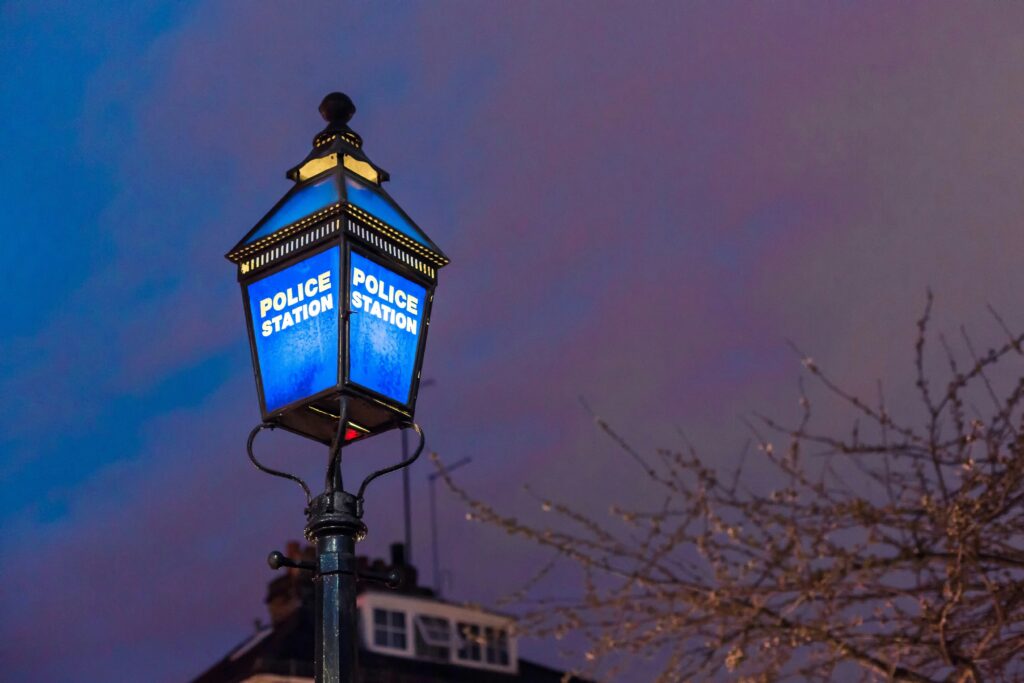
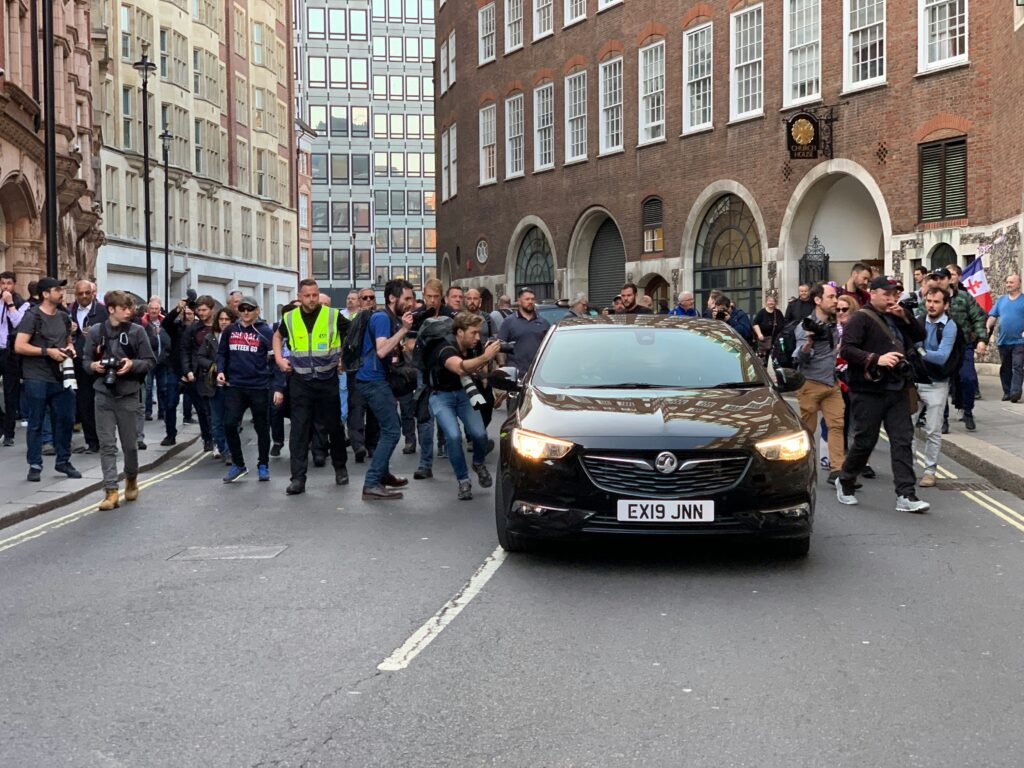
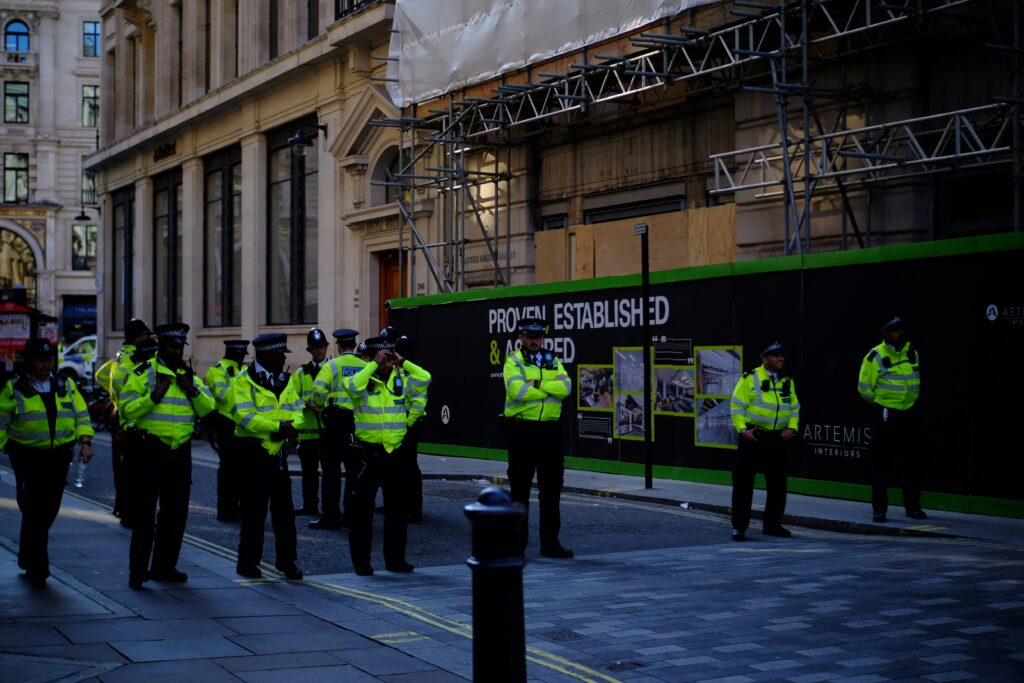
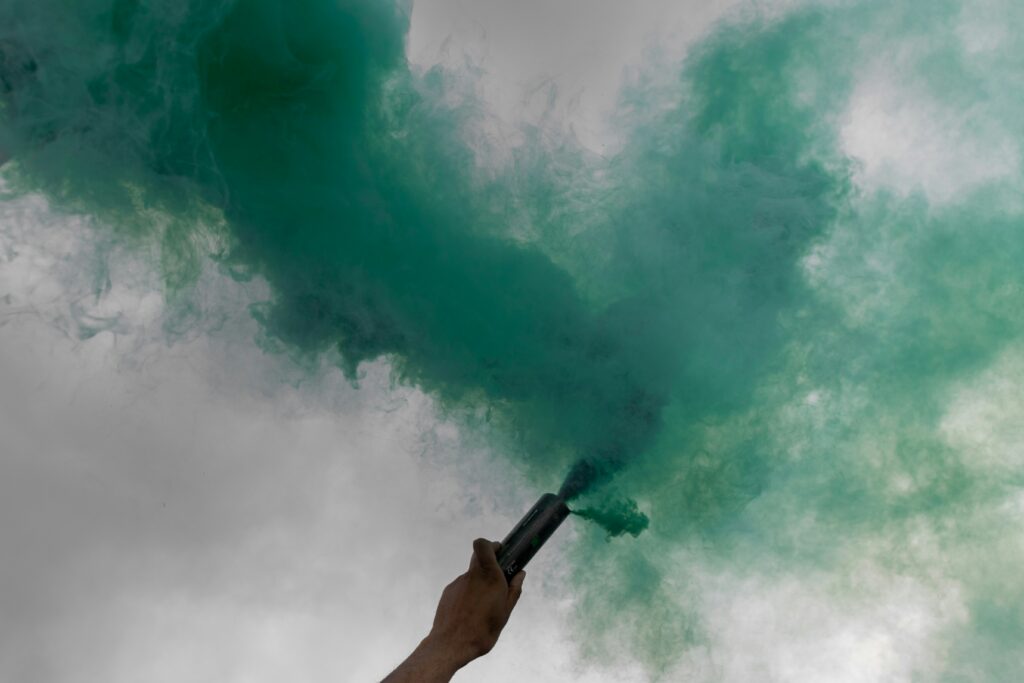
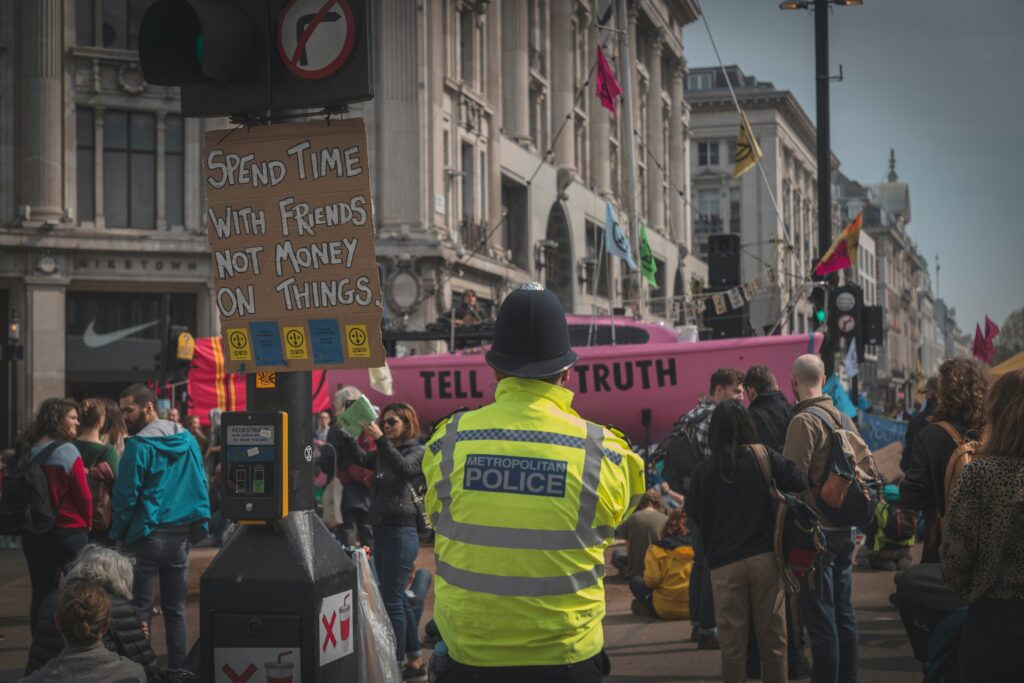
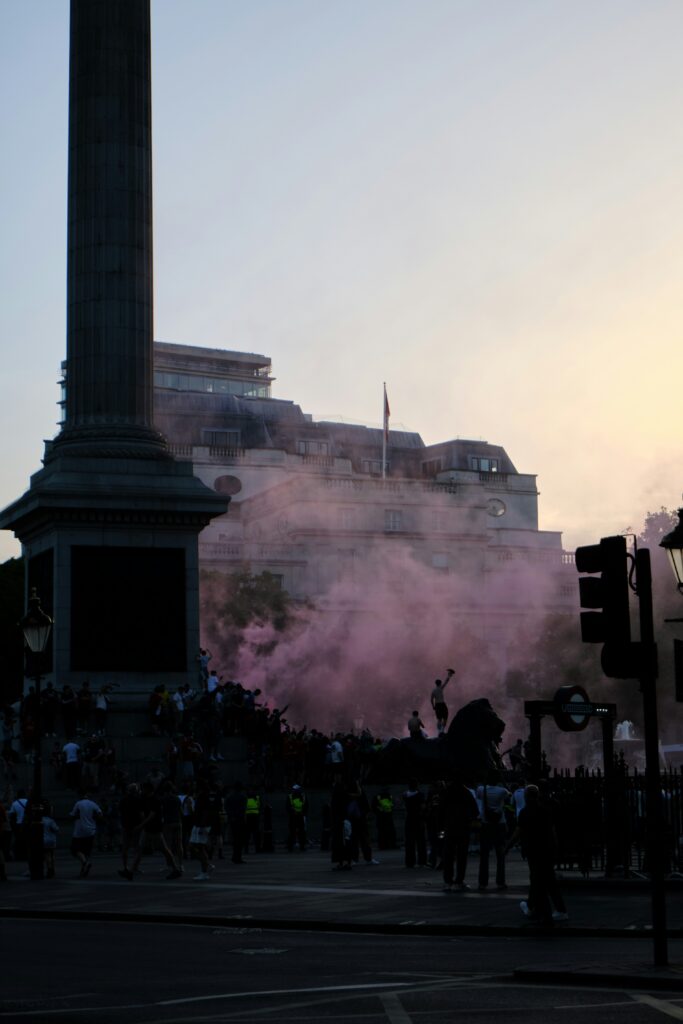
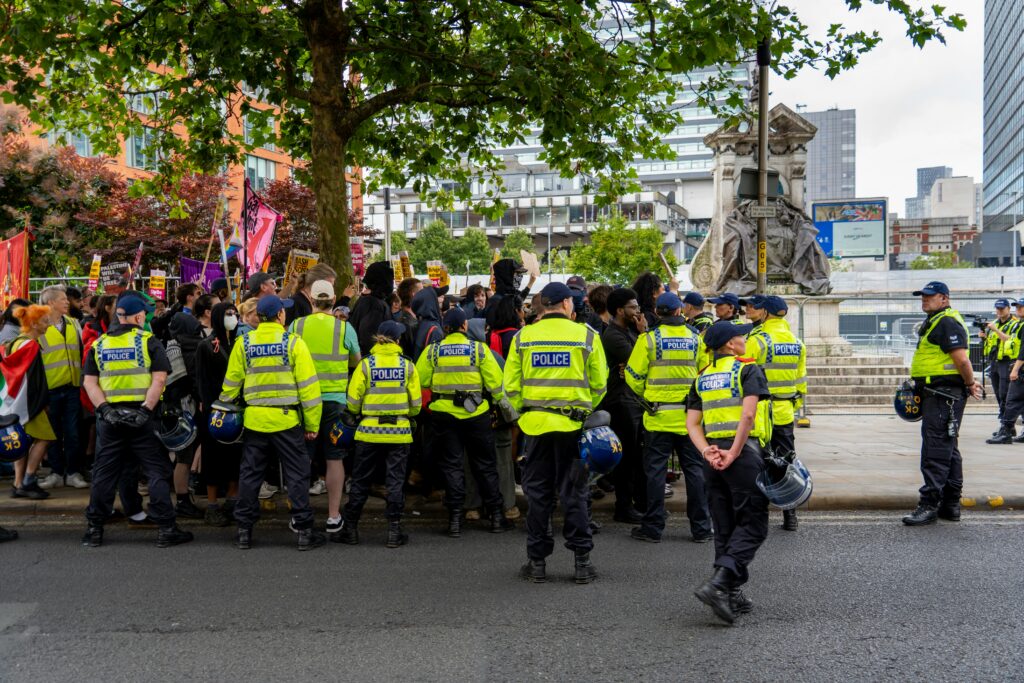
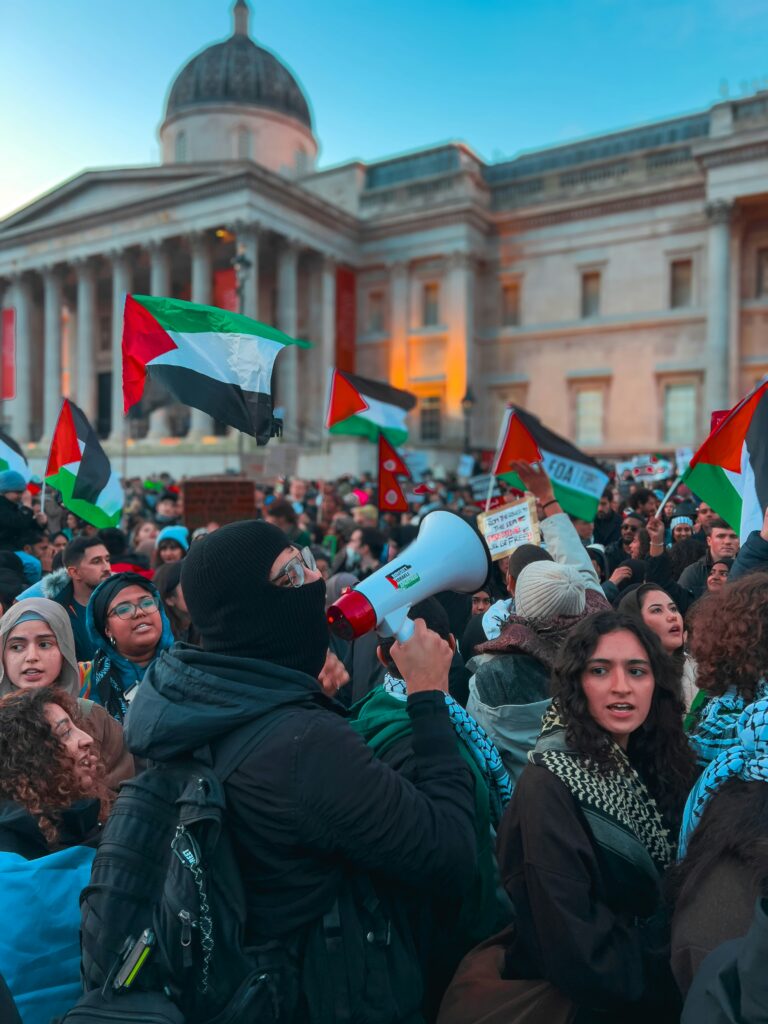
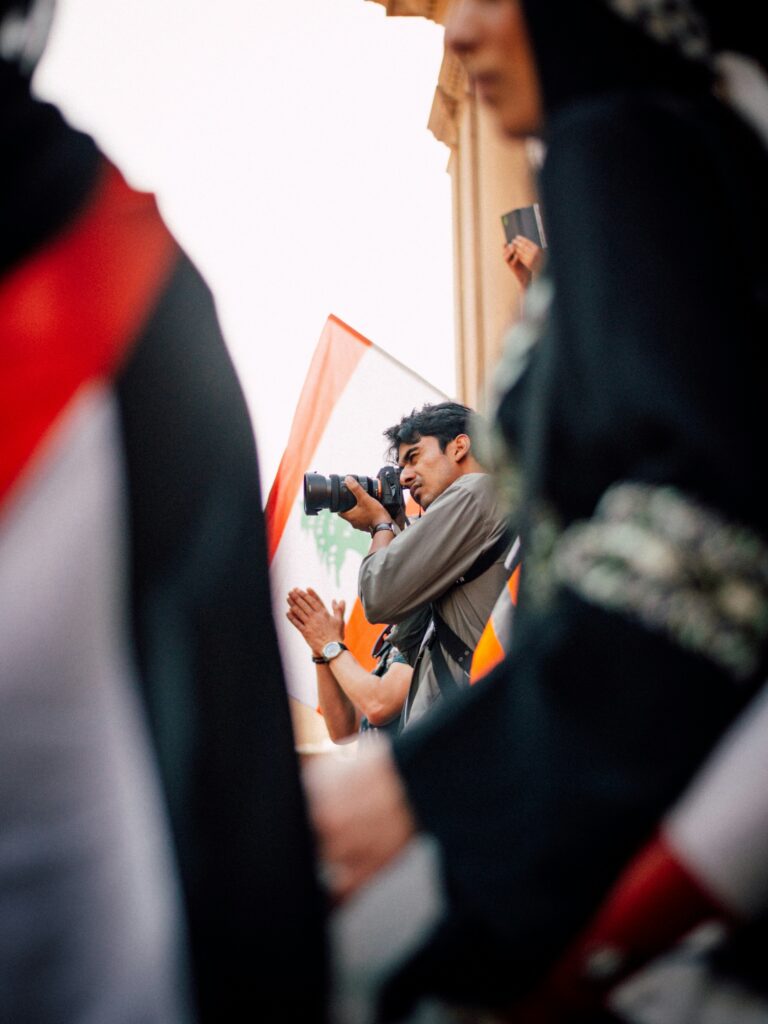
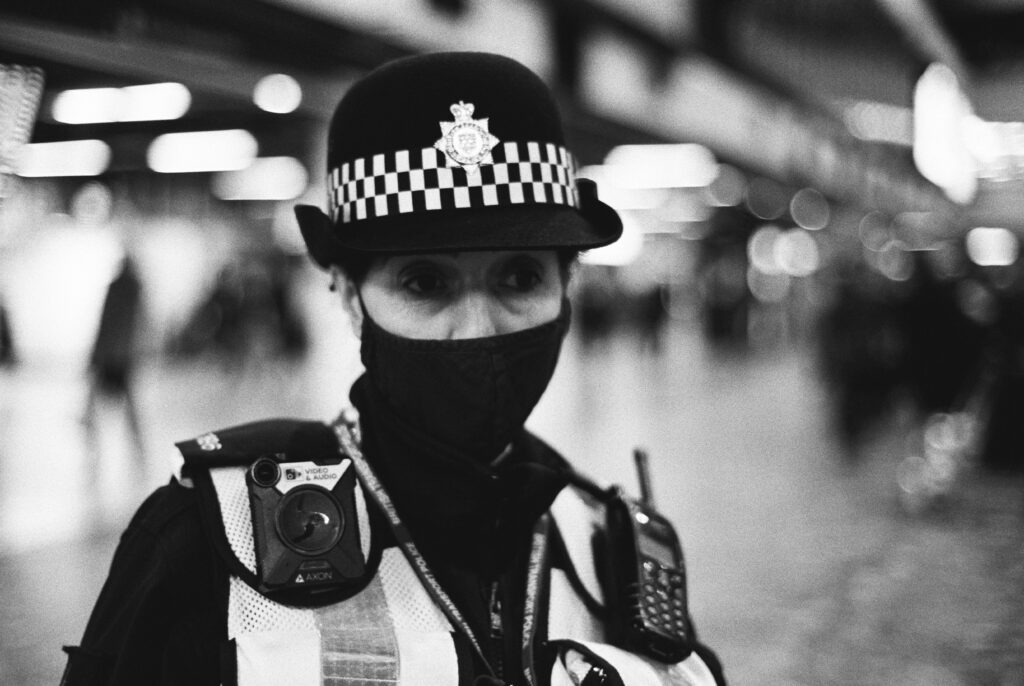
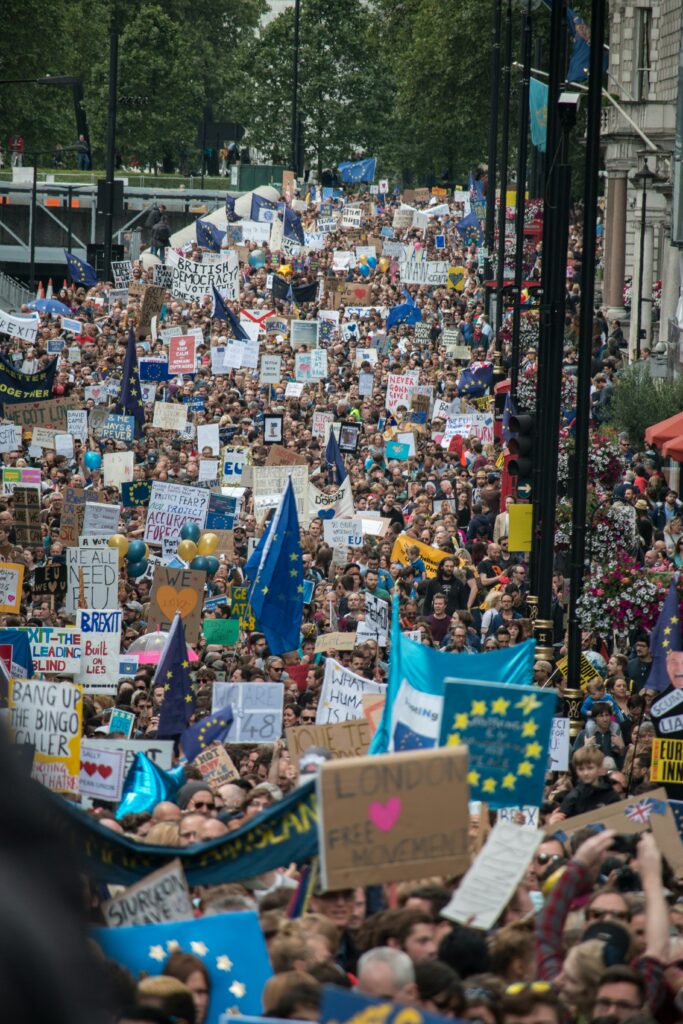
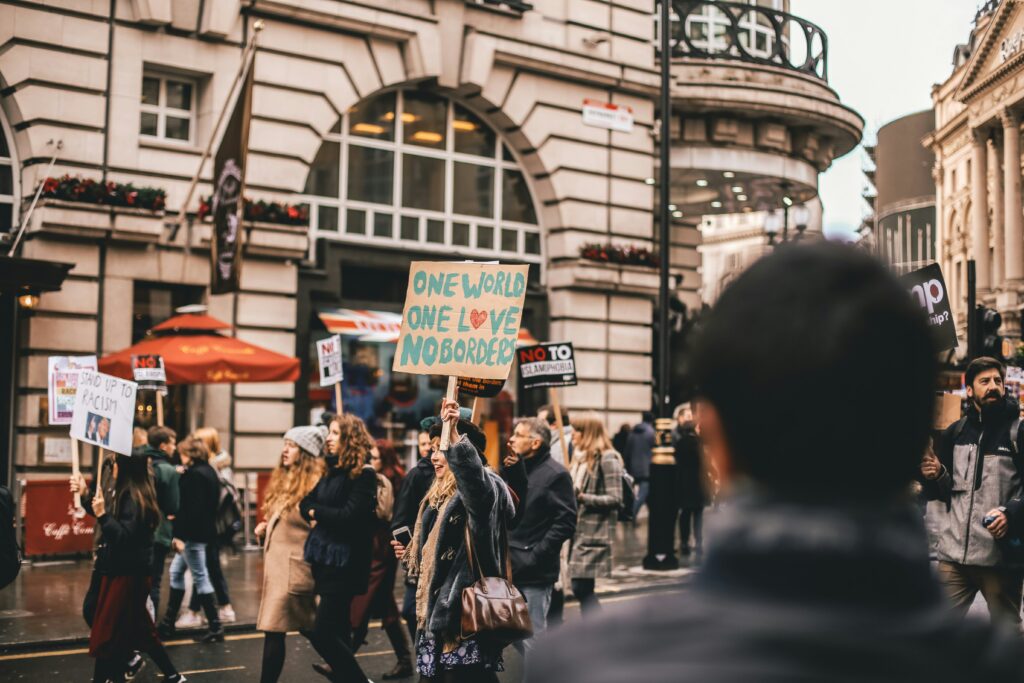
Photographs in this article are used under the Unsplash licence and are for illustration only. They do not show, and are not intended to suggest, criminal activity or wrongdoing by anyone pictured.
At nine o’clock on Saturday 25 July 2026, a large part of Dover became somewhere you could be arrested for wearing a mask.
Kent Police were expecting a march and a counter protest, and they used a power that was less than a month old to designate the area.
According to the monitoring group Netpol, the zone took in ten council wards, some of them miles from the march itself.
I have a particular interest in this one. Before I was a photographer I was a police sergeant, and on a Police Support Unit I worked as an evidence gatherer. My job at a disorder was to point a camera at people so they could be identified afterwards. I know why people at protests pull a scarf up when a lens swings their way, because I used to be the reason.
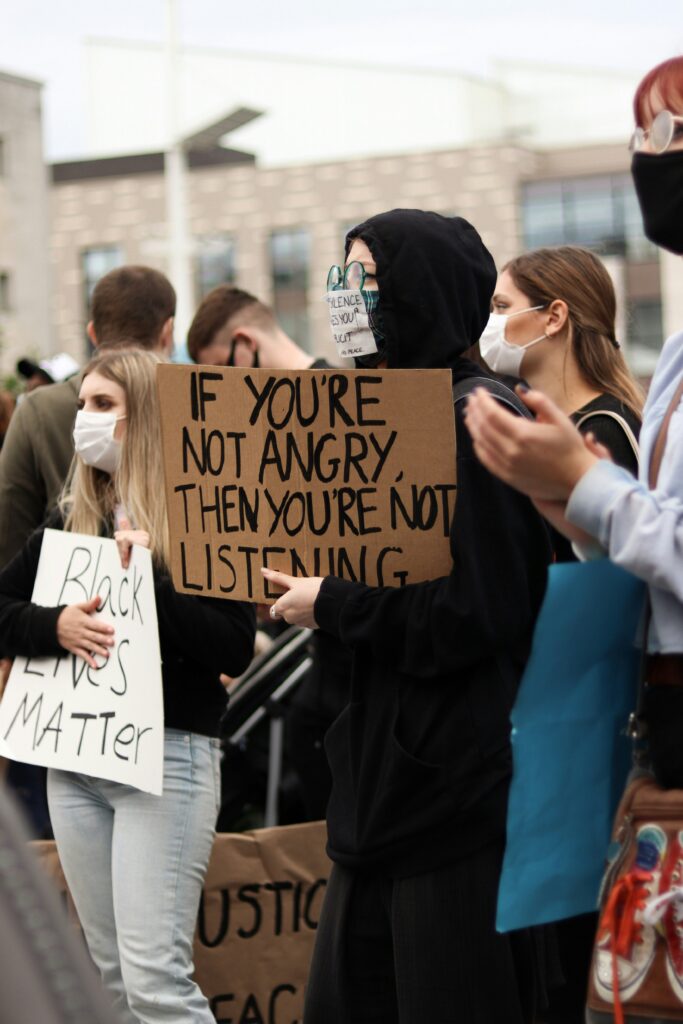
That’s why this belongs on a photography blog. The face covering law exists because of cameras. Police cameras, press cameras, facial recognition vans, and a thousand phones whose footage is on TikTok before the march reaches the end of the road.
If you’re photographing protests, whether that’s for a newspaper, for a client or for your own Instagram, part of this law is about you.
This isn’t a post about photographing people in the street generally. I’ve covered that in my guide to UK photography law.
This is about protests, which are a different animal.
In this post (law checked 21 September 2026)
- What the face covering law says
- What it doesn’t say
- The rest of the 2026 Act that anyone with a camera should know
- The human rights behind all of this
- Photographing protests: what you’re allowed to do
- The police powers you’re most likely to meet
- If you’re press
- If you’re a working photographer but not press
- If you’re filming on your phone
- Proscribed organisations and the pictures you publish
- Thirteen real world scenarios
- How the professionals work a protest
- To blur or not to blur
- Facial recognition: where it stands today
- Scotland and Northern Ireland
- Timeline of key dates
- Key takeaways
- Frequently asked questions
- The bigger picture
- Disclaimer
Photographing Protests. What the face covering law says
The Crime and Policing Act 2026 received Royal Assent on 29 April 2026. The protest provisions, including the face covering offence, came into force on 29 June 2026. They apply in England and Wales only.
The offence: section 157
Under section 157, you commit an offence if you’re in a public place inside an area the police have designated, and you’re wearing or using something that conceals your identity or somebody else’s identity.
The maximum penalty is one month in prison, a fine of up to £1,000, or both.
It applies to everyone in the zone, not only protesters
Read the wording carefully and you’ll notice something the headlines missed. The offence is about where you are and what you’re wearing.
doesn’t say you have to be taking part in the protest. A photographer, a shopper or someone walking the dog through a designated area with a scarf pulled over their face is, on the plain words of the Act, in the same position as the person at the front of the march. In practice officers will use discretion, but discretion isn’t a defence.
How an area gets designated: section 158
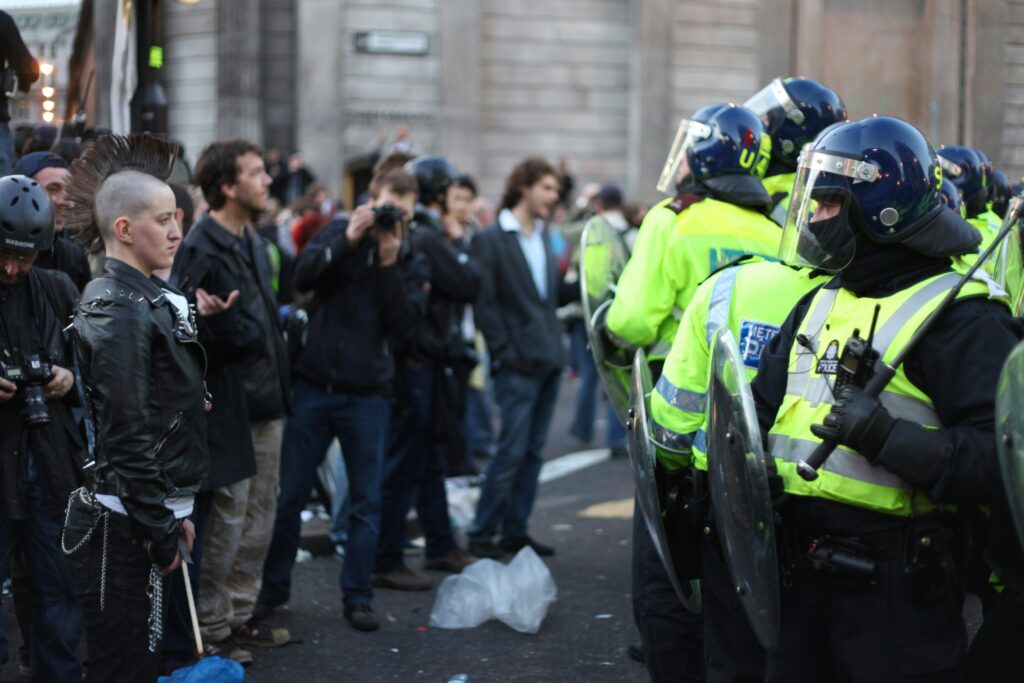
Under section 158, an officer of at least inspector rank can designate a locality for up to 24 hours if they reasonably believe three things.
That a protest is taking place or may take place there. That it’s likely to involve, or has involved, offences being committed.
And that designating the area is expedient to prevent or limit those offences. A superintendent can extend the designation for a further 24 hours.
Notice how low that bar is. The belief is that the protest is likely to involve offences. Not serious offences, not violence. Any offences.
How would you know you’re in a zone?
The police have to take all reasonable steps to tell the public that the designation has been made, what the offence is, where the zone is and how long it lasts.
If that hasn’t been done, the offence isn’t committed. So far that has meant force websites, social media posts and local press.
If you’re covering a protest, check the force’s channels before you travel and screenshot what you find, with the time showing.
British Transport Police and Ministry of Defence Police can use the power in their own areas too, so stations are covered.
What counts as concealing identity?
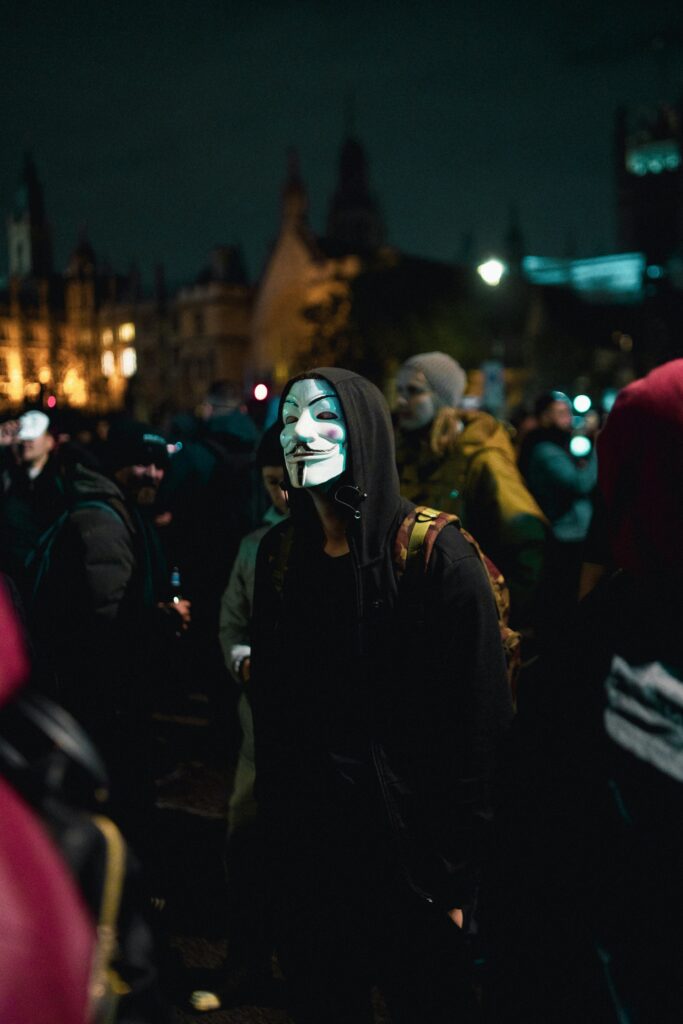
The Act doesn’t list items. It says “an item that conceals” identity, which could be a balaclava, a scarf, a medical mask, a motorcycle helmet, a Halloween mask or a hood pulled tight with sunglasses.
Whether a particular item conceals identity is a question of fact for a court. That vagueness is deliberate, and it’s the part photographers should watch, because plenty of what we wear on a cold, wet or hostile job could qualify.
The three defences, and the catch
It’s a defence to prove you wore or used the item for a purpose relating to health, for religious observance, or for a purpose relating to your work.
The word that matters there is “prove”.
These are defences, which means you may be arrested first and asked to make your case afterwards. Liberty has made that point loudly, and as a description of how it works on the street they’re right.
Case study: Dover, 25 July 2026
Dover is the clearest early example of how the power gets used. A march and a counter protest were expected in the town centre, a few hundred metres end to end.
The designation came into force at 9am and, according to Netpol and local reporting, covered ten wards reaching out to villages several miles away.
Whatever you think of the decision, it shows that a zone can be far bigger than the protest, and that people with no connection to the march can find themselves inside one.
What the face covering law doesn’t say. It isn’t a blanket ban
Outside a designated zone, wearing a mask at a protest is still lawful.
The older power is still there: section 60AA
Section 60AA of the Criminal Justice and Public Order Act 1994 still exists alongside the new offence.
Where an authorisation is in place, officers can require you to remove anything they reasonably believe you’re wearing wholly or mainly to conceal your identity, and they can seize it.
Refusing is an offence. Essex Police used it during the Epping protests in 2025.
The difference is that under section 60AA the offence is refusing to take it off when told. In a section 157 zone, simply wearing it is the offence.
The police said they needed the new power because people were removing a mask when told, walking twenty yards into the crowd and putting it back on.
“Another person’s identity”
The offence covers concealing “another person’s identity” as well as your own. Nobody yet knows whether that catches the steward holding an umbrella or a banner in front of a camera.
Netpol has flagged the same uncertainty about banners used to block police filming.
It hasn’t been tested in court, and anyone who tells you they know the answer is guessing.
Two views of the same law
The government’s position, set out in its public order factsheet, is that some protesters have been using face coverings to avoid being held responsible for criminal behaviour.
Civil liberties groups say people cover up to avoid police surveillance and being identified and targeted online, as well as for health, religious and cultural reasons.
Both of those things are true at the same time, which is what makes this difficult.
The rest of the 2026 Act that anyone with a camera should know
The face covering offence got the attention, but the same part of the Act created several others on the same day. A photographer can walk into three of them without thinking.
Climbing on memorials: section 161
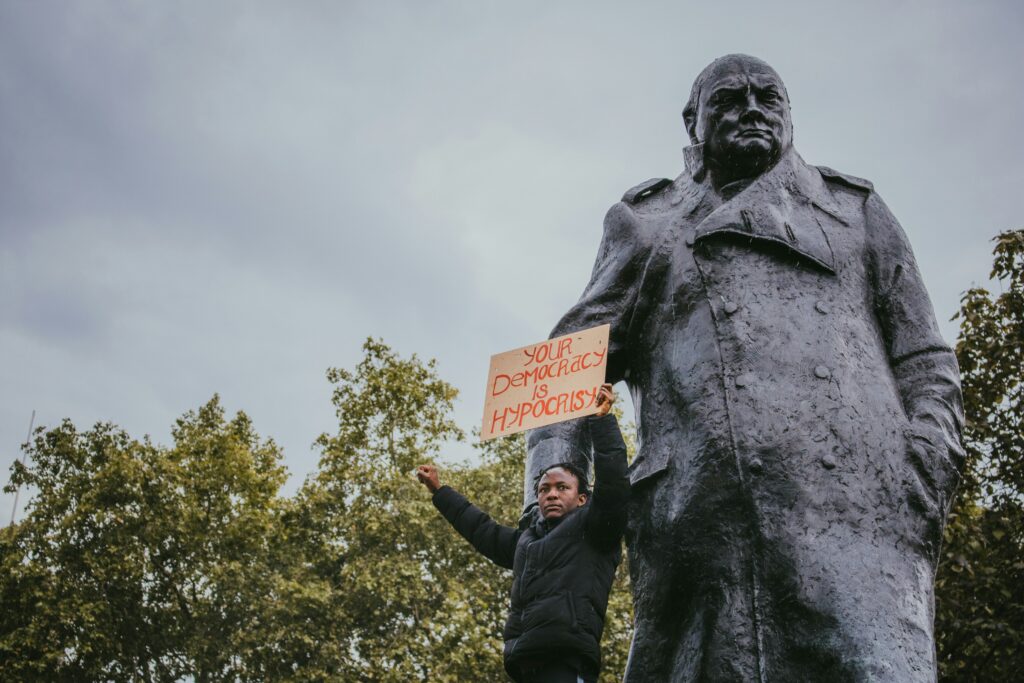
It’s now an offence to climb on a specified memorial.
The list in Schedule 17 includes certain war memorials and named statues, among them Winston Churchill in Parliament Square.
The maximum is three months in prison, a £1,000 fine, or both. There are defences, including having the owner’s consent.
very press photographer has at some point hopped up onto a plinth for a clear view over a crowd. Don’t. “I wanted a better angle” is unlikely to count as a good reason.
Flares, fireworks and smoke: section 160
Possessing a pyrotechnic article while taking part in a protest is now an offence with a fine of up to £1,000.
That’s aimed at protesters, and there’s a work defence, but it matters to photographers for a different reason.
Flares and smoke make strong pictures, and those pictures are now evidence of an offence.
If you photograph the person holding the flare, you have photographed a suspect.
Protests outside politicians’ homes: section 162
It’s now an offence to protest outside or near the private home of an elected office holder in order to influence or condemn how they do their job, and it can carry a prison sentence.
Reporting on such a protest isn’t the offence. But this is exactly the setting where the line between observer and participant needs to be obvious to any officer who turns up.
Places of worship and cumulative disruption: sections 164 and 165
Senior officers can now impose conditions on protests near places of worship where people may be intimidated from attending, and they must take account of the cumulative disruption caused by repeated protests in the same area.
For anyone photographing protests, the practical effect is more conditions, more rerouting and more exclusion areas.
A condition you didn’t know about can move the whole event away from where you planned to stand.
The human rights behind all of this
Every argument about protest and cameras in this country comes back to three articles of the European Convention on Human Rights, which the Human Rights Act 1998 makes part of UK law.
It’s worth knowing them because every court case in this post turns on them.
Article 8: respect for private life
You have no general right not to be photographed in public. But the courts have accepted that what the state does with images of you can interfere with your private life.
In Wood v Commissioner of Police of the Metropolis in 2009, the Court of Appeal held that the Met breached Article 8 by keeping photographs its officers had taken of a peaceful campaigner who had committed no offence.
In Catt v United Kingdom in 2019, the European Court of Human Rights reached a similar conclusion about police records kept on a peace campaigner in his nineties. I was taking that kind of photograph for the police at around that time.
Those cases changed how forces were supposed to think about it.
Article 10: freedom of expression
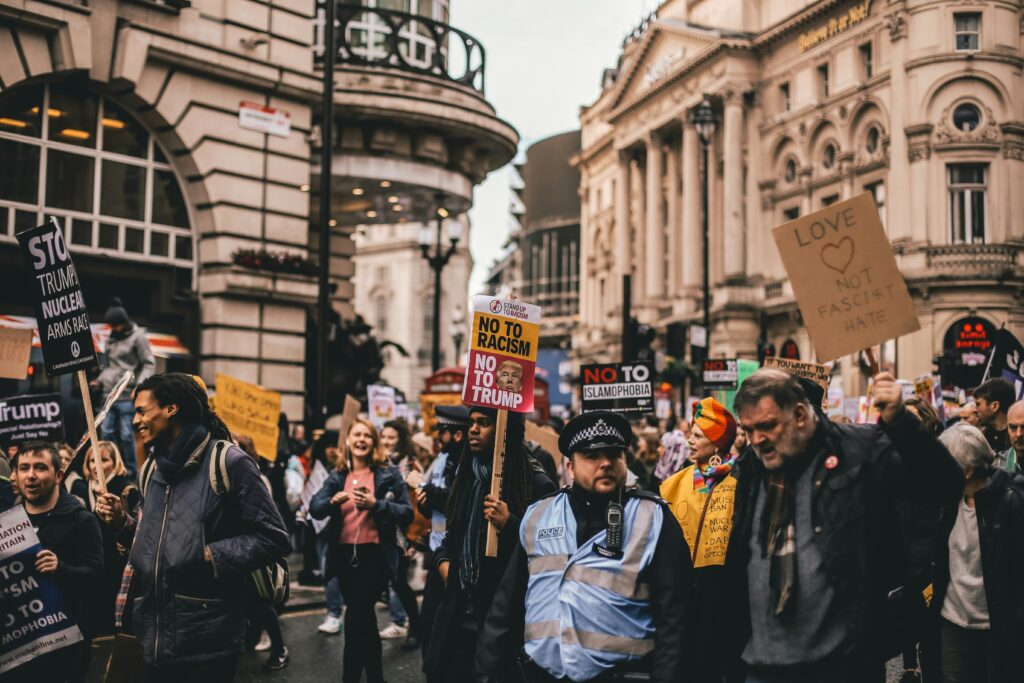
This covers the protester’s right to say what they think and the photographer’s right to gather and publish news.
It’s the foundation for the protection given to journalistic material, and it’s the argument a journalist makes whenever the police try to stop them working or get hold of their pictures.
Article 11: freedom of assembly
This is the right to protest peacefully. Critics of the face covering law argue that if people are afraid to attend because they can’t protect their identity, their Article 11 right has been interfered with.
The Council of Europe’s Commissioner for Human Rights wrote to the Home Secretary questioning whether the offence was necessary and proportionate, and a group of UN special rapporteurs said wearing a mask shouldn’t be treated as a sign of violent intent.
None of them are absolute
All three are qualified rights. The state can interfere with them if the interference is lawful, pursues a legitimate aim such as preventing crime, and is proportionate. That word, proportionate, is where every one of these laws will eventually be tested. It hasn’t happened yet for section 157.
Photographing protests: what you’re allowed to do
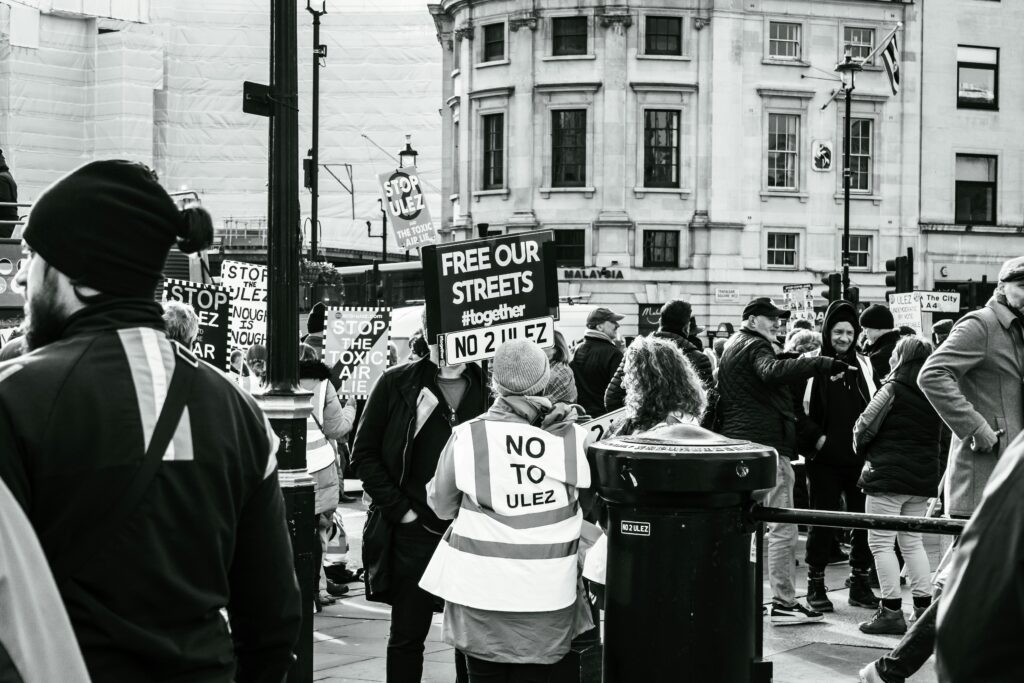
The starting point hasn’t changed. There’s no law against photographing or filming in a public place, and that includes protesters, counter protesters and police officers.
You don’t need permission, a permit or a press card.
Section 17: the protection most people haven’t heard of
Since July 2023 there’s been something extra. Section 17 of the Public Order Act 2023 says a police officer can’t use a police power solely to stop someone observing or reporting on a protest, or on the police using their powers at one.
It was added after an LBC reporter was arrested and held for five hours while covering a Just Stop Oil protest, press card and all.
The government of the day opposed the amendment and lost the vote in the Lords. The wording says “a person”, not “a journalist”, so it covers the bystander with a phone and the legal observer as much as the agency photographer.
Where that protection stops
Section 17 has limits. If an officer has another lawful reason to move you, such as a cordon, a genuine obstruction or your own safety, it doesn’t help you.
It stops the police acting only to prevent you watching. It doesn’t put you above every other power they have.
Photographing police officers
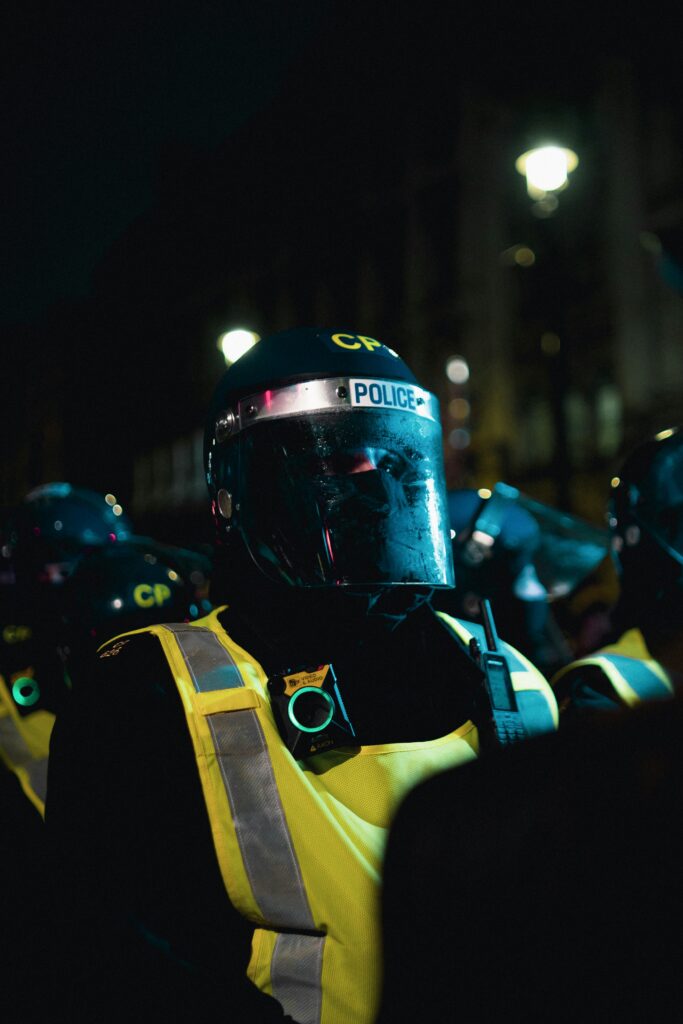
It’s lawful to photograph and film police officers doing their job in public. There is an offence under section 58A of the Terrorism Act 2000 of collecting information about police officers, members of the armed forces or the intelligence services of a kind likely to be useful to a terrorist.
It was never meant to stop ordinary photography, police guidance has said so for years, and there’s a reasonable excuse defence.
Filming an arrest at a protest isn’t what that section is for.
Nobody can make you delete your pictures
No officer can make you delete pictures, and nor can a steward, a security guard or an angry protester. I’ve written about that separately in who can delete your photos.
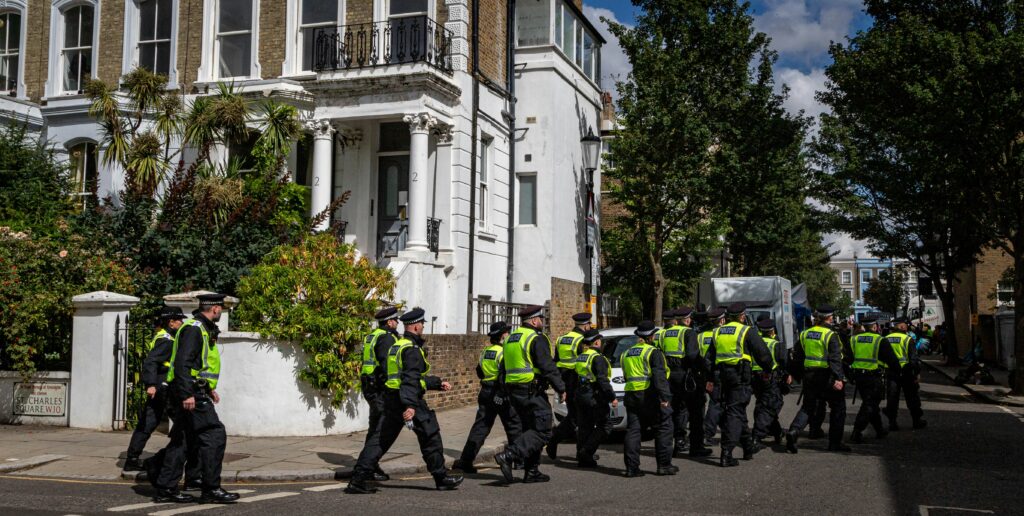
Private land is different
Your right to photograph applies to public places.
Shopping centres, railway stations, university campuses and the forecourts of office buildings are private land, even when they feel public.
Plenty of protests now happen in exactly those places. The owner can tell you to stop or to leave, and if you refuse you become a trespasser.
They still can’t take your camera or make you delete anything.
Observer or participant: pick one
One thing I’d tell anyone photographing protests. Decide whether you’re an observer or a participant, and behave like it.
Conditions imposed on a march apply to the people taking part.
If you’re chanting with a camera round your neck, you’re taking part, and everything that applies to the crowd applies to you.
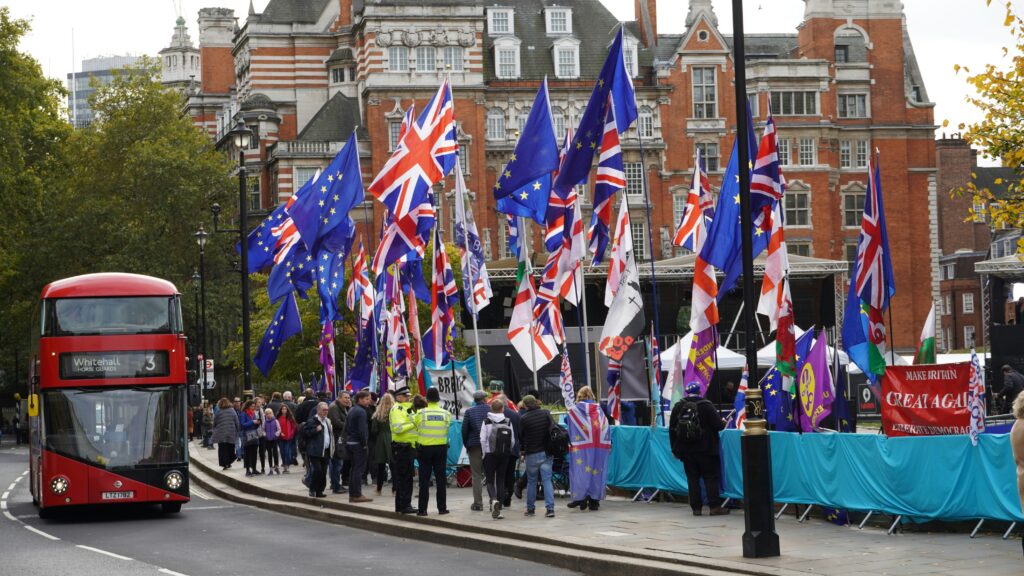
The police powers you’re most likely to meet
I’m going to describe these from the other side of the line, because I’ve used most of them.
Conditions on marches and assemblies
Under sections 12 and 14 of the Public Order Act 1986, senior officers can set conditions on the route, location, duration and numbers of a protest.
Knowingly breaching one is an offence for participants and organisers. For an observer the practical point is that conditions decide where the event will be, and the police usually publish them in advance.
Stop and search
You can be searched under the ordinary power where an officer has reasonable grounds to suspect you’re carrying something prohibited.
Where a section 60 authorisation is in place, officers can search without suspicion for weapons.
And section 11 of the Public Order Act 2023 allows suspicionless searches for items intended for use in certain protest offences, such as locking on, where it has been authorised. A camera bag full of gaffer tape, cable ties and a bike lock will take some explaining. Think about what you carry.
Cordons and containment
Police can close streets and hold a line. They can also contain a crowd in one place, which everyone calls kettling.
The House of Lords and then the European Court of Human Rights, in the Austin cases, held that containment can be lawful if it’s necessary and proportionate and lasts no longer than it needs to.
If you’re inside one, you’re inside one. More on that in the scenarios below.
Obstruction
Obstructing the highway and obstructing a police officer are both offences.
Standing in the road to get your shot, or planting yourself between an arrest team and their prisoner, can be either.
Most of the press photographers I ever saw arrested or moved on were dealt with for where they were standing, not for what they were photographing.
Dispersal and breach of the peace while photographing protests.
Officers can direct people to leave an area under dispersal powers, and they can act to prevent a breach of the peace.
Section 17 means those powers can’t be used solely to stop you observing.
But if a lawful direction to leave is given to everyone in a street, that includes you, unless the officer in charge agrees otherwise.
Photographing Protests in 2026. Seizure
An officer who is lawfully on premises, or who has arrested you, can seize items they reasonably believe are evidence of an offence and which might otherwise be lost or destroyed.
That’s the narrow route by which a camera or phone can lawfully be taken at the scene.
It doesn’t include a power to delete anything, and journalistic material has additional protection that I’ll come to.
If you’re press. Your press card and the “work” defence
A UK Press Card isn’t a legal status, but it’s the fastest way to show an officer what you’re doing.
It’s also what makes the “work” defence believable if you’re wearing a respirator, or a helmet with a visor, inside a designated zone.
That defence hasn’t been tested for photographers yet. Carry the card where it can be seen and be ready to explain yourself calmly.
Journalistic material and production orders
Material acquired or created for the purposes of journalism has special status under the Police and Criminal Evidence Act 1984. Sections 11, 13 and 14 define it, and section 9 with Schedule 1 sets out how the police get access.
They have to apply to a circuit judge, normally on notice so you or your employer can be there to oppose it, and the judge has to weigh the value of the evidence against the damage done to press freedom when journalists become evidence gatherers for the state.
Judges do say no. After the 2011 riots a judge refused police applications for BBC footage connected to the Mark Duggan shooting.
In 2012 the High Court quashed production orders Essex Police had obtained against the BBC, Sky, ITN and others for more than a hundred hours of footage from the Dale Farm eviction, because the police hadn’t shown what the footage was likely to prove.
The caveat nobody tells you
Those protections work best when you’re a witness. If you’re arrested as a suspect, the police have wider powers to search you and seize what you’re carrying, and the special protection for journalistic material isn’t written into every one of those powers.
If that happens, say clearly and repeatedly that the material is journalistic material, ask for that to be recorded, and get a solicitor.
That’s where Article 10 earns its keep.
I know what the police want from you
I gathered evidence for a living, and I can tell you the appetite for good identification footage after a disorder is enormous. A
press photographer with a long lens and a clear view is carrying the best evidence on the street.
That’s exactly why the law makes the police go to a judge for it. If crowds come to see photographers as an arm of the police, photographers get attacked, and that has happened in this country more than once.
Know your position, and your employer’s or agency’s position, before you’re asked.
If you’re a working photographer but not press
When the protest comes to your shoot
Most commercial photographers will never be commissioned to cover a protest.
But protests come to you. An AGM, a site opening, a festival, a construction project, a university event.
I’ve had jobs where the story outside the building was bigger than the one inside.
Talk to your client first
If there’s any chance of a protest at a job, raise it with the client beforehand.
Agree whether they want it photographed at all. Some will want a record for their own security or legal team.
Some will want you nowhere near it. Put it in your risk assessment, and agree what happens to those images afterwards.
A photographer acting for one side of a dispute isn’t a journalist and shouldn’t pretend to be.
Photographing protests: Commercial use and data protection
Think hard before using protest pictures commercially. Journalism has exemptions under data protection law. Marketing doesn’t.
An identifiable face at a protest tells the world something about that person’s political opinions, and political opinion is one of the specially protected categories of personal data.
Protest pictures belong in editorial use, not in a client’s brochure or the commercial side of a stock library.
Drones: Don’t.
A protest is an assembly of people, and you can’t fly over one.
I’ve set out the rules in detail in flying a drone over a crowd and why you don’t do it.
Add police helicopters and drones sharing the same airspace, and a temporary restriction that may have been put in place for the event, and it’s a quick way to lose your operator ID.
Check your insurance
Plenty of equipment and liability policies exclude riot and civil commotion.
The day you find that out shouldn’t be the day a lens gets smashed. Read the wording or ring your broker.
If you’re filming on your phone
You have the same right to film as anyone else, and section 17 protects you too. But most of the footage of any protest now comes from people like you, so most of the legal risk does too.
A phone doesn’t make you press
If you’re there as a protester, the face covering offence and every condition on the march apply to you like everyone else. Holding a phone up doesn’t change that.
Your footage can become evidence when photographing protests.
What you film can end up as evidence, for either side. Police put out appeals for footage after almost every major protest now, and forces already run facial recognition on still images after the event. The clip you post tonight is searchable tomorrow. And unlike a press photographer, you have no special protection if the police want it.
Filming and posting are two different acts
Keeping footage for yourself is your own business. Putting identifiable strangers on a public account, with a caption inviting people to work out who they are, takes you towards harassment and data protection territory. The law has long treated what you film and what you publish as two separate questions. If you’ve read my piece on Meta glasses and UK filming law, it’s the same principle.
Your caption can get you sued
The picture is rarely the problem. The words are. If you post a clip of an identifiable person and call them a thug, a racist, a terrorist supporter or a paedophile protector, and you’re wrong, that’s defamation, and “I was only sharing it” isn’t a defence.
People have been misidentified from protest footage and had their lives turned over. Describe what the footage shows. Leave the labels out.
You own your footage
If you shot it, you own the copyright. When a clip takes off, news organisations will message you asking to use it “with credit”.
You’re entitled to ask for payment, you’re entitled to say no, and you shouldn’t sign anything that hands over all rights for nothing.
Posting to a platform gives that platform a licence. It doesn’t give one to every newspaper that embeds or downloads it.
Livestreaming
A livestream can’t be edited before it goes out. Whatever walks into frame is published instantly, including children, people being arrested who turn out to be innocent, and anything covered by the next section.
It also tells everyone watching, friendly or not, exactly where you are.
Children
There’s no law against photographing children in public, and children attend protests.
But an identifiable child at a contentious protest is a picture that can follow them for life.
Most professionals avoid close, identifiable pictures of children at protests unless the child is the story. I’d suggest everyone else does the same.
Proscribed organisations and the pictures you publish
The offence: section 13 of the Terrorism Act 2000
Under section 13 it’s an offence to wear clothing, or to carry or display an article, in a way that arouses reasonable suspicion that you’re a member or supporter of a proscribed organisation.
Since 2019, subsection (1A) has made it an offence to publish an image of such an item in a way, or in circumstances, that arouse the same suspicion about you, the publisher. Still and moving images both count.
The maximum is six months in prison, a fine of up to £5,000, or both. Membership and inviting or recklessly expressing support are separate and far more serious offences under sections 11 and 12, carrying up to 14 years.
Which organisations are proscribed, and when were they banned?
As of the Home Office’s last update on 7 July 2026, 84 organisations are proscribed under the Terrorism Act 2000, plus 14 Northern Ireland groups banned under earlier legislation. The full official list is on GOV.UK and it’s the only one you should rely on. What follows is a selection, with the dates the government gives, chosen because these are the names, flags and symbols most likely to turn up in front of a camera in the UK.
Groups whose flags, placards or symbols have appeared at UK protests
- Palestine Action: proscribed July 2025.
- Hamas: military wing proscribed March 2001. Extended to the whole organisation in November 2021.
- Hizballah: external security organisation proscribed in 2001, the wider military wing in 2008, and the organisation in its entirety in March 2019.
- Hizb ut-Tahrir: proscribed January 2024.
- Palestinian Islamic Jihad: proscribed March 2001.
- Popular Front for the Liberation of Palestine General Command (PFLP-GC): proscribed June 2014. The government’s list notes this is separate from the similarly named PFLP.
- Kurdistan Workers’ Party (PKK): proscribed March 2001, with further names added in 2006 and February 2020.
- Liberation Tigers of Tamil Eelam (LTTE): proscribed March 2001.
- Babbar Khalsa: proscribed March 2001. “Babbar Khalsa International” was added as an alternative name in July 2026.
- Al Ghurabaa and The Saved Sect, better known as Al Muhajiroun: proscribed July 2006. Names including Islam4UK and Muslims Against Crusades were added in 2010 and 2011, more in 2014, and “The Islamic Thinkers Society” in July 2026.
Extreme right wing groups
- National Action: proscribed December 2016. Scottish Dawn and NS131 were added as alternative names in September 2017, and System Resistance Network in February 2020.
- Sonnenkrieg Division: proscribed February 2020.
- Feuerkrieg Division: proscribed July 2020.
- Atomwaffen Division, also known as National Socialist Order: proscribed April 2021.
- The Base: proscribed July 2021.
- The Terrorgram collective: proscribed April 2024.
- Maniacs Murder Cult: proscribed July 2025.
- Russian Imperial Movement: proscribed July 2025.
International groups most people will recognise
- Al Qa’ida: proscribed March 2001.
- ETA: proscribed March 2001.
- Al Shabaab: proscribed March 2010.
- Boko Haram: proscribed July 2013.
- Islamic State, listed as ISIL and also known as ISIS or Daesh: proscribed June 2014.
- Wagner Group: proscribed September 2023.
Northern Ireland
Fourteen groups linked to Northern Ireland related terrorism remain proscribed under earlier legislation.
They include the Irish Republican Army, the Irish National Liberation Army, the Continuity Army Council, the Ulster Volunteer Force, the Ulster Defence Association, the Ulster Freedom Fighters, the Loyalist Volunteer Force and the Red Hand Commando.
If you photograph parades, murals or commemorations, section 13 is the reason to think about how you caption and publish.
Four things the list teaches you
- It isn’t one kind of politics. The list runs from Islamist groups to neo-Nazis to separatists to a Russian mercenary company. The law is the same whichever flag is in your frame.
- Names change. The Home Secretary can add alternative names by order, and three groups had names added as recently as July 2026. The government also says a group using a name that isn’t on the list can still be treated as the proscribed organisation if it’s the same thing in practice. “It’s not on the list” isn’t a safe assumption.
- Groups come off as well as go on. Four organisations have been removed since 2008, and in late 2025 the government stopped treating Hay’at Tahrir al-Sham as another name for Al Qa’ida. Check the current list, not an old article, and that includes this one.
- It follows you abroad. Since April 2019 the section 12 and 13 offences, including publishing images, can be committed overseas by British nationals and UK residents.
For the person carrying the flag, the offence is section 13(1). For you, it’s only a problem if the way you publish the picture suggests that you support the organisation.
A flag in the background of a news photograph of a march is reporting. The same flag as your profile picture is not.
Why this is live right now
Palestine Action was proscribed on 5 July 2025.
Thousands of people have since been arrested for holding placards expressing support for it.
In February 2026 the High Court ruled the proscription unlawful, but left it in place while the government appealed.
On 15 June 2026 the Court of Appeal overturned that ruling and held the proscription lawful.
As I write, it remains a criminal offence to express support for the group, and section 13 applies to images of its placards.
Reporting is not supporting
The offence is about suspicion that you, the person publishing, are a supporter.
A news photograph of people holding placards, captioned factually, is reporting.
The National Union of Journalists said in July 2025 that proscription doesn’t prevent journalists reporting on the organisation’s activities.
Its advice to members was to carry a press card, make it obvious you’re there only as a newsgatherer, stand apart from activists, and avoid wearing anything that could be read as support.
Editors at the NUJ’s London Freelance Branch added a good rule for captions. Avoid adjectives.
Officers don’t always get it right
In July 2025 a retired head teacher was arrested in Leeds for holding a placard that reproduced a Private Eye cartoon about the ban.
He was held for six hours before police confirmed there would be no further action. The law was new and an officer got it wrong. That’s worth remembering, because section 157 is even newer.
For casual posters
If you’re not a journalist, the safest assumption is that a selfie with a placard supporting a proscribed group, or a repost with an approving caption, puts you at risk.
A factual clip of what happened is a different thing. Know which one you’re posting.
Thirteen real world scenarios
These are illustrations to show how the law might apply. They are not predictions, and real situations turn on their own facts.
1. You’re a press photographer wearing a respirator inside a designated zone
You’re wearing an item that conceals your identity in a designated area, so the offence is made out on its face. Your answer is the work defence. Have your press card visible, take the respirator off when you’re not using it, and if challenged explain calmly that it’s protective equipment for your job.
You may still be arrested and have to prove it later. Whether the defence succeeds for a photographer hasn’t been tested.
2. It’s freezing, you’ve got a snood pulled up, and you’re walking through a zone to get to a job
You’re not protesting, but the offence doesn’t require you to be. None of the three defences is “it was cold”. Realistically an officer will ask you to pull it down and that will be that. But the law as written gives you no excuse. Pull it down.
3. A steward holds an umbrella in front of your lens
Outside a designated zone, that’s annoying but lawful, provided they don’t touch you or your kit. Inside a zone, they’re arguably using an item to conceal another person’s identity. Whether that’s an offence is untested. Don’t get into a shoving match over it. Move.
4. Photographing protests. An officer tells you to stop filming an arrest
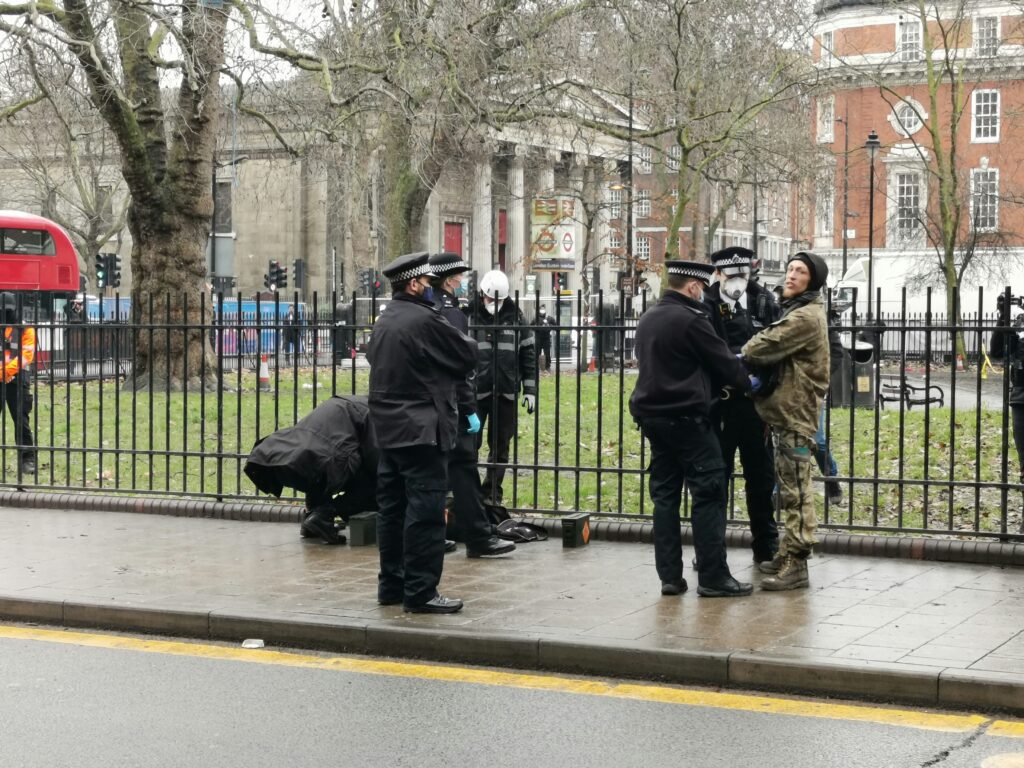
There’s no power to stop you filming solely because you’re filming, and section 17 says so. Stay calm, keep filming, take a step back to show you’re not obstructing, and say you’re observing.
If the officer tells you to move back for safety or because you’re in the way, move back and keep filming from there. Distance is the easiest thing to give.
5. An officer asks to look through your pictures, or tells you to delete one
You can say no to both. There’s no power to make you show images without a lawful seizure or a court order, and no power at all to make you delete. Be polite. Ask which power they’re using. If they seize the camera, don’t resist physically. State that it contains journalistic material if it does, ask for a receipt and the officer’s number, and get legal advice.
6. A week later a detective emails asking for your footage
If you’re a journalist, this is a request, not an order. Refer it to your editor, agency or union.
Handing over material voluntarily has consequences for every colleague who covers the next protest. If the police want it enough they can apply to a judge, and you can be heard.
If you’re a member of the public, you have no special protection, but a request is still only a request unless it comes with a court order.
It’s your decision. Think about who’s in the footage before you make it.
7. You’re shooting a corporate event and protesters arrive
Your duty is to your client and to your own safety. Ring the client contact. Photograph from a safe position if they want a record. Don’t engage with the protesters, don’t claim to be press, and don’t publish anything yourself. Those images are your client’s business, and they carry data protection obligations that a newspaper’s wouldn’t.
8. A protester demands you delete a picture of them
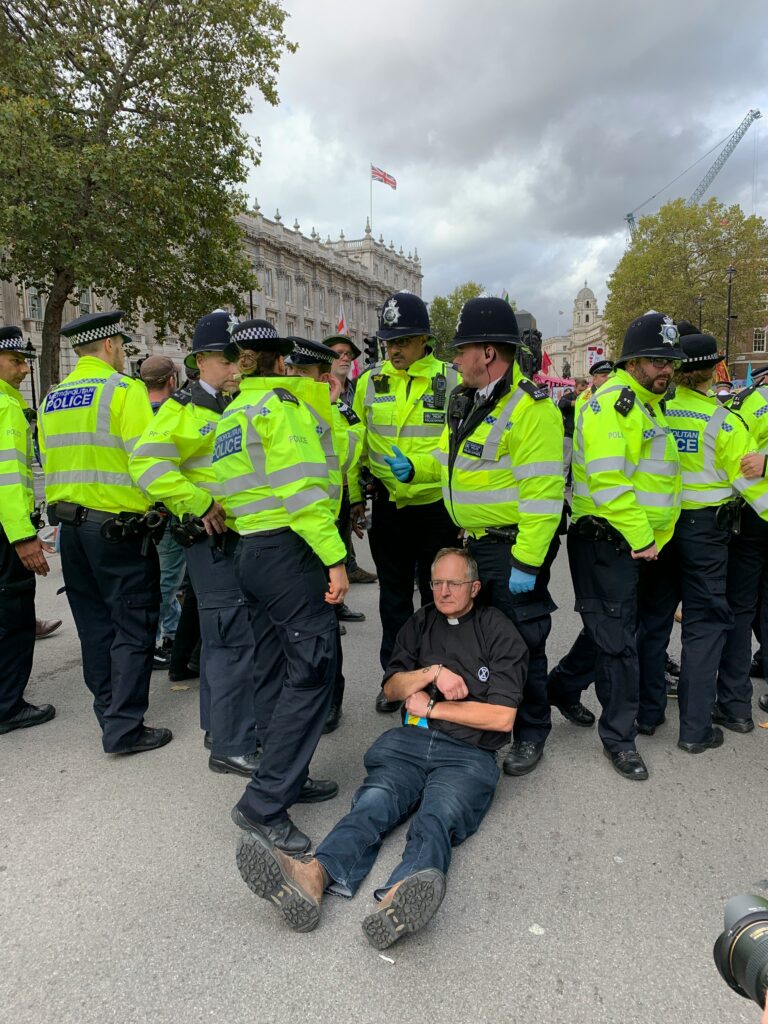
They have no right to insist. But ask yourself why they’re asking. Someone who’s frightened of an employer, a family or a government overseas is in a different position from someone who’s just been filmed committing an offence. It costs nothing to listen. What you do next is an ethical choice, and it’s yours.
9. Your clip goes viral and a newspaper wants it
You own it. Ask what they’ll pay, where it will be used and for how long. Get it in writing, even if that’s a direct message. Don’t accept “exposure”. And before you license it, watch it again with the sound up and check who’s identifiable and what’s being said.
10. You post a clip and someone in the comments names the wrong person
You didn’t name them, but it’s your post, and once you know about it you have a problem. Delete the comment, correct it publicly and consider taking the clip down. If the person named comes after anyone, the original poster with the large audience is the obvious target.
11. You climb a war memorial for a better angle
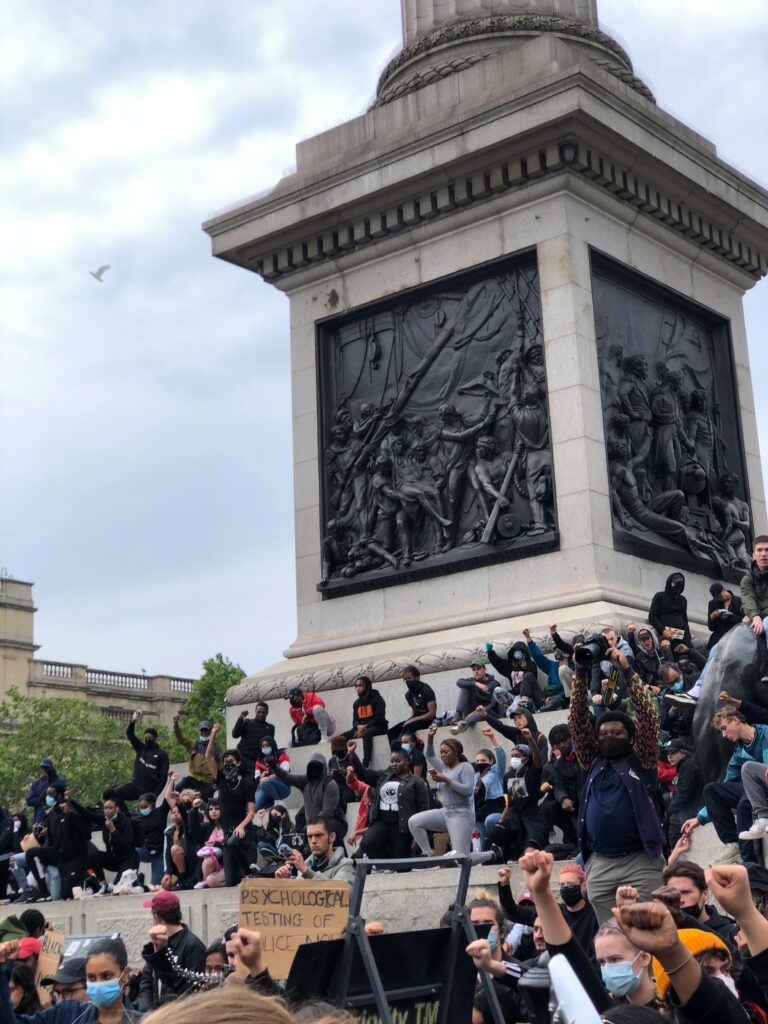
If it’s on the Schedule 17 list, that’s an offence under section 161 carrying up to three months. Carrying a camera isn’t a defence. Find a doorway, a set of steps or a friendly first floor window.
12. You’re caught inside a containment
Work your way to the police line, find a supervisor, show your press card and ask to be let out. Police guidance has long said accredited press should be allowed through.
It doesn’t always happen, and you have no power to insist. If you’re not press, you wait with everyone else.
Either way keep working, keep your kit close, and tell someone outside where you are.
13. You put a drone up to get the scale of the march
That’s a Civil Aviation Authority matter and potentially a criminal one.
The aerial shots you see on the news come from helicopters and rooftops, not from someone in the crowd with a drone.
How the professionals work a protest. Photographing Protests in 2026
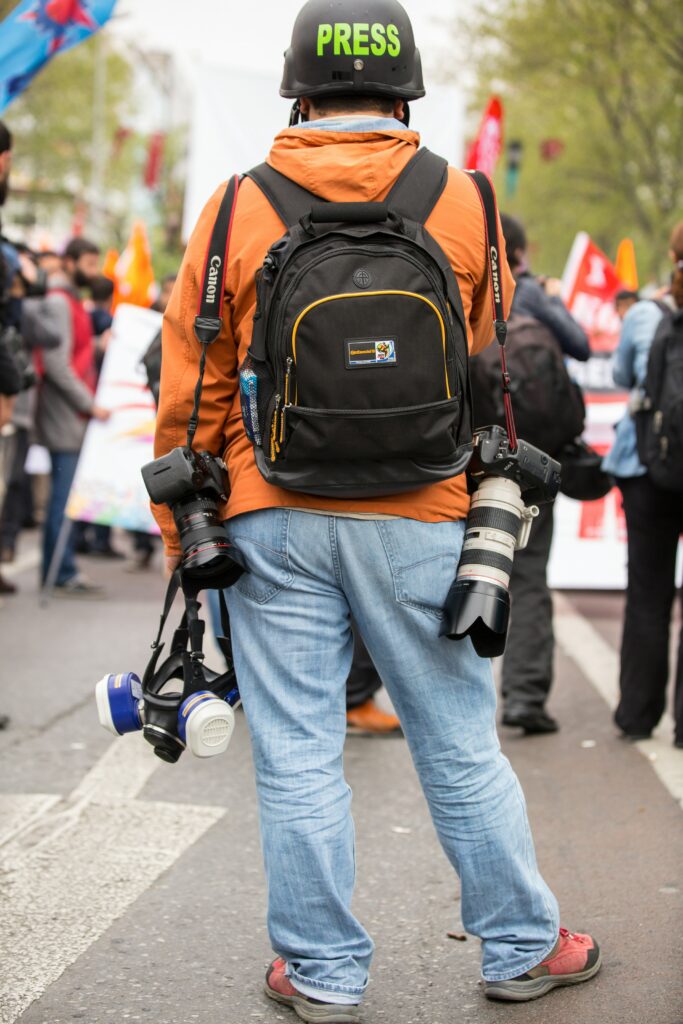
The law is half of it. The rest is craft, and most of it is about not becoming part of the story.
Before you go
- Check the force’s website and social channels for conditions, section 60 and 60AA authorisations and any face covering designation. Screenshot them.
- Know the route, the side streets and at least two ways out.
- Tell someone where you’re going and when you’ll check in.
- Carry a solicitor’s number somewhere that isn’t your phone.
- Dress plainly. No slogans, no colours associated with either side, nothing that looks like police or protest kit.
- Strip your bag back. One body, two lenses, spare cards and batteries, water. Everything you carry is something you might have to run with or explain.
While you’re there
- Work in pairs if you can. One shoots, one watches.
- Stay on the edge, not in the middle. Never stand between a police line and a crowd. When the line moves, it moves fast, and nobody on it is looking at your press card.
- If you shoot to two cards, do it. If your camera can send to your phone or the office, set it up. The pictures that matter are the ones that survive.
- Be obvious. Hiding your camera makes crowds and police equally suspicious.
- When someone objects to being photographed, lower the camera and talk. Most confrontations end there.
- Watch the mood, not just the action. The change in noise before trouble starts is unmistakable once you’ve heard it.
Afterwards
- Back up before you edit.
- Caption with facts. Who, what, where, when. No adjectives.
- Look at every identifiable face before you publish and ask what publishing does to that person.
- If the police contact you, don’t reply the same day. Take advice first.
To blur or not to blur
No law requires a news photographer to blur faces at a protest, and a record of who was there and what they did is a large part of why the press attends at all.
But this law changes the moral arithmetic a bit. Inside a designated zone people can’t legally hide their own faces, so whether they’re identifiable online is increasingly down to whoever is holding the camera. That cuts across every kind of protest, whoever is marching and whatever you think of them.
There are some working rules that most editors would recognise. People committing offences, people on a stage or holding a megaphone, and people who’ve chosen to be the public face of a cause have put themselves forward. The person at the back of the crowd with a pushchair hasn’t. Wide shots tell the story of scale without singling anyone out. Tight portraits of individuals need a reason.
I don’t think there’s one right answer. I do think anyone photographing protests should have worked out theirs before they press the shutter.
Facial recognition: where it stands today
This is the other half of the face covering story, and it’s moving quickly.
The courts
In 2020, in the Bridges case, the Court of Appeal found South Wales Police’s use of live facial recognition unlawful because there were too few limits on where it could be used and who could be put on a watchlist. Forces rewrote their policies. On 21 April 2026 the High Court dismissed a challenge to the Metropolitan Police’s revised policy, brought by a man who was wrongly identified and stopped, together with the director of Big Brother Watch. The court found the policy compatible with Articles 8, 10 and 11. The claimants have said they’ll appeal.
The streets
In May 2026 the Met used live facial recognition as part of a protest policing operation for the first time. The government has announced that the national fleet of facial recognition vans will grow from 10 to 50. The Met has said it’s preparing to fit fixed cameras across the West End and Soho by the end of 2026. British Transport Police are running a pilot at London stations, extended to some Underground stations in August and due to run until November. Some forces are also trialling handheld versions on officers’ phones.
The law
There’s still no Act of Parliament that specifically governs police facial recognition. The government consulted on one earlier this year and has said legislation will follow. The Biometrics Commissioners have warned it could be years before it’s in force.
Why it matters to anyone with a camera
Live systems scan faces as people walk past. Retrospective systems work on any still image, and that includes yours.
Put mask free zones alongside that and you have a situation where showing your face can be compulsory and scanning it can be automatic.
That’s a post of its own. Scotland and Northern Ireland
Sections 157 and 158 apply in England and Wales only. Scotland and Northern Ireland have their own public order law, their own police powers and their own courts, and protest in Northern Ireland in particular is regulated very differently. The general freedom to photograph in public is much the same across the UK, and the Terrorism Act offences apply everywhere. Beyond that, don’t assume anything in this post applies north of the border or across the Irish Sea.
Timeline of key dates
- 2009: Wood v Commissioner. Police retention of photographs of a peaceful campaigner held to breach Article 8.
- 2012: High Court quashes production orders for media footage of the Dale Farm eviction.
- April 2019: Publishing images under section 13(1A) of the Terrorism Act 2000 becomes an offence.
- August 2020: Bridges. Court of Appeal finds South Wales Police’s use of live facial recognition unlawful.
- November 2022: LBC reporter arrested while covering a protest on the M25.
- 2 July 2023: Section 17 of the Public Order Act 2023 comes into force.
- 5 July 2025: Palestine Action proscribed.
- 13 February 2026: High Court rules the proscription unlawful but leaves it in place pending appeal.
- 21 April 2026: High Court upholds the Met’s live facial recognition policy.
- 29 April 2026: Crime and Policing Act 2026 receives Royal Assent.
- May 2026: Live facial recognition used at a protest for the first time.
- 15 June 2026: Court of Appeal holds the Palestine Action proscription lawful.
- 29 June 2026: Face covering offence and other protest provisions come into force.
- 25 July 2026: Kent Police designate ten wards of Dover under the new power.
- Autumn 2026: Facial recognition legislation expected to be brought forward.
Key takeaways
- Wearing a face covering is only an offence inside an area the police have designated, and they have to take reasonable steps to tell the public about it.
- Inside a zone the offence applies to everyone in a public place, not only to protesters. That includes photographers.
- A designation lasts up to 24 hours and can be extended by another 24. England and Wales only.
- Health, religion and work are defences, but you may have to prove them after arrest.
- Photographing and filming protests in public is lawful. The police can’t use their powers solely to stop you observing or reporting.
- Don’t climb on memorials, don’t fly a drone, and don’t stand between a police line and a crowd.
- Material held for journalism has extra legal protection. Casual footage doesn’t.
- There are 84 proscribed organisations plus 14 Northern Ireland groups, from every part of the political spectrum. Publishing images of their flags, placards or symbols can be an offence if it suggests you support them. Reporting factually is not supporting.
- Commercial use of identifiable protest pictures is a data protection problem. Keep it editorial.
- Filming and publishing are separate acts. Your caption is more dangerous than your picture.
Photographing protests: frequently asked questions
Is it illegal to wear a face covering at a protest in the UK?
Not in general. In England and Wales it’s an offence only inside a locality the police have designated under section 158 of the Crime and Policing Act 2026, and only while the designation is in force. Separately, where a section 60AA authorisation is in place, an officer can order you to remove a face covering and refusing is an offence.
Does the face covering offence apply to people who aren’t protesting?
On the wording of section 157, yes. The offence is being in a public place in a designated locality while wearing or using an item that conceals identity. It doesn’t require you to be taking part in the protest. The defences are health, religious observance and work.
Is photographing protests legal in the UK?
Yes. There’s no law against photographing or filming a protest in a public place, and section 17 of the Public Order Act 2023 stops the police using their powers solely to prevent you observing or reporting on it. Other police powers, such as cordons and dispersal, still apply to you.
Can the police make me delete photos or hand over my camera at a protest?
Police officers have no power to make you delete images. They can seize equipment in limited circumstances, for example where they reasonably believe it contains evidence of an offence. Journalistic material has additional protection, and the normal route for the police is an application to a circuit judge under Schedule 1 of the Police and Criminal Evidence Act 1984.
Do I have to blur faces before posting protest photos online?
There’s no general legal duty to blur faces in news reporting. But publishing identifiable people can engage data protection, harassment and defamation law depending on who you are, why you’re publishing and what you say alongside the image. Commercial use is a different matter again and needs far more care.
Can a photographer wear a mask or respirator in a designated zone?
The Act provides a defence where an item is worn for a purpose relating to your work. How that applies to photographers hasn’t been tested in court, and a defence may only help you after you’ve been arrested. Carry visible press identification and be prepared to explain why you’re wearing it.
Is it an offence to post a photo of a placard supporting a proscribed organisation?
It can be. Section 13(1A) of the Terrorism Act 2000 makes it an offence to publish an image of an article in a way that arouses reasonable suspicion that you are a member or supporter of a proscribed organisation. Factual news reporting is different from posting in support, but the wording is broad and caution is sensible.
Which organisations are proscribed in the UK?
As of 7 July 2026 there are 84 organisations proscribed under the Terrorism Act 2000 and 14 Northern Ireland groups proscribed under earlier legislation. They include Palestine Action (July 2025), Hizb ut-Tahrir (January 2024), Wagner Group (September 2023), Hamas in its entirety (November 2021), Hizballah in its entirety (March 2019) and National Action (December 2016). The Home Office publishes the full current list on GOV.UK.
Can I fly a drone over a protest?
No. A protest is an assembly of people and drone rules prohibit flying over one. There may also be airspace restrictions and police aircraft operating in the area.
The bigger picture
When I was holding a police camera at a disorder, there were perhaps three or four lenses on the street that mattered. Mine, a couple of press photographers and maybe a TV crew. Everybody knew who was filming and roughly where the footage was going.
That world has gone. Today every person at a protest is a camera operator, every clip is published within minutes, and software can put a name to a face faster than any detective I ever worked with. The face covering law is Parliament’s answer to one half of that problem, which is people hiding from accountability. It has nothing to say about the other half, which is what happens to the ordinary, lawful protester whose face is now on a hundred strangers’ phones.
Look at the timeline above and you can see how quickly this has moved. In the space of a few months this year, the courts approved facial recognition, Parliament made it an offence to cover your face where the police say so, and the first zones were drawn on the map. Each step has an argument behind it that I understand, because I used to make those arguments. Taken together they add up to something nobody voted for in one go: a country where, at a protest, being identifiable is becoming the default and being anonymous is becoming the offence.
The law isn’t going to settle what that means for the people in the pictures. It will be settled, one frame at a time, by the people holding the cameras. That’s the press, it’s working photographers like me, and it’s you.
So know the law. Know which side of the line between observer and participant you’re standing on. Know the difference between taking a picture and publishing one. And have your own answer ready to the question of whose face you’re prepared to put in front of the world, and why.
If you’ve got a question about photographing protests, or about photography and filming law in general, I’m always happy to talk. And if you need a commercial photographer or film crew who understands how to work safely and lawfully in public places, that’s what we do.
Email studio@blanc-creative.com or call 07871 364041.
More from the Blanc Creative law series
- UK Photography Law 2026: Know Your Rights
- UK Photography Law: Who Can Delete Your Photos
- Meta Glasses UK Law: Why Wetherspoon Said No
- Who Owns Your Concert Photos
- Flying a Drone Over a Crowd and Why You Don’t Do It
Important: please read this disclaimer
1. This is general information, not legal advice
I’m a photographer. I’m not a solicitor, a barrister or a legal adviser, and nothing in this article is legal advice. It’s a general guide written for interest and information. Reading it doesn’t create any kind of professional or advisory relationship between you and me, or between you and Blanc Creative. Please don’t rely on it as a substitute for advice from a qualified lawyer about your own circumstances.
2. My police background
I left the police service in 2012. I refer to that experience as personal background only. I hold no current role with any police force, and nothing here represents the views, policy, training or practice of Norfolk Constabulary, any other police force, the College of Policing, the Home Office or any other public body. Legislation, guidance and police procedure have changed a great deal since I served.
3. England and Wales only
This article deals with the law of England and Wales. Scotland and Northern Ireland have their own legislation, police powers and court procedures, and the face covering offence in sections 157 and 158 of the Crime and Policing Act 2026 doesn’t extend to them. If you’re outside England and Wales, don’t assume any of this applies.
4. Accuracy and date
The legal content was checked against legislation.gov.uk and other published sources on 21 September 2026. This area of law is changing quickly. Parts of the Crime and Policing Act 2026 are not yet in force, new legislation on facial recognition is expected, appeals are pending in cases mentioned here, and the face covering offence has not yet been interpreted by the higher courts. I’ve taken care to get this right, but I don’t guarantee that it’s complete, accurate or up to date, and later changes may make parts of it wrong. Case summaries are brief and simplified. The list of proscribed organisations in this article is a selection only, taken from the Home Office list as updated on 7 July 2026. It is not complete, organisations and alternative names are added and removed, and the official list on GOV.UK is the only authoritative source. Always check the current law.
5. Every situation turns on its own facts
Whether an offence has been committed, whether a designation or authorisation is valid, whether a police power has been lawfully used and whether a defence applies are all decided on the specific facts by the police, the Crown Prosecution Service and ultimately the courts. A blog can’t decide any of that. Where I say something is untested or uncertain, I mean it.
6. The scenarios are illustrations only
The scenarios in this article are simplified examples written to explain how the law might apply. They’re not predictions of what the police or a court will do, and they’re not instructions. The suggestions about what I would do are my personal opinion as a photographer. Following them won’t guarantee that you avoid arrest, injury, prosecution or a civil claim.
7. No encouragement to break the law or take sides
Nothing in this article encourages anyone to attend, avoid, support or oppose any protest, cause, campaign or organisation, and nothing expresses or invites support for any proscribed organisation. Nothing encourages anyone to commit an offence, to conceal their identity, to obstruct a police officer or to ignore a lawful instruction. If an officer gives you a direction you believe is wrong, the safe course is to comply, ask politely which power is being used, make a note of what happened and challenge it afterwards through a solicitor or the police complaints process. References to particular protests, groups or events are there to explain the law and don’t indicate my support for or opposition to anyone.
8. Your safety is your responsibility
Protests can change quickly and can become dangerous. If you choose to attend, photograph or film one, you do so entirely at your own risk. I accept no responsibility for any injury, arrest, detention, prosecution, or loss of or damage to equipment or other property.
9. Third parties, sources and links
I’ve referred to and linked to organisations including government departments, police forces, Liberty, Netpol, Big Brother Watch and the National Union of Journalists so you can read the sources for yourself. That isn’t an endorsement of them, and they don’t endorse me. I’m not responsible for the content of external websites. Descriptions of real events and court cases are drawn from published reports and judgments and attributed to their source. They’re not an allegation of wrongdoing against any person, police force or organisation.
10. Limitation of liability
To the fullest extent permitted by law, Lee Blanchflower and Blanc Creative accept no liability for any loss, damage, cost or consequence of any kind arising from your use of, or reliance on, anything in this article. Nothing in this disclaimer excludes or limits any liability that cannot lawfully be excluded or limited.
11. Where to get proper help
If you need advice, speak to a solicitor who specialises in public order, protest or media law. If you’re a member of the National Union of Journalists or another professional body, contact them. Liberty publishes free information on protest rights. If you’re arrested, you have the right to free and independent legal advice at the police station. Ask for the duty solicitor, or for a solicitor of your choice, before you answer questions.
12. Photographs
The photographs in this article are stock images used under the Unsplash licence. They were not taken at any of the events described and are included only to illustrate the general subject. No person who appears in any photograph has any connection with the events, organisations, offences or court cases discussed, and nothing in this article should be read as suggesting that anyone pictured has committed an offence, supports any organisation or cause, or has done anything wrong. If you appear in an image and would like it removed, email me and I’ll take it down.
13. Corrections
If you believe anything here is inaccurate or out of date, please email studio@blanc-creative.com and I’ll review it.
Text copyright Blanc Creative 2026. Photographs are the copyright of their respective photographers and are used under the Unsplash licence. Contains public sector information licensed under the Open Government Licence v3.0.