Can Someone Really Make You Delete Your Photos? The Truth About UK Photography Law and Who can delete your photos!
By Lee Blanchflower, Blanc Creative

The Moment Every Photographer Dreads
You’ve got your camera up. The light is perfect. You press the shutter. And then a hand appears in front of your lens.
“You can’t photograph here. Delete that. Now. I’ll call the police.”
If you’ve spent any time shooting on the streets or at public events in the UK, you’ll have had some version of this conversation.
UK Photography Law is one of those areas that almost everybody thinks they know about and most of the time they’re wrong.
Maybe it was a security guard outside a shopping centre. Maybe it was a member of the public who didn’t want to be in frame. Maybe, on a particularly bad day, it was an actual police officer who decided to overstep. Delete those shots now! Who can delete your photos. Do you know!
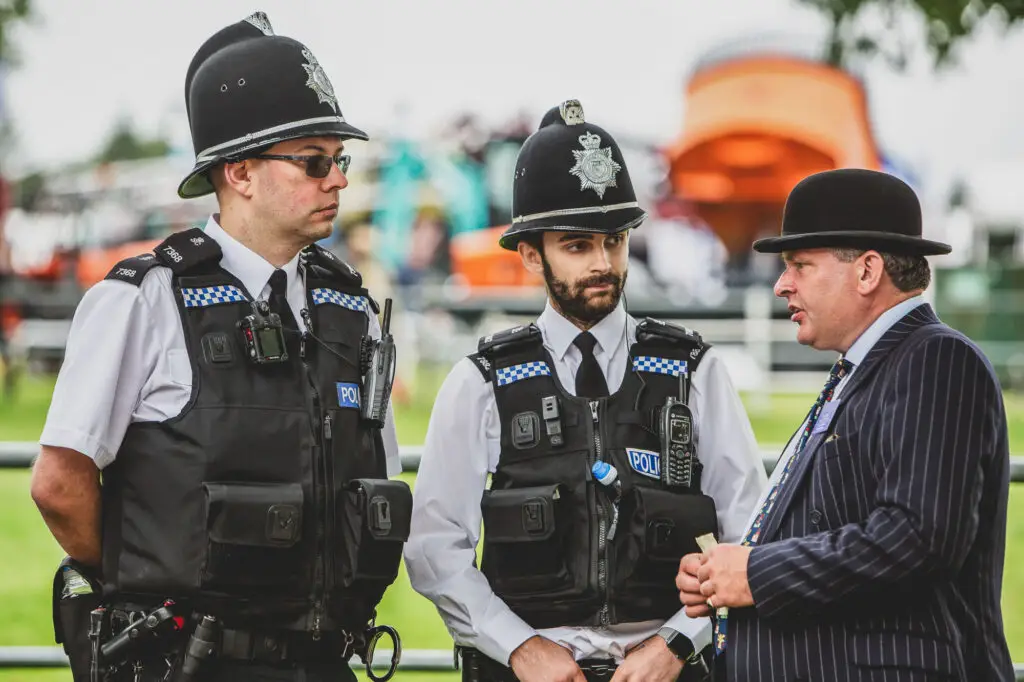
As a former Police Sergeant and Evidence Gatherer on the PSU Team, I’ve had firsthand experience on both sides of this emotive subject, but the truth is, most people issuing these demands have absolutely no legal authority to make them.
They don’t have a clue.
My own personal experience involves working for a well known advertising agency, where part of my role included photographing advertisements that were in place on bus stops and advertising space in London.
On one occasion, I was approached by a plain clothes police officer, driving past, who demanded my details and wanted to know why I was taking images outside an education establishment, a college. I had no legal obligation to explain myself. I was photographing in a public place.
The only criteria this officer repeatedly mentioned, that it was because I was outside college where young people attended.
After a few moments, having explained that he had no lawful basis to request my details, I also explained that it was half term and that everybody was on holiday. Case closed….
The fact is… Many photographers are caught off guard in the heat of the moment, don’t know their rights well enough to calmly and confidently push back. Especially when its involves authority and Police.
This UK Photography Law post about Who can delete your photos is going to change that.
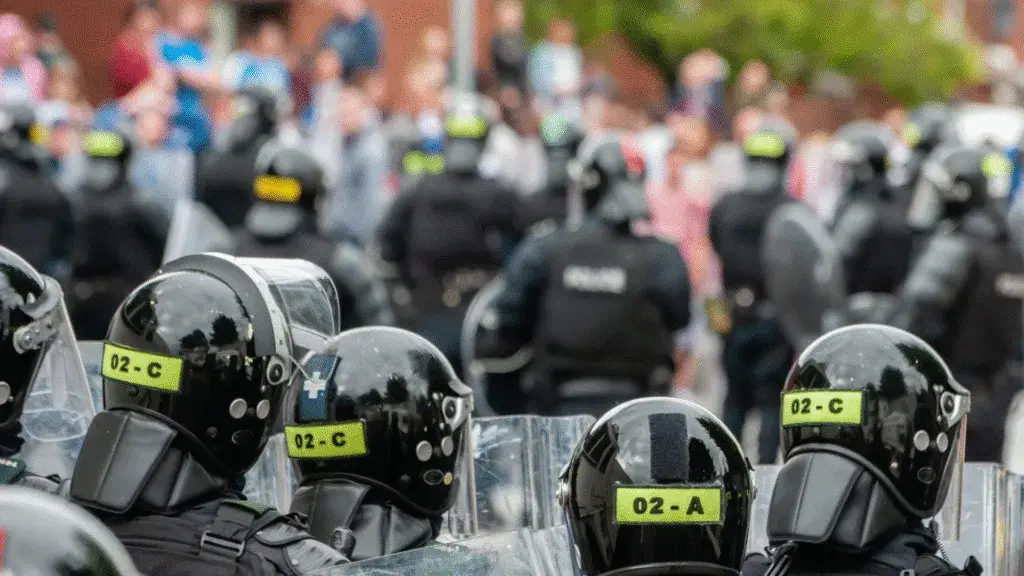
I’m Lee Blanchflower, founder of Blanc Creative, and over the years I’ve shot on streets, at events, outside public buildings, and in situations where I’ve been challenged, questioned, and on more than one occasion, directly threatened.
What I’ve learned is that knowing the law… Really knowing it, not just having a vague sense of it… Is the most powerful thing a photographer can carry alongside their camera.
So let’s go through it properly. No waffle. Just the facts, the legislation, and what it means for you on the ground.
The Foundational Principle: There Is No Law Against Public Photography in the UK
Let’s start at the very beginning, because this is the bedrock of everything that follows.
In the United Kingdom, there is no specific law that prohibits photography in a public place. Full stop.
Avon and Somerset Police make the position plain on their own public guidance page: ‘Photography in a public space is not prohibited by law in the UK, as long as the images being captured are not indecent in nature.’
That statement comes from the police themselves. Keep that in mind the next time an officer suggests otherwise. I’ve written a whole blog on the subject of photographing in public places, so head over if you have an interest in that element of photography.
The burden of proof is not on you to justify why you are shooting. The burden is on whoever is objecting to explain exactly which specific law you are breaking.
In the vast majority of confrontations photographers face, no such law has been broken.
What does exist is a patchwork of legislation:
The Terrorism Act 2000, the National Security Act 2023, the Human Rights Act 1998, the Protection from Harassment Act 1997. – IN UK Photography Law these can impact your rights!
That can, in specific and narrow circumstances, place restrictions on photography.
Understanding where those restrictions begin and end is the difference between a photographer who knows their ground and one who hands over their memory card because someone raised their voice.
Your Right to Photograph People in Public under UK Photography Law. Not just photographing in Public.
There’s a difference, but both are lawful.
Here is something that surprises a lot of people the first time they hear it clearly stated.
In the UK, you do not need a person’s consent to photograph them in a public space for personal or editorial use.
There is no law that gives a member of the public the right to stop you photographing them simply because they object to it.
The key legal principle at work here is reasonable expectation of privacy.
When someone is standing on a public street, in a park, or at an outdoor event, they do not carry the same legal expectation of privacy they would have inside their own home or inside a medical facility.
Photographing them from a public place complies with UK Photography Law.
There are nuances that matter, though. If you intend to use an image commercially, for advertising, for a brand campaign, for any purpose where the image is used to promote or endorse a product or service… You will almost certainly need a signed model release form.
The distinction between editorial use and commercial use is significant, and we will be covering that in a dedicated post on model releases coming soon.
It is also worth knowing that repeatedly targeting and photographing one person in an aggressive or intimidatory manner could, in the right circumstances, cross into the legal territory of harassment under the Protection from Harassment Act 1997.
Photography that is intended to intimidate, distress, or stalk a person is a very different matter from taking a street portrait or documenting a public event. Use common sense. Respect people. And if someone seems genuinely distressed by your lens, make the ethical call as well as the legal one.
Can a Police Officer Make You Delete Your Photos?
No. A police officer in the UK cannot legally compel you to delete photographs you have taken.
This is one of the most widely misunderstood areas in UK photography law, and it leads to some of the most frustrating and unnecessary confrontations photographers experience.
Officers have been known to demand deletion, to strongly imply they have the power to insist on it, and in some cases to bluff confidently in the hope that the photographer simply backs down.
The legal position is unambiguous.
Under UK Photography Law, Police have no power to demand that you delete images you have taken.
Even under the stop and search powers in Section 43 of the Terrorism Act 2000, one of the most significant powers available to officers in relation to photography, police can view images on your camera if they are searching you on grounds of reasonable suspicion of terrorism.
They cannot delete those images at any point during that search unless a court order is in place authorising them to do so.
That distinction is critical. Viewing and retaining is not the same as deleting. And a court order requires judicial oversight.
It is not something an officer can invoke on the spot because they feel uncomfortable with what is on your memory card.
If a police officer demands you delete your images without a court order, they are asking you to do something they have no legal authority to demand.
You are within your rights to politely and firmly decline.
The Terrorism Act 2000: What Officers Can and Cannot Do
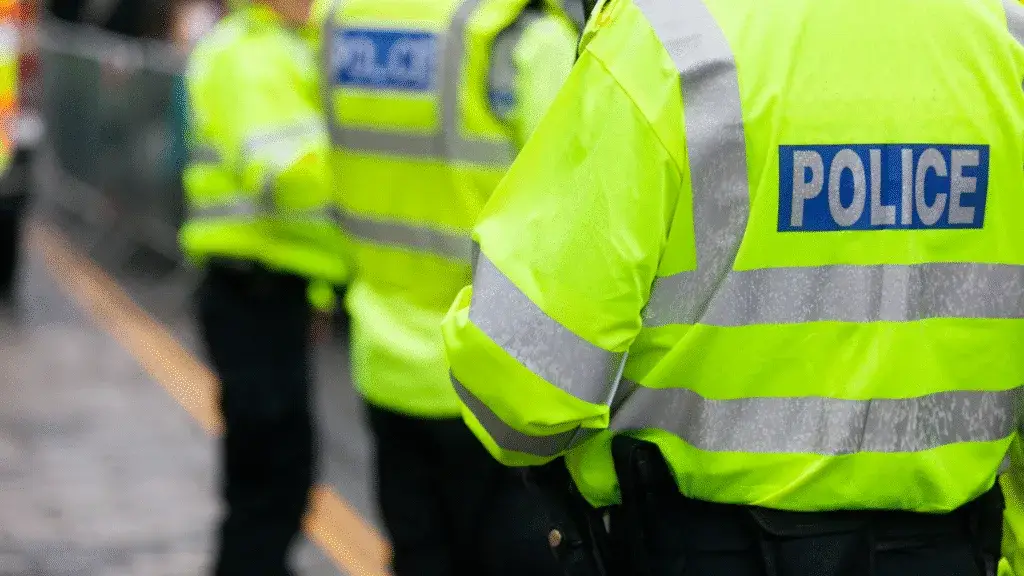
The Terrorism Act 2000 is the piece of legislation most commonly cited by police when challenging photographers, so it deserves a detailed breakdown.
Section 43 allows an officer to stop and search a person if they have reasonable suspicion that person is a terrorist. Under this power, an officer can view images on the camera you are carrying.
They can also seize and retain your camera if they reasonably suspect it contains evidence that you are a terrorist. What they cannot do, even under Section 43, is delete your images without a court order.
Section 58A allows an officer to arrest someone for photographing a police officer, a member of the armed forces, or a member of the intelligence services.
But only if the officer has reasonable suspicion that the images are being obtained to provide assistance to someone committing or planning an act of terrorism.
If you are shooting police officers for documentary, journalistic, artistic, or personal reasons, Section 58A does not apply to you. You do not need permission to photograph police officers going about their normal duties.
Section 44 is the power that used to cause photographers the most grief. It granted police sweeping stop and search powers in designated areas without any requirement for reasonable suspicion.
It was widely misused, and in 2010 the European Court of Human Rights ruled in the case of Gillan and Quinton v United Kingdom that Section 44 violated Article 8 of the European Convention on Human Rights under the right to respect for private life.
The UK government subsequently repealed Section 44 and replaced it with the more limited Section 47A, which requires authorisation from a senior officer and carries a much higher threshold for use.
Any officer who cites Section 44 as grounds for stopping a photographer in the UK today is relying on a power that has not legally existed for over a decade.
What About Security Guards? Don’t worry. They have zero authority under UK Photography Law to do anything.
Security guards are one of the most common sources of confrontation for photographers, and understanding their actual legal position strips away a lot of the authority they project.
Security guards are not police officers. They have no powers of stop and search. They cannot demand you delete your images.
They cannot confiscate your camera or your memory card. Legally, they are members of the public, and their authority extends only as far as the private land their employer controls. If you’re on public land and a security guard tells you to move on or they’ll call the police. Let them.
The police either won’t turn up. And if they do, head back a few lines in this blog, because if you know your UK Photography Law, You’ll be bulletproof.
Don’t be intimidated. UK Photography Law is here to protect you.
If you are standing on public land, a public pavement, a public street, a publicly accessible square. A security guard has no power whatsoever to prevent you from taking photographs.
Anyone who physically obstructs you or uses threatening behaviour in the attempt could be committing assault.
If a security guard physically takes your camera or memory card from you, that is not a grey area . It’s theft and a criminal offence. Call the police.
The one area where their authority is legitimate is private land. If you step onto private property. A shopping centre interior, a privately managed development, or a car park that feels public but is technically privately owned, often have tight regulations about photography.
I’ve been confronted by security guards in a Shopping Mall, for simply having my camera on a tripod facing against a wall while I sat eating a sandwich. Thee scenarios require an element of common sense, especially if there is no possibility that the camera is even facing the direction of any person. In these scenarios, stand up for your rights, request to speak with senior management, stay calm, polite and don’t be intimidated.
The landowner or their authorised representative does have the right to ask you to stop photographing and to leave. You should comply with that request. The problems you’re up against is that even in 2026, there appear to be no distinctions between people photographing in a shopping Mall with an iPhone, but as soon as a professional camera is glimpsed, it’s an emergency situation and I often use this analogy.
Even so, there is one principle that holds regardless of where you were standing when you pressed the shutter: No one can force you to delete images you have already taken.
Not a security guard. Not a member of the public. And not even a police officer without a court order. The photographs exist. The copyright belongs to you. That does not change because someone is loud about it.
The Human Rights Act 1998: Your Right to Create
Here is the legal layer that most photographers never think about but that works strongly in their favour.
Article 10 of the Human Rights Act 1998 protects freedom of expression.
The Equality and Human Rights Commission makes clear that this right covers the freedom to communicate and express yourself in any medium and that explicitly includes pictures and visual art.
Photography is, without question, a form of expression. Street photography, documentary work, photojournalism, and personal photography are all ways of communicating observations, ideas, and perspectives about the world.
Article 10 creates a strong presumption in favour of the photographer’s right to shoot and to keep their images.
Any restriction on that right imposed by a public authority, including the police… Must be lawful, necessary, and proportionate. That is the legal test.
An officer demanding you delete a photograph of a public building because they personally feel uncomfortable about it would not pass that test.
The interference is not necessary. It is not proportionate.
And in the absence of a specific law being broken, it is not lawful.
This is important in practice because it gives you a principled legal basis for any challenge. You are not just saying you have not broken a rule.
You are saying your right to express yourself through photography is protected under the Human Rights Act, and any interference with that right requires a compelling and proportionate legal justification.
The National Security Act 2023: A Newer Layer Every Photographer Should Know
The National Security Act 2023 came into force in December 2023, replacing the Official Secrets Acts of 1911, 1920, and 1939.
It introduced new restrictions that photographers, particularly those shooting near government or defence-related sites MUST understand.
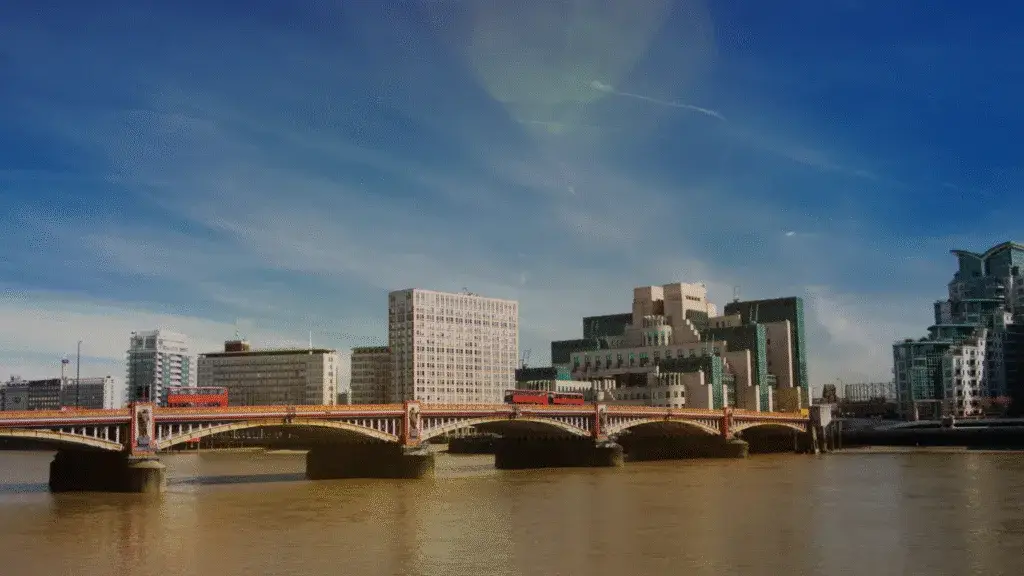
The Act designates certain locations as prohibited places. These include Crown land used for UK defence purposes, sites connected to MI5, MI6, and GCHQ, and civil nuclear sites.
The Secretary of State has the power to designate additional sites through secondary legislation, and that power has already been used, with the Counter Terrorism Operations Centre in West Brompton named as a designated prohibited place in 2024.
Under the Act, it is an offence to photograph a prohibited place if doing so is for a purpose that the person knows, or ought reasonably to know, is prejudicial to the safety or interests of the United Kingdom.
The more serious offence, entering or inspecting a prohibited place for such a purpose, carries a sentence of up to fourteen years’ imprisonment.
There is also a lesser offence of entering or inspecting a prohibited place without authorisation, which does not require that your intent be harmful to the UK.
In practical terms, photographing certain sites without permission can constitute an offence under this provision even without any malicious intent.
A notable and concerning aspect of the Act is that sites are not legally required to display signage declaring themselves prohibited places.
There will be cases where the absence of a sign is deliberate. The anonymity of a site can itself be a security measure.
This means that for photographers shooting near anything that could plausibly be a defence installation, intelligence facility, or nuclear site, the absence of signs is not a guarantee you are in the clear.
For the overwhelming majority of photographers working in towns, cities, and public spaces, the National Security Act 2023 will never be relevant.
For those shooting industrial landscapes, urban exploration, or anything in the vicinity of military or government infrastructure, it is legislation worth knowing inside out.
Two Locations With Their Own Rules about UK Photography Law
Here is a very specific piece of UK law that catches photographers out more often than you might expect.
Both Trafalgar Square and Parliament Square have specific UK Photography Law provisions in place that prohibit photography for commercial purposes without the written permission of their respective management bodies and the payment of a fee.
This is not a vague courtesy guideline. It is a specific legal restriction.
If you are shooting for personal use, editorial use, or journalistic purposes, you are free to photograph in both locations without any restriction.
However, if you are there on a commercial shoot including advertising, brand content or any work with a paying client attached, you need permission in advance.
The same principle applies to commercial photography and filming in the Royal Parks, where commercial activity also requires prior authorisation from the park management.
This catches out photographers who assume that because a space is publicly accessible it is entirely free to use for commercial work. Public access and commercial freedom are not the same thing.
What to Do When Someone Challenges You

Knowing the law is one thing. Knowing how to handle a live confrontation is another.
Here is a practical framework for those moments when someone steps in front of your lens.
Stay calm. A confrontational response rarely resolves anything, and it can escalate a situation that might otherwise be over in thirty seconds. Your composure is itself a form of authority.
Ask the UK Photography Law question that most challengers cannot answer:
Under what specific law are you asking me to stop?
Police officers should be able to cite legislation.
Security guards on public land usually cannot, because they have no relevant powers there.
Members of the public certainly cannot.
If you are on public land and no specific law is being cited, you are within your rights to continue. You do not need to show your images to anyone unless a police officer with proper grounds formally requests them. You do not need to provide identification unless you are being formally detained.
Do not delete your images. Whatever pressure is applied, however loud the demand, however authoritative the person sounds, you are not legally required to delete your photographs without a court order.
If you delete them voluntarily because you feel pressured, that is your choice, but you should make it knowing that no one has the legal power to make you do it.
If the situation is not resolving calmly, the sensible move is often simply to leave. You have your images.
The confrontation is serving no useful purpose. Walk away, note the details of what happened, and seek legal advice afterwards if you believe your rights were violated.
If a police officer arrests or detains you, cooperate calmly. State clearly that you understand your rights. Ask for a solicitor.
Do not try to argue the detail of the law at the point of arrest, that’s a conversation for the right setting, with the right support around you.
The Bottom Line on UK Photography Law
The United Kingdom is, by international comparison, a reasonably photographer-friendly country when it comes to rights in public spaces.
The foundational legal position is strong: You can photograph people, buildings, events, and everyday public life from public land without needing permission, a permit, or anyone’s approval.
What erodes that freedom is not the law. It is the confidence gap — the moment where a photographer who knows their rights backs down because someone in a high-visibility jacket raises their voice or a security guard uses a particularly authoritative tone.
This post exists to close that gap.
Know the legislation by name. Know the Terrorism Act 2000 and what it actually permits. Know that Section 44 is gone. Know that the National Security Act 2023 matters near sensitive sites. Know that your rights under Article 10 of the Human Rights Act are real and they apply to you. Know that security guards on public land have no authority over your camera. And know — with complete certainty — that unless a court order exists, nobody can make you delete those photographs.
In most confrontations, the person asking you to delete your images is simply wrong.
Important: please read
This article is provided for general information only. It is not legal advice and must not be relied upon as legal advice.
I am a professional photographer, not a solicitor or barrister, and I am not qualified to advise on the law. Nothing in this article creates a professional or advisory relationship of any kind between me, Lee Blanchflower trading as Blanc Creative, and any reader.
The content reflects my own general understanding as at August 2026 and relates to the law in England and Wales. The position in Scotland and Northern Ireland differs in a number of respects. Legislation, guidance and case law change frequently, and provisions referred to here may be amended, repealed or brought into force on different dates after publication. Summaries are necessarily simplified and omit exceptions, defences and qualifications that could be important in your circumstances.
You should not take, or refrain from taking, any action on the basis of this article. If you have a specific question or a live problem, take advice from a qualified solicitor and check the current legislation directly at legislation.gov.uk, together with the relevant guidance from the Civil Aviation Authority, the Information Commissioner’s Office and the Crown Prosecution Service.
To the fullest extent permitted by law, I and Lee Blanchflower, accept no liability for any loss, damage, cost or expense arising from any use of, or reliance on, the information in this article, or from any errors or omissions in it. Any links to external sites are provided for convenience only and I take no responsibility for their content or accuracy.
Are you a photographer who’d like to know more about UK Photography Law or simply like reading about the challenges of using a camera in public.
Then why not take a look at some of our other articles including
Photographing Protests UK: The 2026 Face Covering Law – A blog worth 5 minutes of your time!
At nine o’clock on Saturday 25 July 2026, a large part of Dover became somewhere you could be arrested for wearing a mask.
Kent Police were expecting a march and a counter protest, and they used a power that was less than a month old to designate the area.
According to the monitoring group Netpol, the zone took in ten council wards, some of them miles from the march itself.
How do Face Coverings affect you as photographer and how you photograph Protests in the UK.
Photographing Children in Public. UK Photography Law every Photographer needs to know

Photography Law – The Big Facts you Must Read Today