Photographing Children in Public
what is legal, what is ethical, and what might spark confrontation photographing children in public

Few topics in photography stir as much debate and sensitivity as photographing children in public. In the UK, there is often confusion about what is legal, what is ethical, and what might spark confrontation.
As a former police sergeant with Norfolk Constabulary, I am only too aware of how an adult carrying a camera can be construed, particularly in environments where children are present.
In today’s climate, where parents and the public are increasingly concerned about how and where imagery is being distributed, even legitimate photography can trigger alarm.
This caution is not without foundation.

A 2021 study found that just under half of UK parents (around 42%) share photographs of their children online, yet over half of those who do not share (56%) deliberately choose to withhold images to protect their child’s privacy.
More recently, concerns about “sharenting” have grown, with experts warning of the risks of creating a permanent digital footprint for children before they can consent.
As someone who has witnessed the consequences first-hand, I understand that the issue is not solely about legality but also about navigating heightened public sensitivities. When photographing in public, especially around minors, it is vital to balance your rights with respect for the very real anxieties parents may have.
The rise of social media, child safeguarding awareness, and heightened public sensitivity have created a climate where pointing a camera near children — even innocently — can be perceived as suspicious.
For professional photographers, hobbyists, and parents alike, understanding the law is crucial, not only to stay compliant but also to manage public perceptions and avoid escalating situations.
In this article, we take a detailed look at UK law in 2025 around photographing children, the common misconceptions, and practical strategies to protect both yourself and those you photograph. The shifting figures underscore a key theme: while a sizable portion of parents have shared images over the years, a growing number are pulling back due to increasing privacy awareness.
This highlights an evolving social landscape where photographers—especially when photographing children in public—must tread carefully.

Is It Legal to be Photographing Children in Public?
The starting point is clear: yes, it is legal to photograph children in public in the UK.

There is no law prohibiting photography of people in public places, including children, provided the images are not indecent or harassing.
Public spaces include streets, parks, beaches, and other areas accessible to everyone.
Consent is not required when taking photographs in public for non-commercial use.

This principle stems from the idea that there is no reasonable expectation of privacy in a public space. The law makes no special exception for children — they are treated the same as adults in terms of whether they can be photographed in public.
However, legality is only one part of the story. Perception, safeguarding, and context play a huge role in how such photography is viewed.
Where the Law Draws the Line

While photographing children in public is lawful, there are limits:
1. Indecent Images of Children
Creating, possessing, or distributing indecent images of anyone under 18 is a serious criminal offence under the Protection of Children Act 1978 and the Sexual Offences Act 2003.
There is zero tolerance — intent doesn’t matter, and even one image can lead to prosecution.
2. Harassment and Causing Distress
If your photography causes alarm, harassment, or distress to a child or parent, you could fall foul of the Protection from Harassment Act 1997.
Persistent or aggressive photographing can cross this line.
3. Safeguarding Policies in Schools and Organisations

Schools, nurseries, sports clubs, and similar institutions usually operate under strict safeguarding policies. While photographing your own child may be permitted at a school event, photographing other children without consent is often restricted.
These are policy-based rules, not criminal laws, but breaching them can lead to removal from premises or reputational damage.
4. Commercial Use
If you plan to use photos of children commercially (for advertising, marketing, stock photography, etc.), you will need parental/guardian consent and a signed model release.
GDPR and child protection laws also require extra safeguards when handling identifiable children’s data.

Public Perceptions and Real-World Obstacles
Even though the law permits photographing children in public, perception often trumps legality.
Parents and guardians are naturally protective, and media coverage of child exploitation has heightened fears.
Common issues photographers face include:
Being challenged by parents or bystanders who assume photographing children is suspicious.
Threats of police involvement, even when no law is broken.
Social confrontation: accusations, raised voices, or hostile behaviour.
Misinterpretation of intent: what you view as candid street photography may be seen as invasive by others
The result? Many photographers simply avoid pointing their camera near children, even unintentionally, for fear of conflict.

How Police Handle Complaints
If challenged, parents sometimes involve the police. The police position in 2025 is consistent with long-standing guidance:
-
It is not an offence to photograph children in public.
-
Officers cannot demand deletion of images without a court order or specific legal power.
-
They may intervene if they suspect criminal intent (e.g., indecent imagery, harassment, stalking).
Most officers will de-escalate situations by explaining the law to complainants. However, confrontations can still be stressful, particularly for hobbyists unfamiliar with their rights.
Balancing Legal Rights with Public Sensitivity
Understanding the law is essential, but so is practical risk management. Here are strategies to minimise conflict while photographing in public:
1. Be Transparent Where Possible
If challenged, calmly explain what you are photographing and why. A friendly, open approach can ease suspicion.
2. Avoid Singling Out Children Without Context
Photographing a child alone, especially with a long lens, can appear intrusive. Wider context shots (a street scene, a playground atmosphere) are usually better received.
3. Respect Parental Concerns
Even if you are legally within your rights, consider whether taking the photograph is worth escalating a situation. Walking away can protect your reputation and avoid unnecessary conflict.
4. Carry ID or Business Cards
For professional photographers, carrying business cards or media ID helps demonstrate legitimacy.
5. Follow Ethical Best Practice
Even though consent isn’t required in public, seeking permission from a parent when possible is good practice — particularly for portraits or close-up shots.

Safeguarding and Professional Photography
For professionals working in settings with children — schools, sports, events — safeguarding frameworks are strict:
-
Organisations often require Disclosure and Barring Service (DBS) checks for photographers.
-
Written photography policies may ban external photographers unless authorised.
-
Parents usually must give opt-in consent before images of their children are used in school publications or websites.
Failing to comply with these policies won’t land you in criminal court, but it could result in contract termination or reputational harm.
The GDPR Dimension
Since the introduction of the UK GDPR, photographs of children that make them identifiable are considered personal data. This means:
If you are a professional photographer storing or publishing images, you must have a lawful basis for doing so.
For commercial or organisational use, parental consent is usually the most appropriate basis.
Hobbyists photographing for personal use are largely exempt — GDPR is aimed at organisations, not individuals taking photos for private purposes.
The Fine Balance: Law vs Social Norms
The legal framework in the UK strikes a balance: it protects freedom of expression and the right to photograph in public, while safeguarding children from indecent or harmful imagery.
However, social norms are often stricter than the law. Many people view photographing children — especially strangers — as unacceptable, regardless of legality.
As a result, the “court of public opinion” can be as powerful as the actual law.

In 2025, the legal position on photographing children in public in the UK is clear: it is lawful, provided the images are not indecent, harassing, or commercially exploited without consent.
Yet the challenge for photographers lies less in the courtroom and more in public perception. Parents are protective, bystanders are wary, and misunderstandings are common.
The best approach is a blend of legal knowledge and social sensitivity. Know your rights, but act with empathy.
Communicate openly, respect concerns, and avoid unnecessary escalation. In doing so, you not only protect yourself legally but also maintain trust in the broader photography community.
UK Street Photography Law – All your Questions Answered.

We’re a society teeming with smartphones and social media and the act of photographing minors has grown into a contentious issue that straddles legal and ethical lines.
In the United Kingdom, the law offers some clarity but leaves much to personal discretion, making it a fraught subject, especially for photographers who might capture images of children in public spaces.
From a UK Photography Law perspective, it is generally permissible to photograph people in public areas without their consent, including minors. However, the intention behind the photograph can make it unlawful.
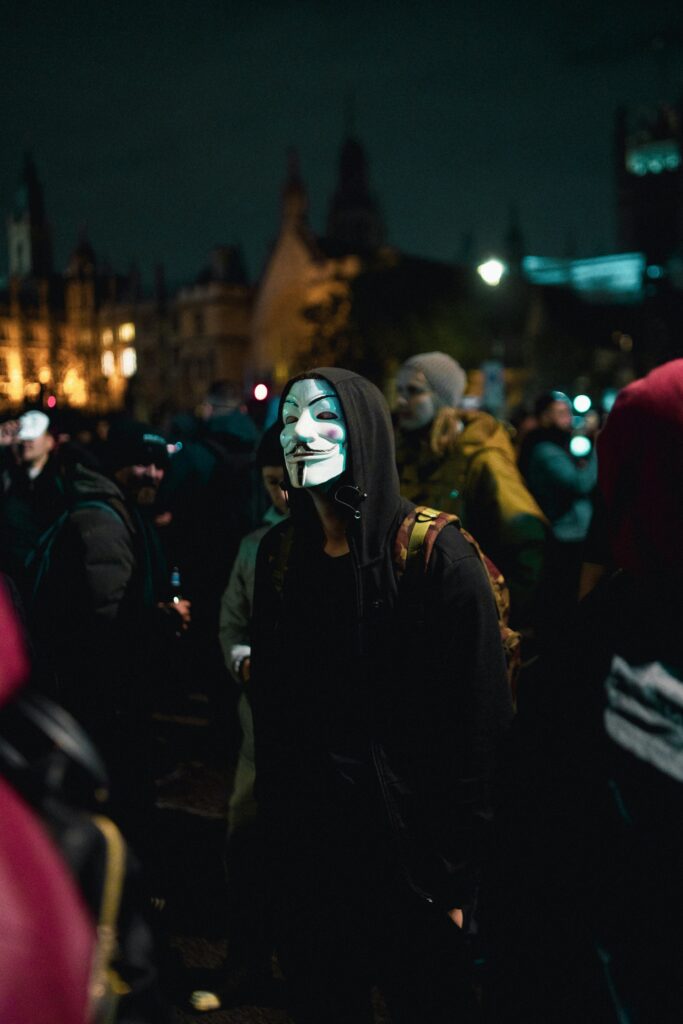
Photographing Protests UK: The 2026 Face Covering Law – A blog worth 5 minutes of your time!
At nine o’clock on Saturday 25 July 2026, a large part of Dover became somewhere you could be arrested for wearing a mask.
Kent Police were expecting a march and a counter protest, and they used a power that was less than a month old to designate the area.
According to the monitoring group Netpol, the zone took in ten council wards, some of them miles from the march itself.
How do Face Coverings affect you as photographer and how you photograph Protests in the UK.
Important: please read
This article is provided for general information only. It is not legal advice and must not be relied upon as legal advice.
I am a professional photographer, not a solicitor or barrister, and I am not qualified to advise on the law. Nothing in this article creates a professional or advisory relationship of any kind between me, Lee Blanchflower trading as Blanc Creative, and any reader.
The content reflects my own general understanding as at August 2026 and relates to the law in England and Wales. The position in Scotland and Northern Ireland differs in a number of respects. Legislation, guidance and case law change frequently, and provisions referred to here may be amended, repealed or brought into force on different dates after publication. Summaries are necessarily simplified and omit exceptions, defences and qualifications that could be important in your circumstances.
You should not take, or refrain from taking, any action on the basis of this article. If you have a specific question or a live problem, take advice from a qualified solicitor and check the current legislation directly at legislation.gov.uk, together with the relevant guidance from the Civil Aviation Authority, the Information Commissioner’s Office and the Crown Prosecution Service.
To the fullest extent permitted by law, I and Lee Blanchflower, accept no liability for any loss, damage, cost or expense arising from any use of, or reliance on, the information in this article, or from any errors or omissions in it. Any links to external sites are provided for convenience only and I take no responsibility for their content or accuracy.
Want to know more about your rights on the street… Then why not head over to our Street Photography Blog for an in-depth guide on your rights as a photographer