Industrial Photography: What It Really Takes to Shoot a Working Site
Industrial photography is the least glamorous and most useful work I do. It is also the work that companies most often get wrong, because they treat it as a favour asked of somebody with a decent camera rather than a job that has to be planned around a live site.
I get asked for industrial pictures by manufacturers, engineering firms, food producers, energy contractors, recycling operators and construction companies.
The brief is almost always the same in spirit.
They need images that show what the business actually does, because the stock library shots on their website look like a different company in a different country, and the phone snaps taken by the operations manager are not usable at any size.
This post is the long version of the answer I give on the phone. It covers what industrial photography is, the different looks it can take, the sectors I shoot, how drone work fits alongside ground level images, and the questions that come up on nearly every enquiry.
What industrial photography actually is
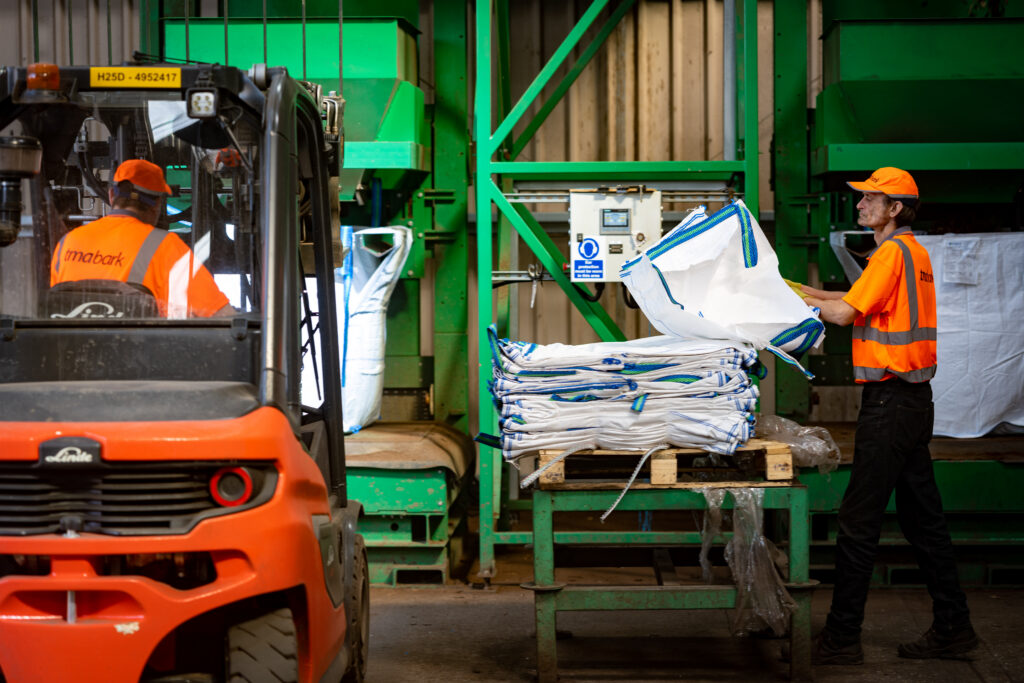
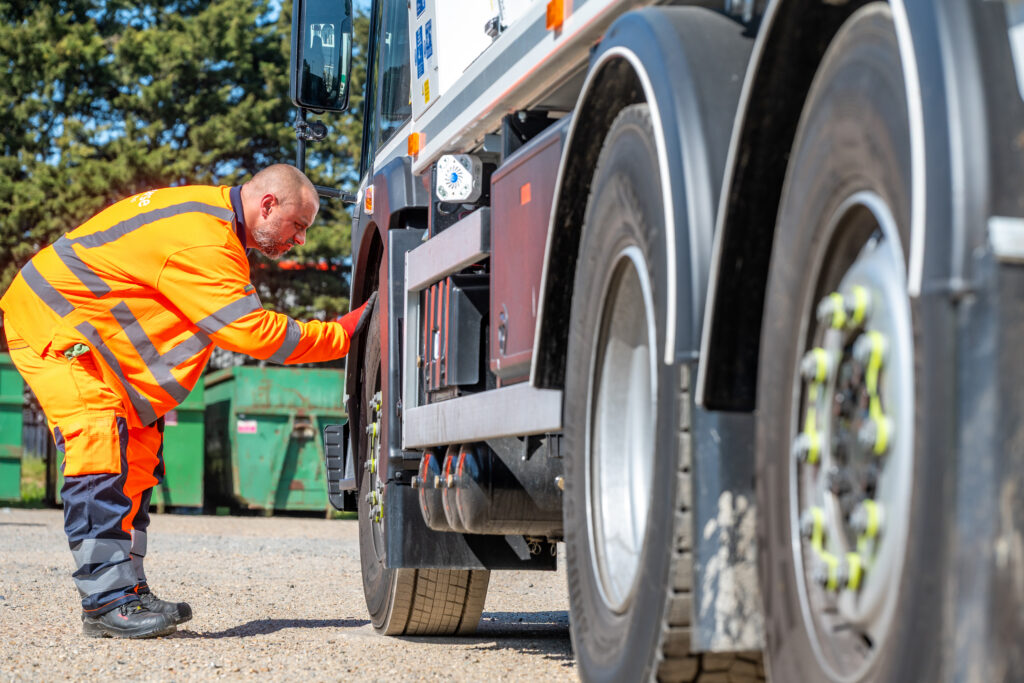
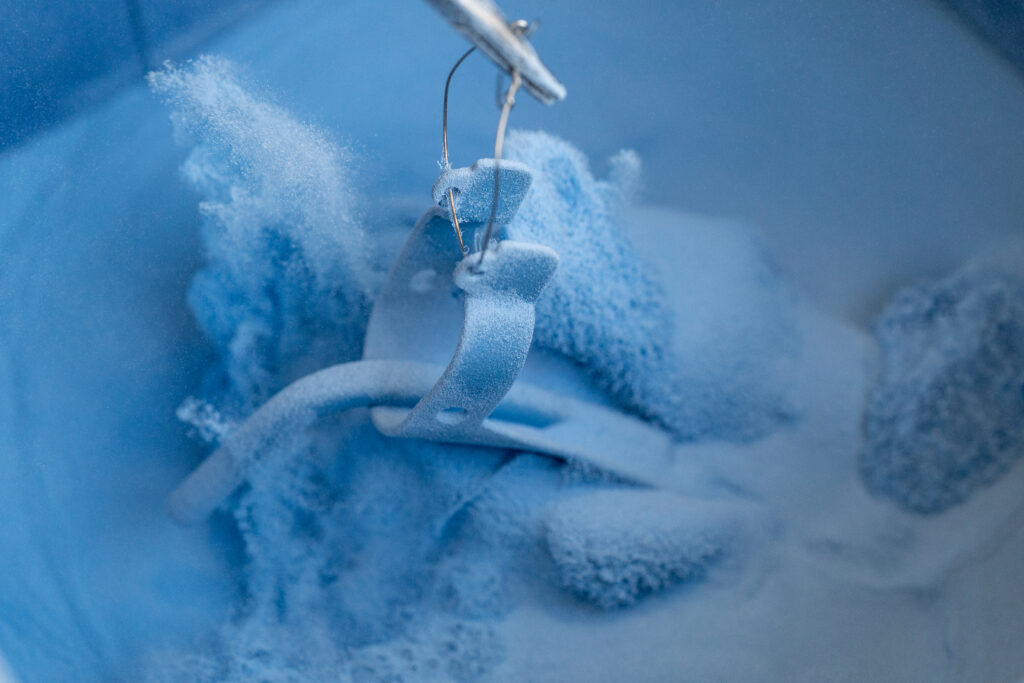
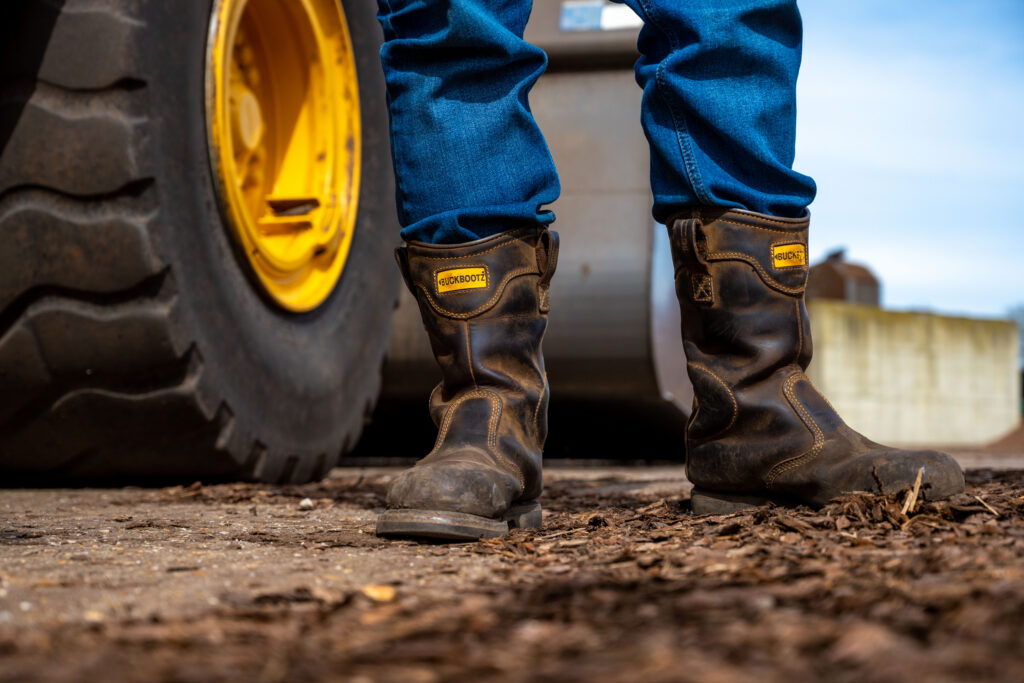
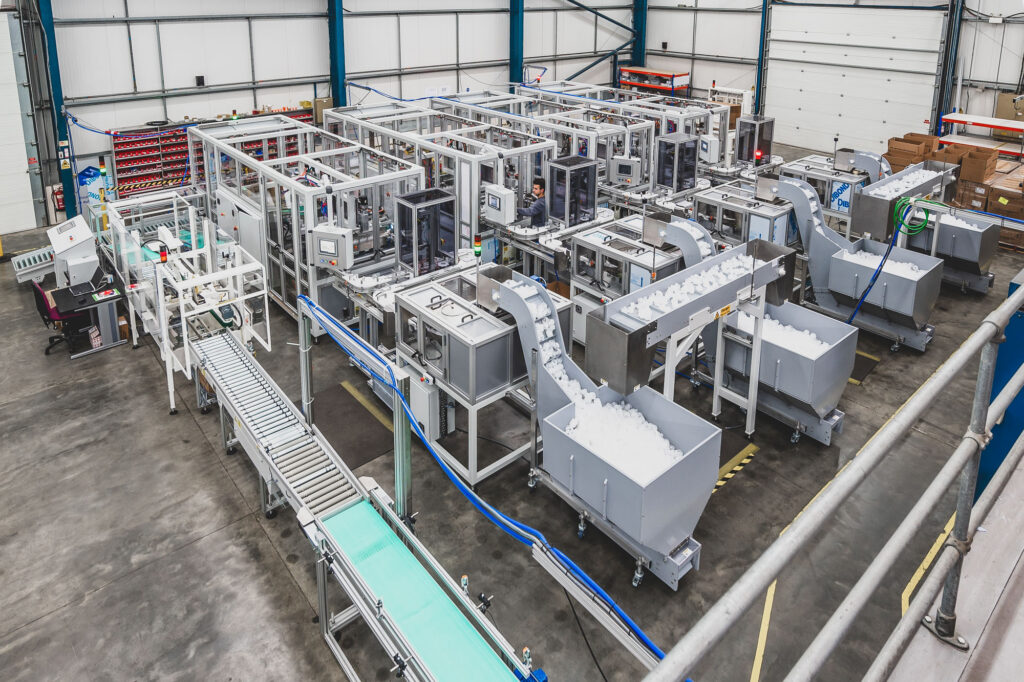
Industrial photography is commercial photography made inside and around working environments. Factories, workshops, plant rooms, cold stores, yards, quarries, construction sites, depots and labs. The subject is a mix of process, machinery, product and people, and the images exist to do a job: win work, explain a capability, support a tender, fill a website, feed a recruitment campaign, or give a PR team something worth sending out.
It is not a portfolio exercise. Nobody commissions a factory shoot because they want art on the wall.
They commission it because a buyer, an investor, a regulator or a candidate is going to look at their website and decide something about them in about four seconds.
The practical difference between industrial photography and most other commercial work is that the site does not stop for you.
Production runs. Forklifts move. Doors open onto compressed air, hot metal and noise.
Industrial photography has to fit around all of that, safely, without becoming the reason a line went down.
That single constraint shapes everything about how the work is planned and shot.
The two looks: moody and dark, or clean and clinical Industrial photography
Most industrial briefs land somewhere between two very different visual approaches, and choosing the right one matters more than any technical decision made on the day.The dark, moody treatment.
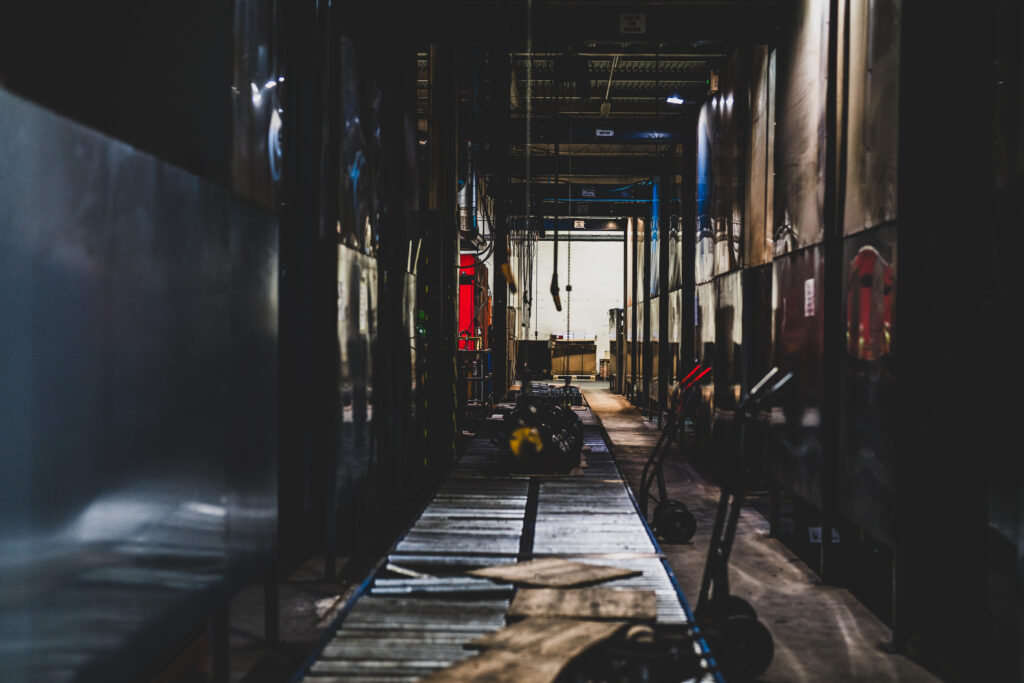
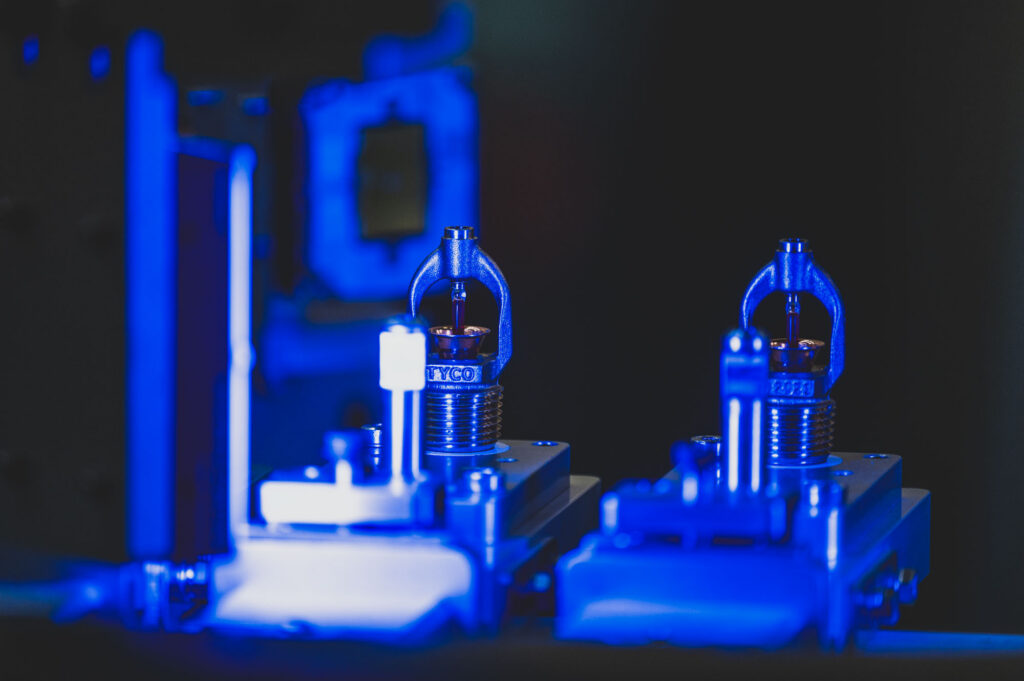
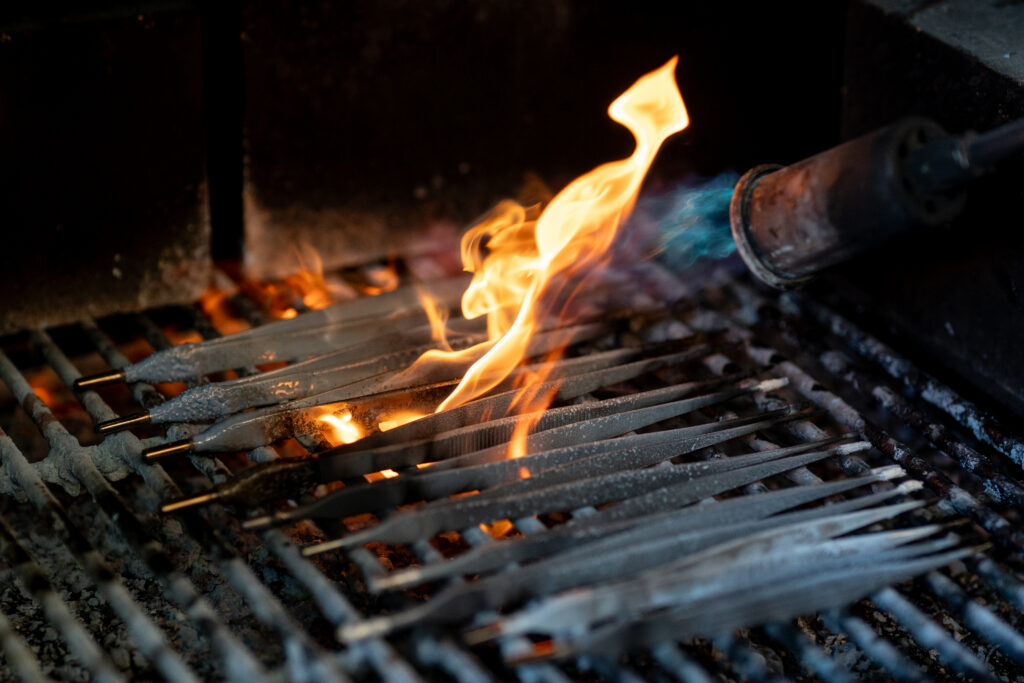
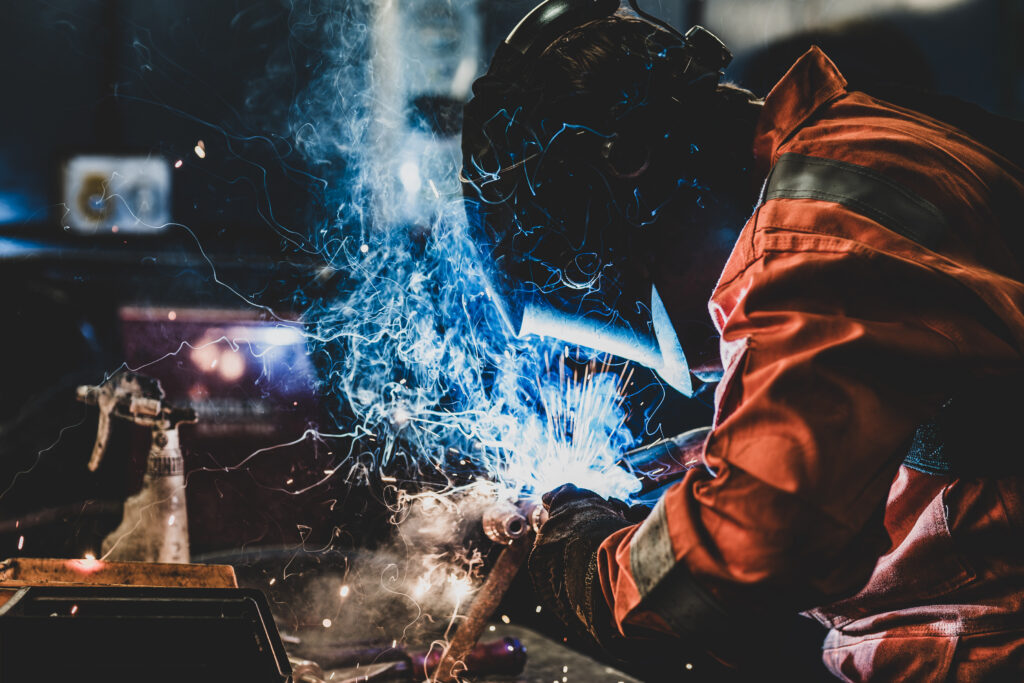
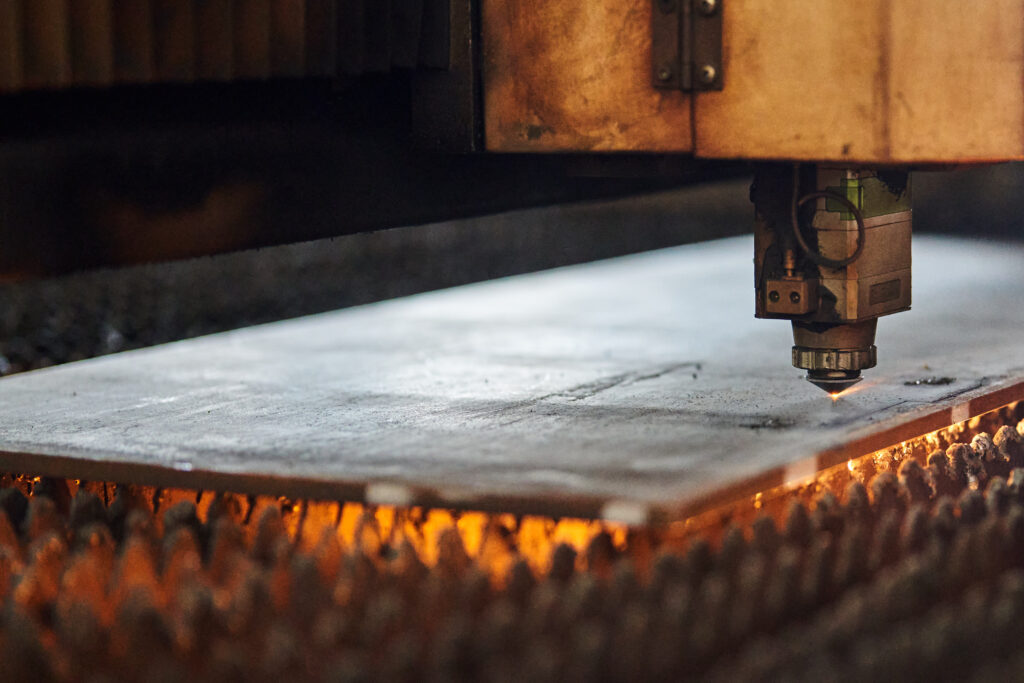
This is the look people picture when they think of heavy industry. Deep shadow, hot pools of light, sparks against a black background, steam catching a shaft of window light, the glow of a furnace or a welding arc doing the lighting for you. It suits fabrication, foundries, engineering, marine work, energy and anything where the process itself throws out light.
What makes it work is restraint. The temptation is to light the whole scene so everything is visible. That kills it. Industrial spaces are dramatic precisely because they are pools of light in large dark volumes, and the job is to use that light and shadow to shape the picture rather than to flatten it.
would rather find the one place in a workshop where the light does something interesting than try to make an entire bay look evenly lit.
Worth saying plainly: lights have to be carried, rigged, powered and made safe at every position, and on a live site that is often neither practical nor welcome. A lot of the strongest industrial images come from reading the light that is already there and building the frame around it.
The clean, clinical treatment
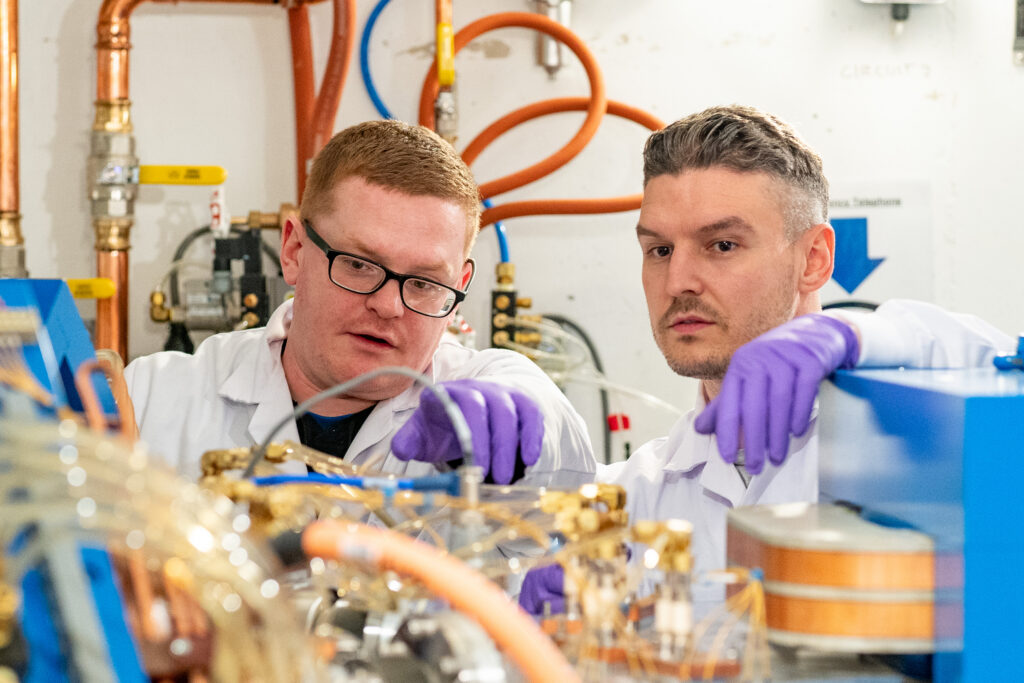
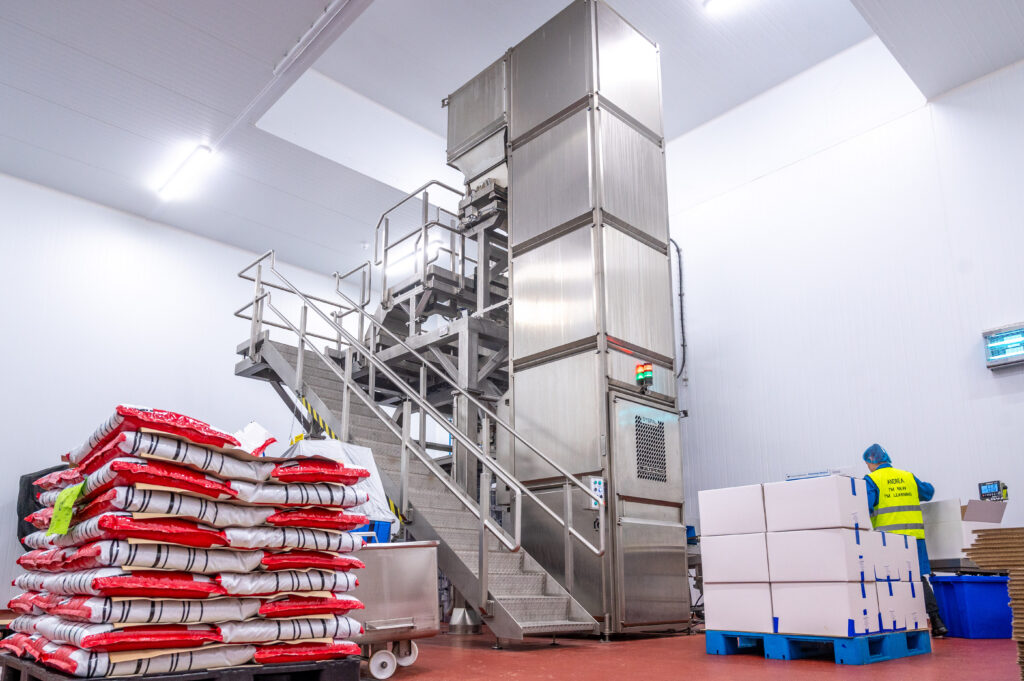
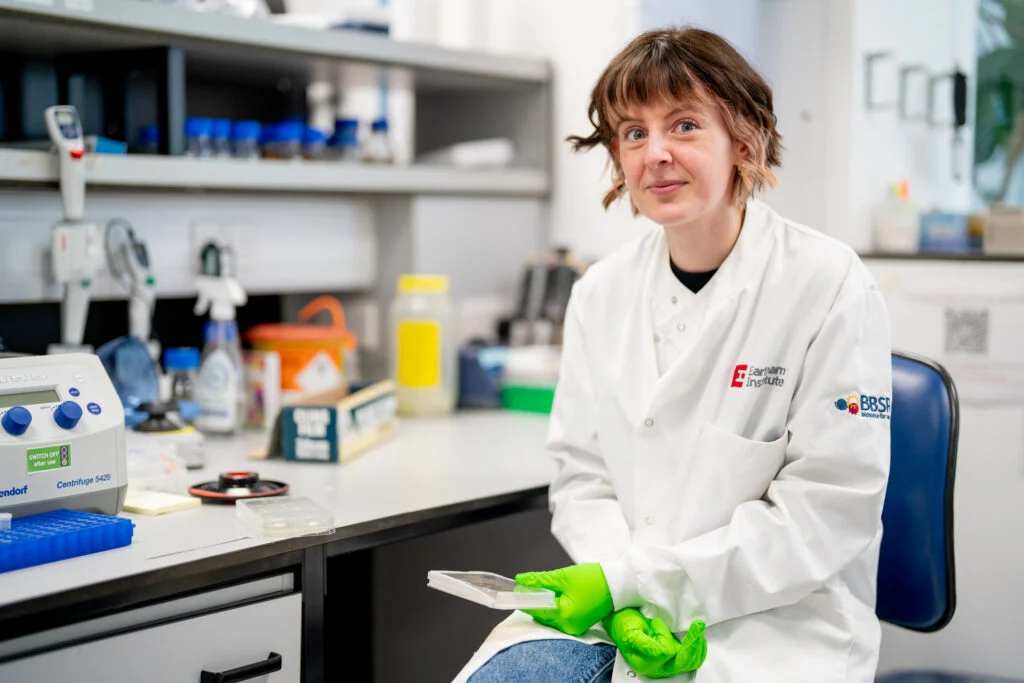
The opposite end is bright, controlled and precise. Food production, pharmaceutical and life science facilities, cleanrooms, medical device manufacturing, electronics assembly, laboratories and modern warehousing all tend to want this. White surfaces, stainless steel, clear glass, high hygiene standards, everything legible.
Here the aim is accuracy. Whites need to stay white across mixed lighting, stainless steel needs to look like steel and not a mirror full of reflections, and the frame needs to be tidy because clutter reads as poor housekeeping to anybody auditing the images. Clinical work is slower than it looks. Most of the time goes on composition, angle and reflection control, not on the exposure.
Plenty of jobs need both. A food manufacturer might want a clean, bright production hall for the website and a darker, more atmospheric set of engineering images for the careers page. There is no rule that a company only gets one visual language.
The sectors, and what each one needs
Industrial photography are broad word. In practice these are the environments that come up most, and they all ask for something slightly different.
People are the part that sells
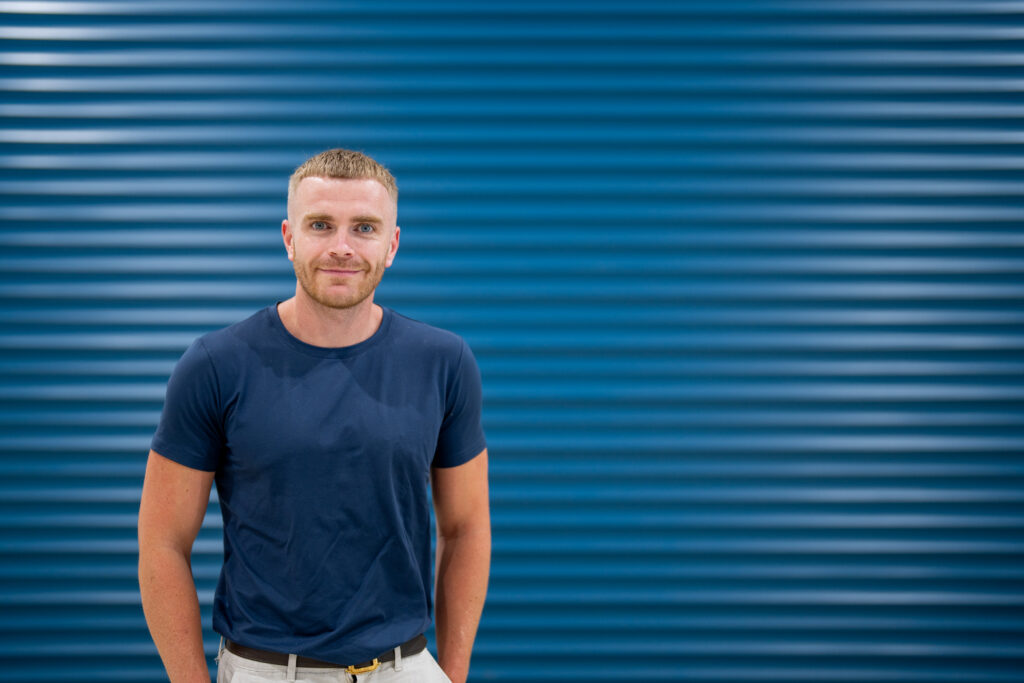
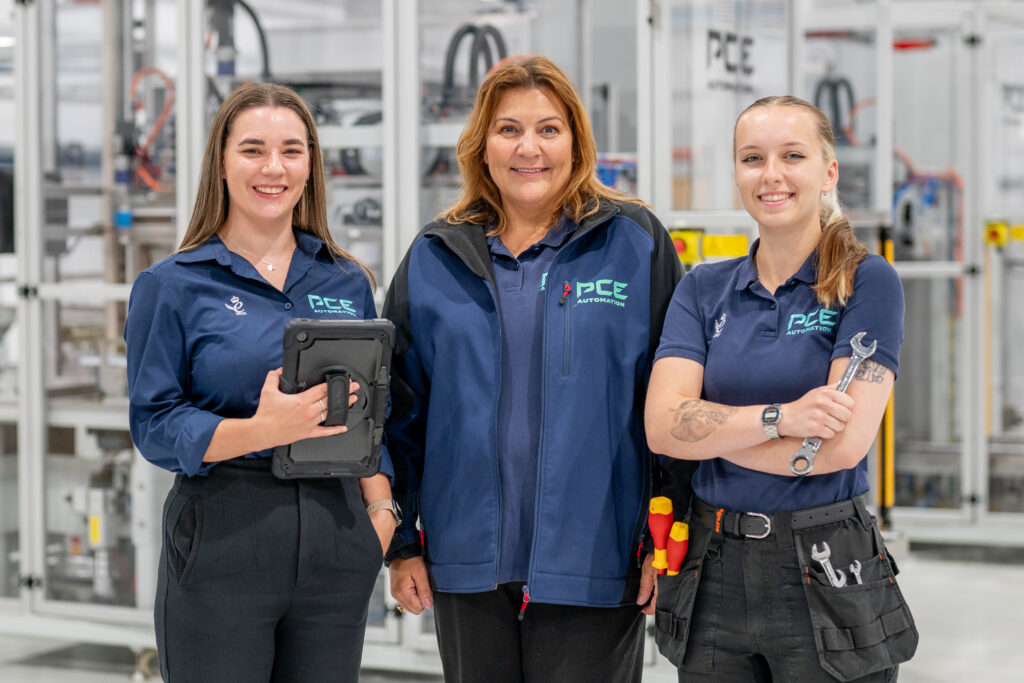
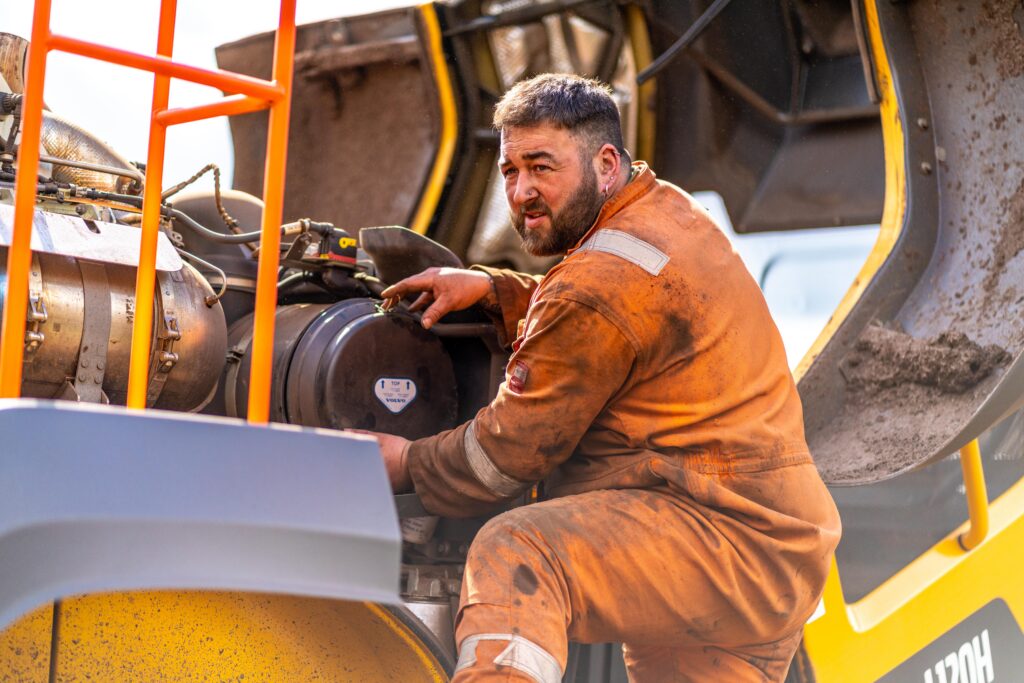
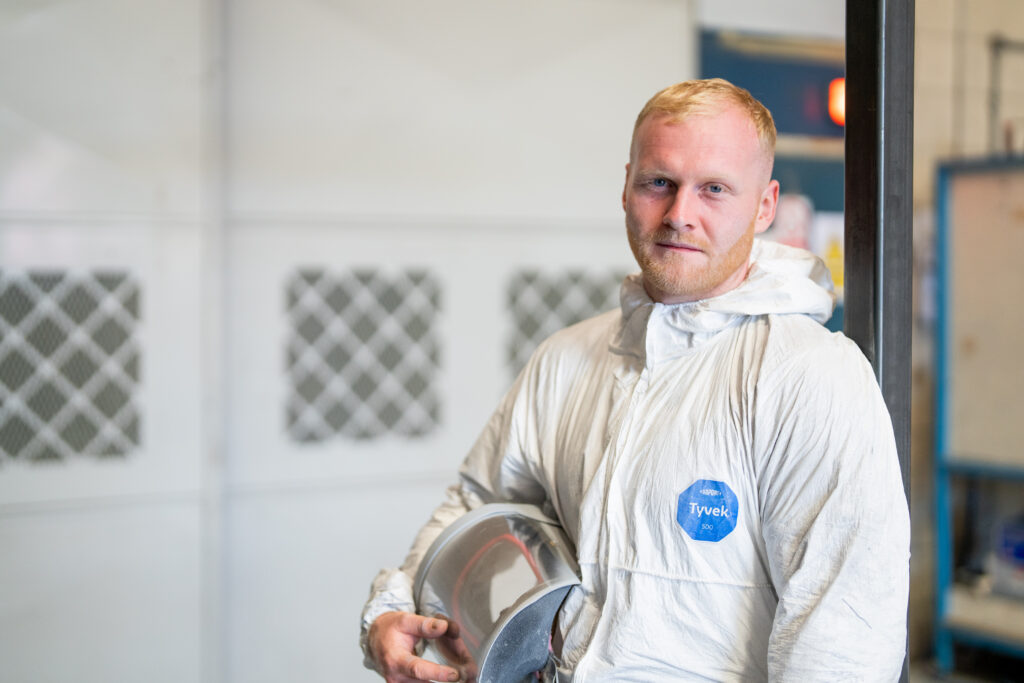
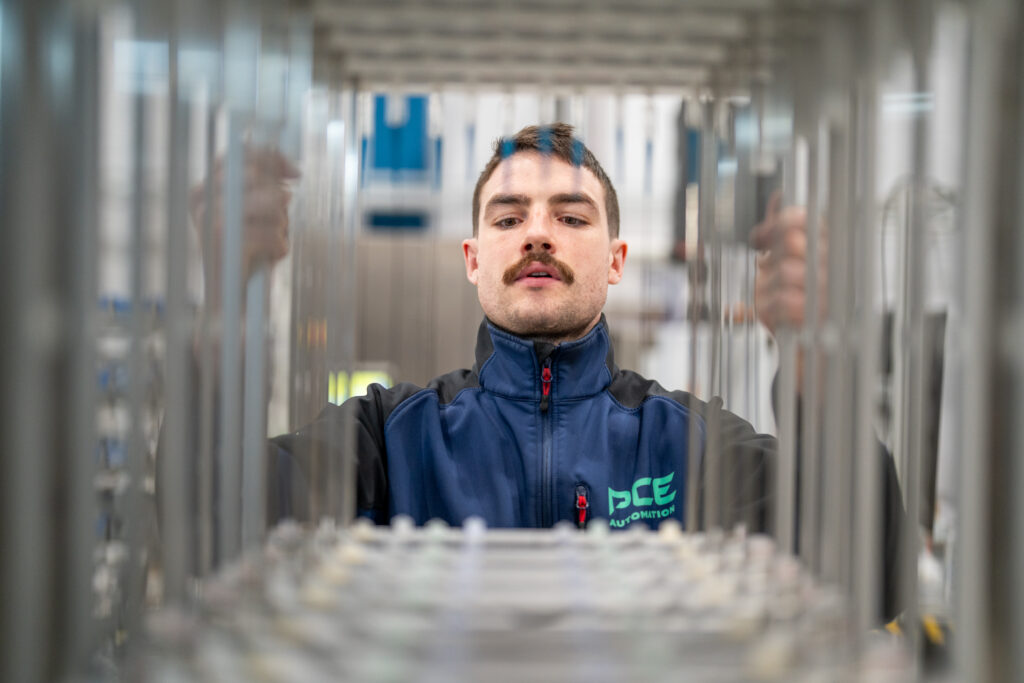
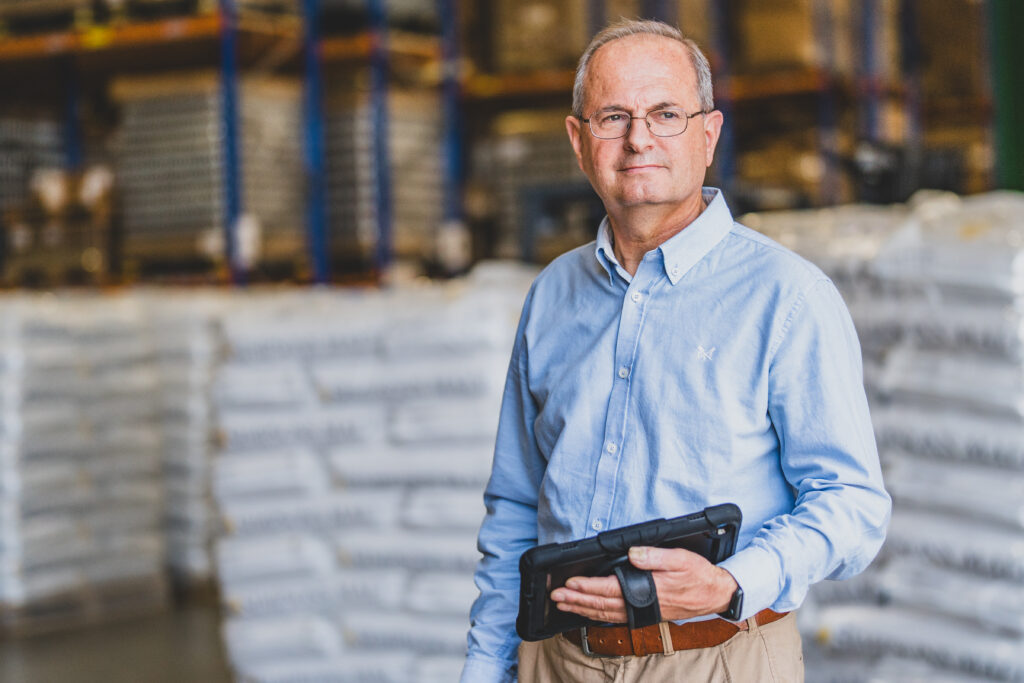
Machinery photographs well. People photograph better. Almost every industrial client I work with ends up using the images of their staff more heavily than the images of their kit, because that is what makes a company look like somewhere you would want to buy from or work for.
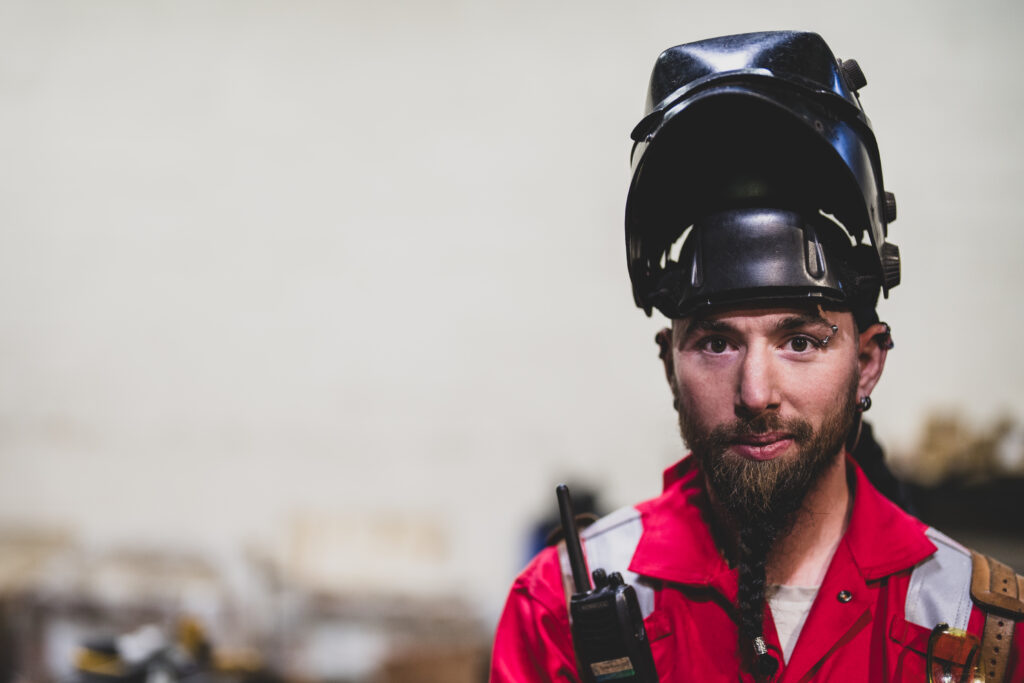
That means environmental portraits at the workstation, hands at work, teams in the yard, and the small unposed moments in between.
If recruitment is anywhere on the agenda, and in this sector it usually is, those frames matter more than the plant list. I will normally build a short portrait set into an industrial day rather than treat it as a separate booking, because everybody is already on site and already in PPE.
Outside the building: drone and exterior work
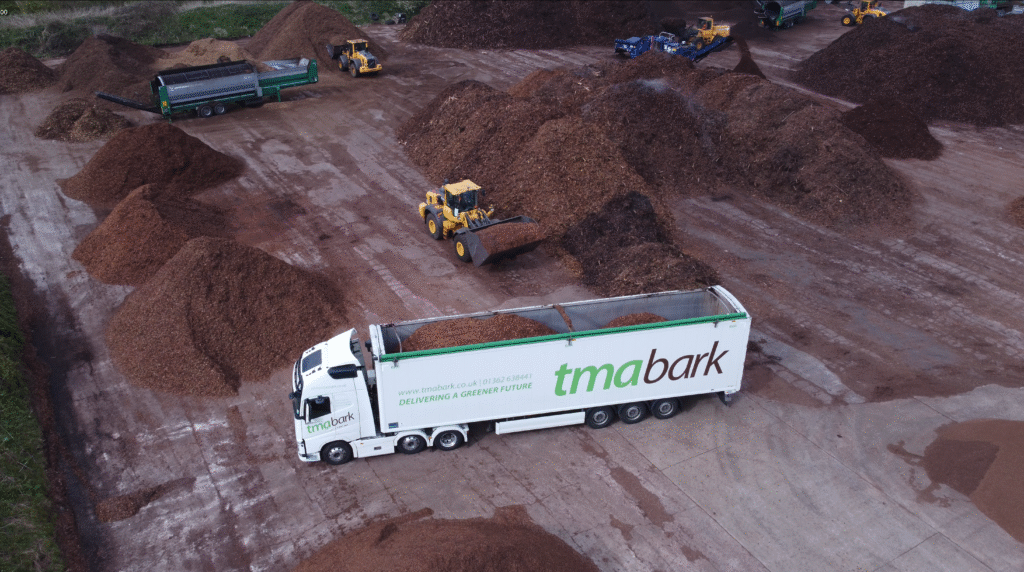
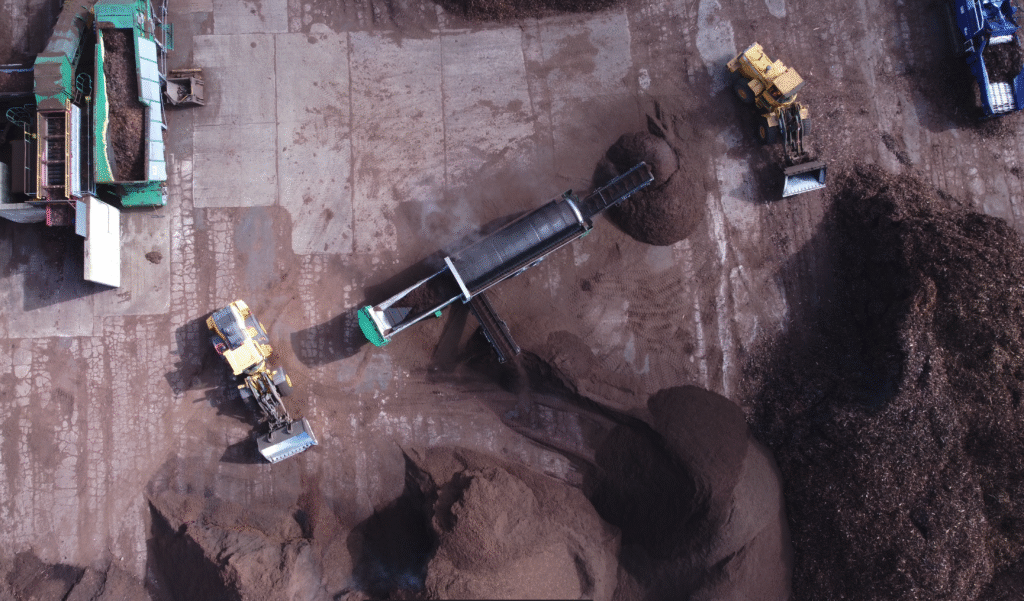
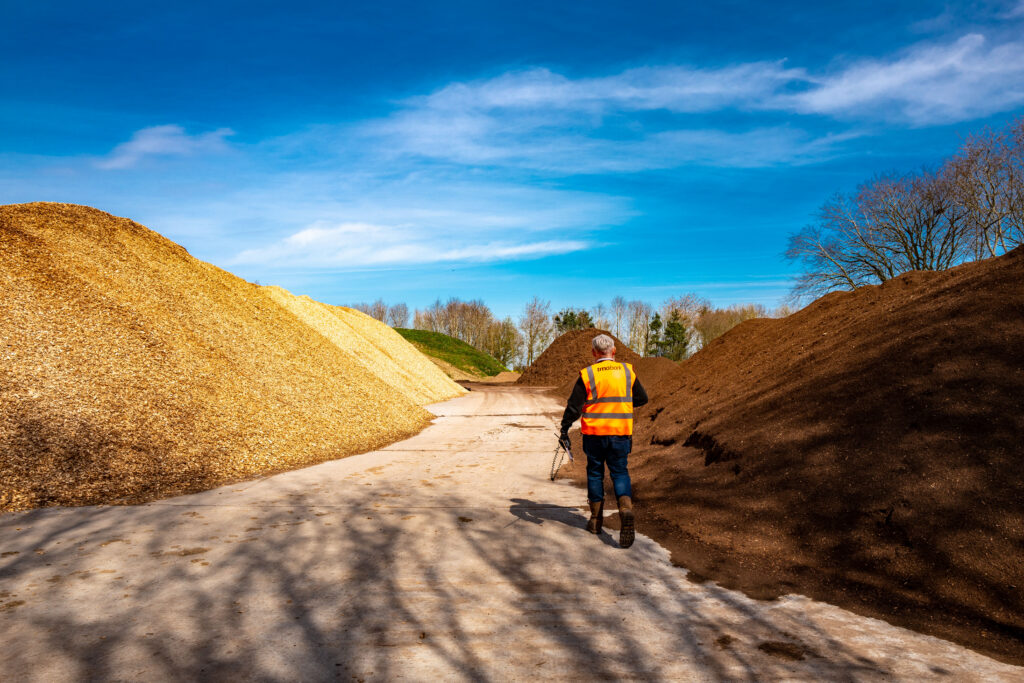
Half of an industrial story happens outside. Site footprint, yard layout, roof plant, storage, access routes, proximity to road and rail, and the sheer scale of a facility are all things you cannot show from ground level.
I am a CAA registered drone operator and I carry the operator and flyer registrations, insurance and site specific paperwork for every flight. On industrial sites the flight planning is the job. Airspace, overflight of people and property, neighbouring premises, tanks, stacks, overhead lines and site permissions all get worked out before anything leaves the ground, and a flight risk assessment is produced for the site in question. If a flight cannot be done safely and legally, it does not happen, and I will say so at enquiry stage rather than on the day.
Elevated exterior images also work hard beyond marketing. Progress records, insurance documentation, planning submissions and asset records all come out of the same flight.
Working around a live site
This is where industrial photography is either straightforward or a nuisance, and it comes down to conduct rather than cameras.
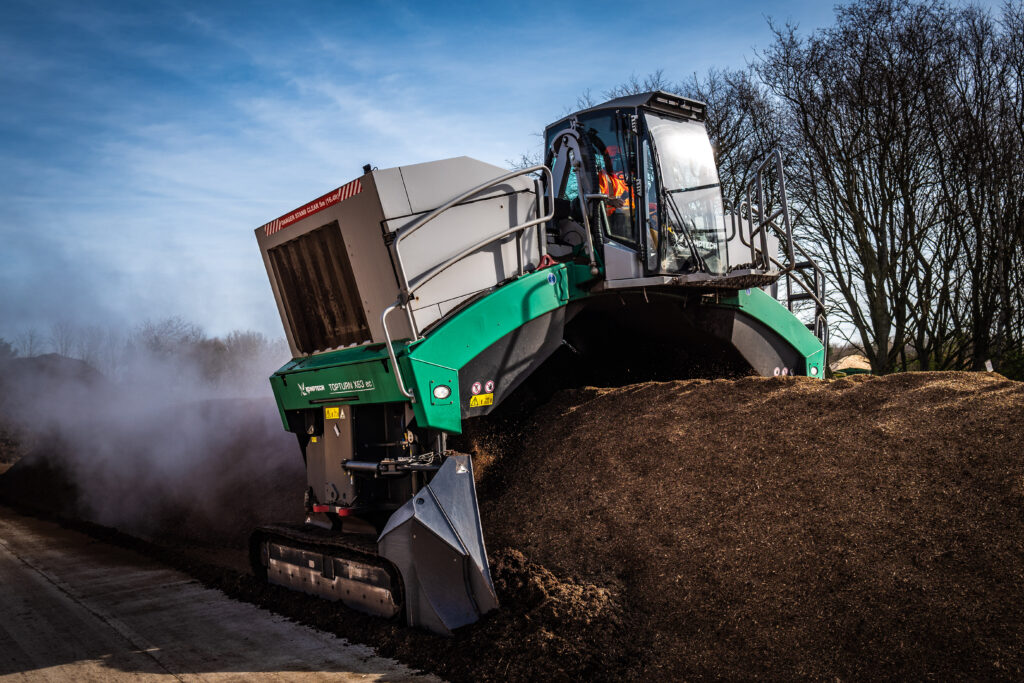
I turn up with my own PPE, sign in, do the induction, listen to the site rules and follow them. I don’t step over barriers for a better angle, I do not ask an operator to do something unsafe for a picture, and I do not put a lens where it interferes with a process.
I carry public liability insurance and can provide risk assessments and method statements in advance where a site requires them, which many do.
Some of that comes from my background before photography, which was policing in Norfolk, finishing as a sergeant.
That is not a photography credential, but it did teach me to read a working environment quickly, to take direction on site without argument, and to write a risk assessment that a safety officer will actually accept.
On industrial jobs that is worth more than any piece of equipment.
If your site needs RAMS, insurance certificates, a signed contractor pack or a specific induction before I attend, send it over at enquiry stage and it will be completed before the shoot date rather than at the gate.
The sectors, and what each one needs
Industrial Photography are broad words. In practice these are the environments that come up most often, and although the principles carry across all of them, each one asks for something slightly different from the day.
Engineering, machining and fabrication
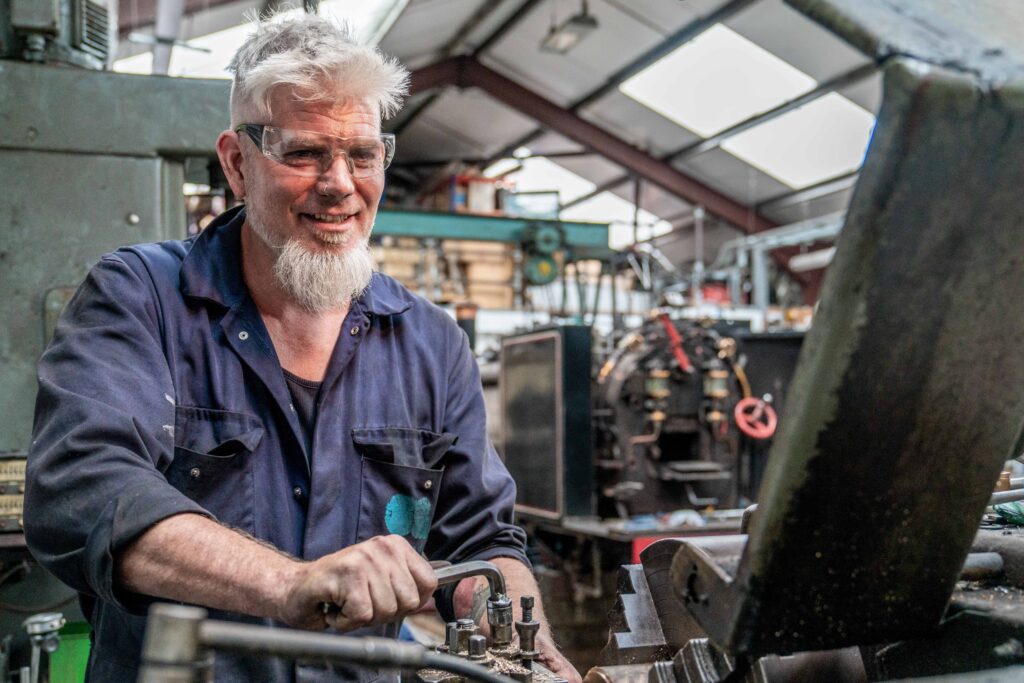
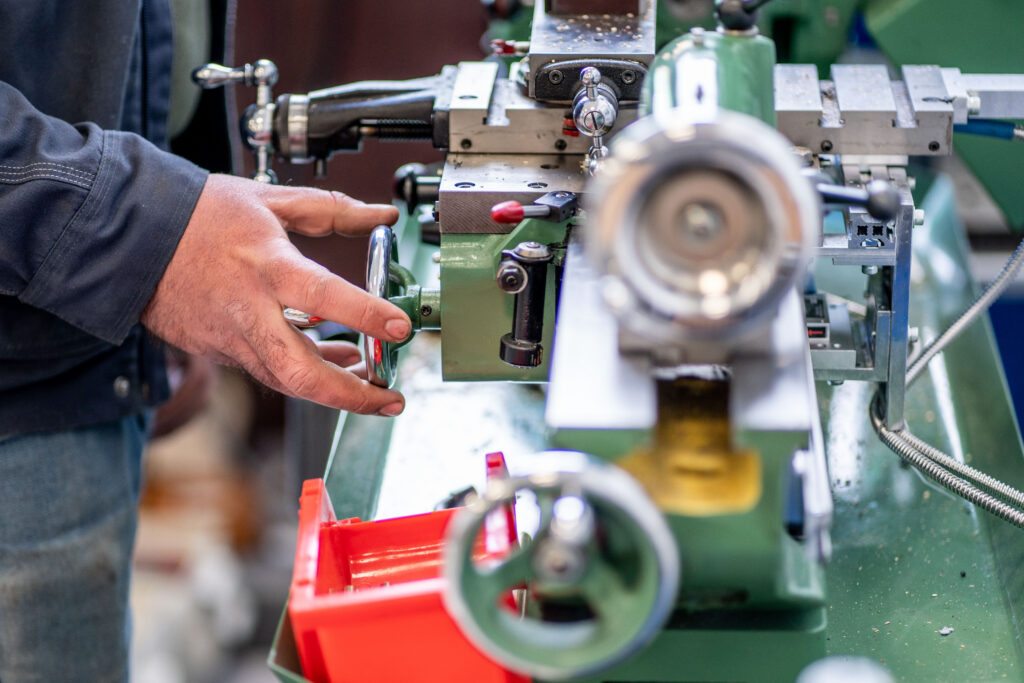
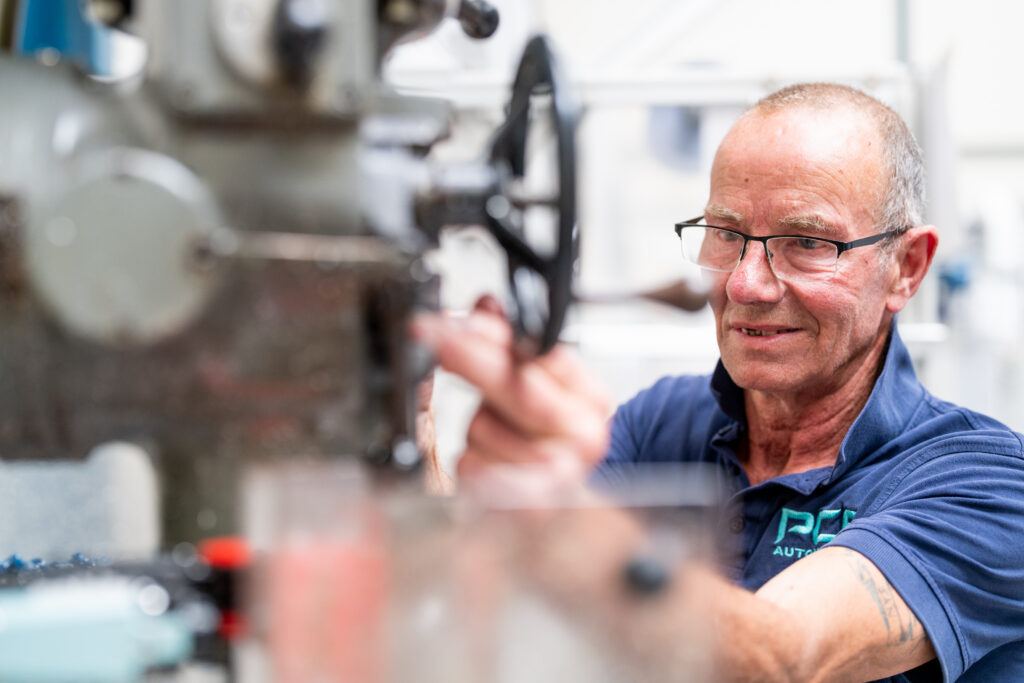
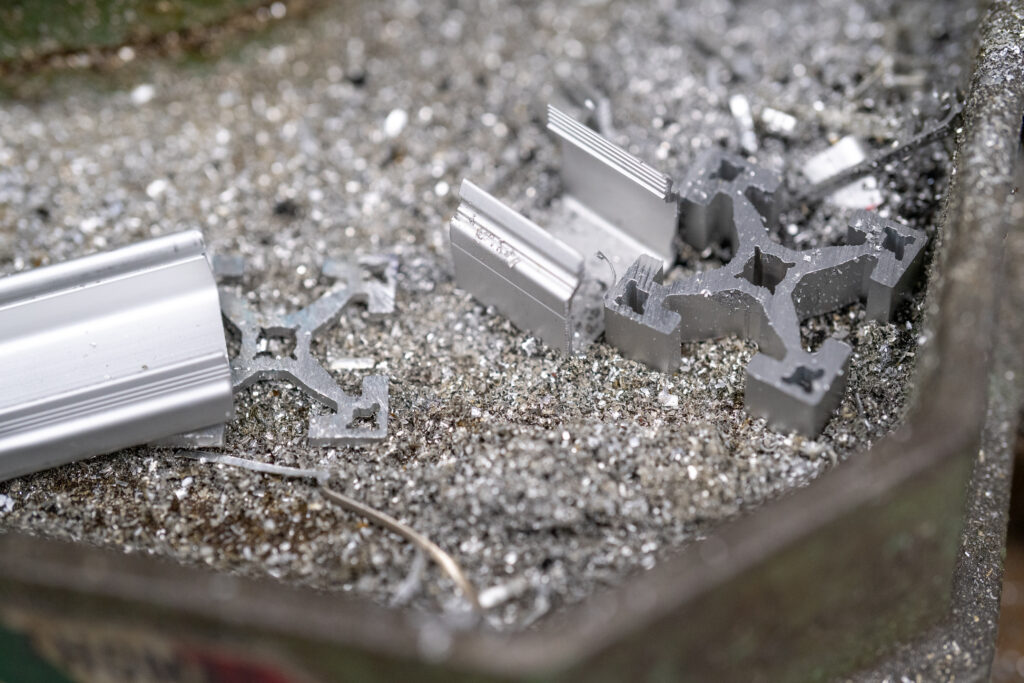
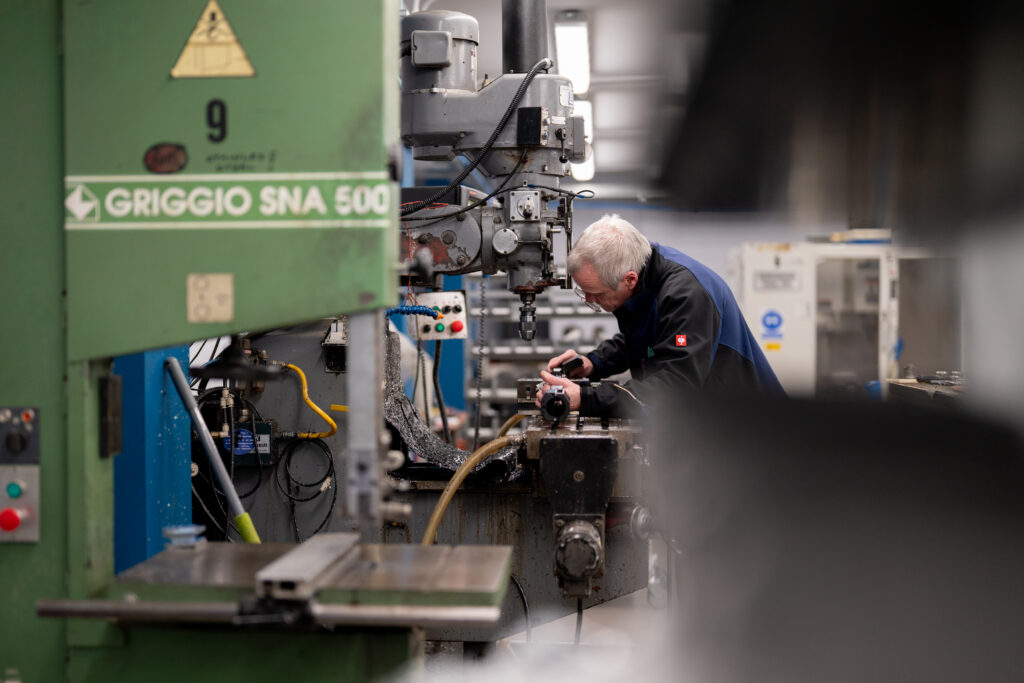
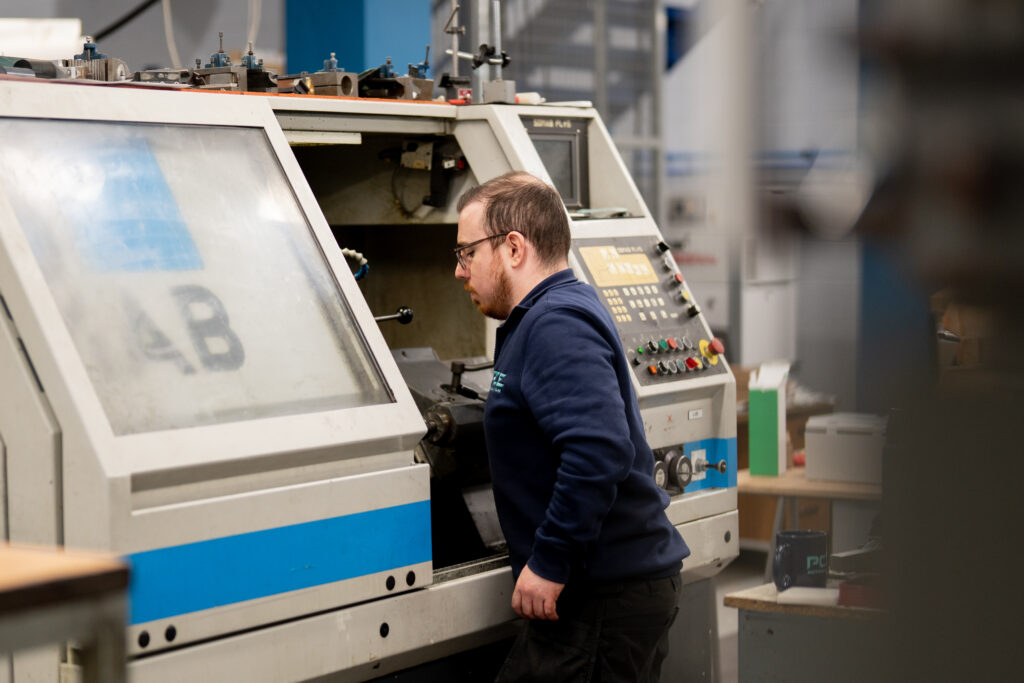
CNC machining, turning, milling, press work, sheet metal, jigs, welding bays and assembly. This is the backbone of the sector and the environment I photograph most.
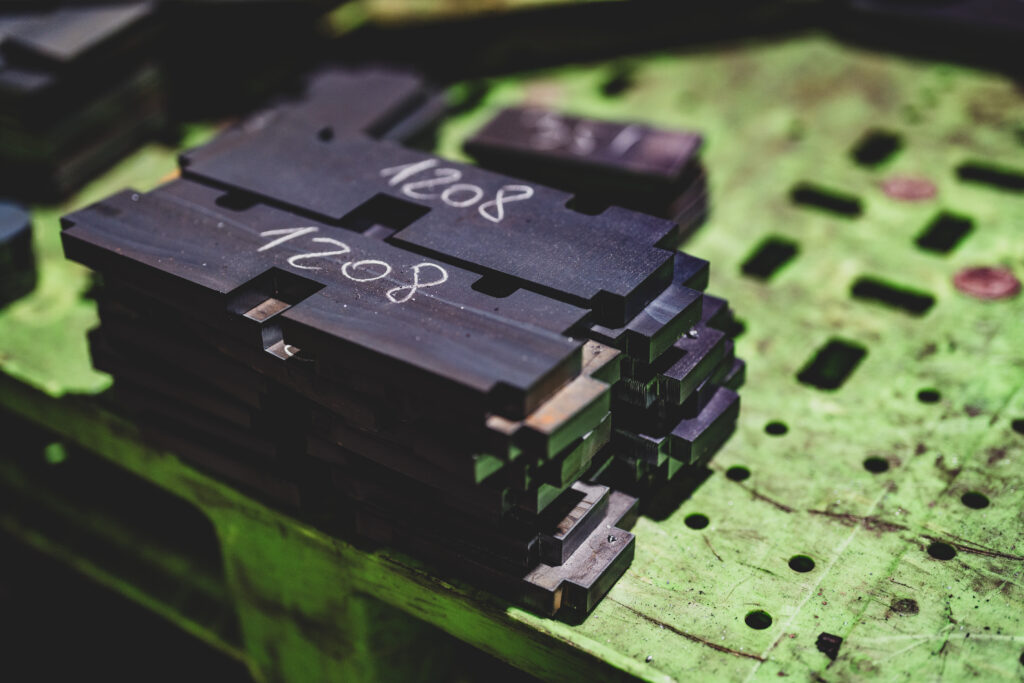
The pictures that earn their keep are close in. The cutting edge in contact with the material, the swarf curling away, coolant catching the light, a micrometer or a gauge in a hand, a part being inspected under a lamp. Buyers looking at a machine shop want evidence of precision, and precision lives in the detail rather than in a wide shot of an industrial unit.
Wide shots still matter, but for a different reason. They show capacity, the number of machines, the size of the floor and whether the place looks organised. A customer deciding whether you can take on their volume is reading the wide shots. A customer deciding whether you can hold their tolerance is reading the close ones. Most engineering firms need both, and they tend to sit in different places on the website.
The part almost everybody forgets is quality. The inspection bench, the CMM room, the certification and traceability side of the operation are all part of what a customer is buying, and they are rarely photographed. If your accreditations are a selling point, the images should show the function behind them rather than leaving a logo in the footer to do all the work.
Fabrication brings its own opportunities. Large assemblies, structural steel, jigs and finished units in the bay give you scale and geometry that photograph beautifully, and they are worth capturing before the item leaves, because once it has gone it has gone.
Welding and hot work
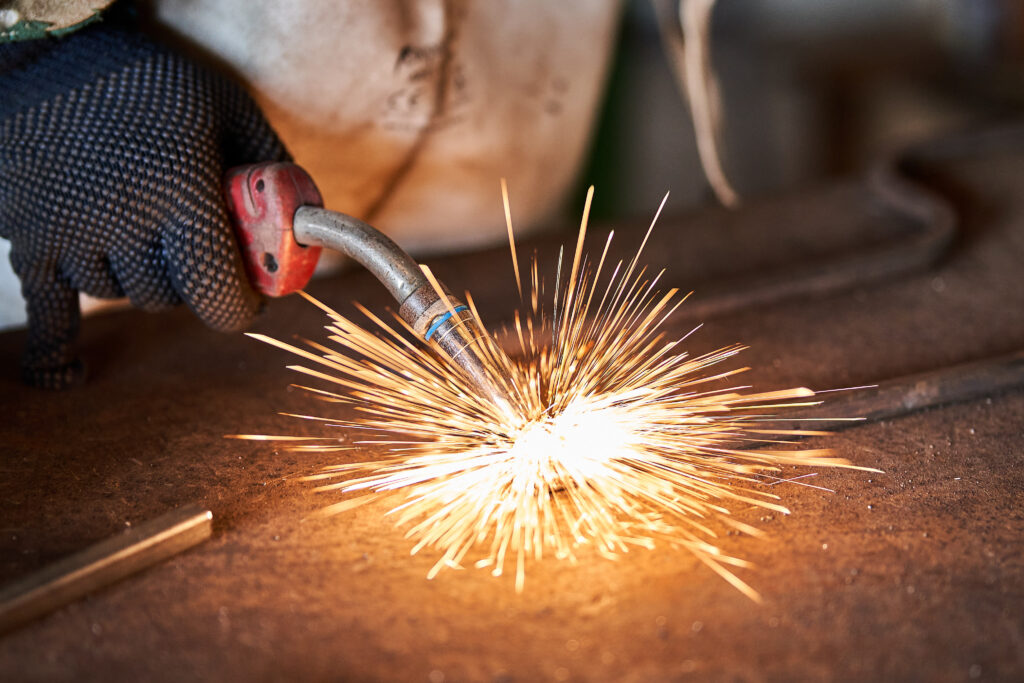
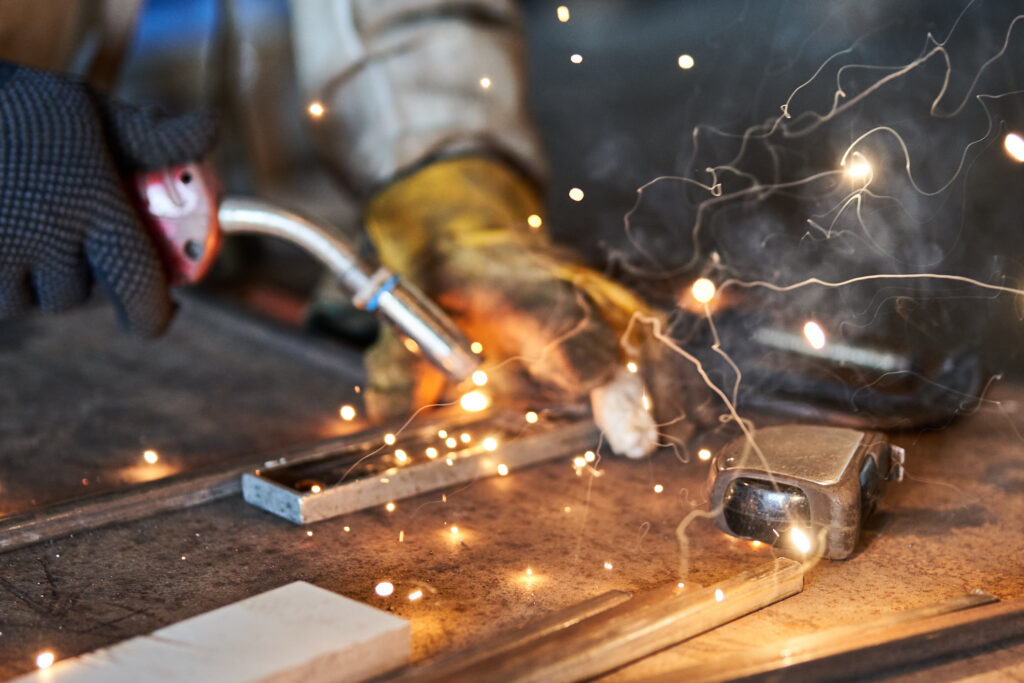
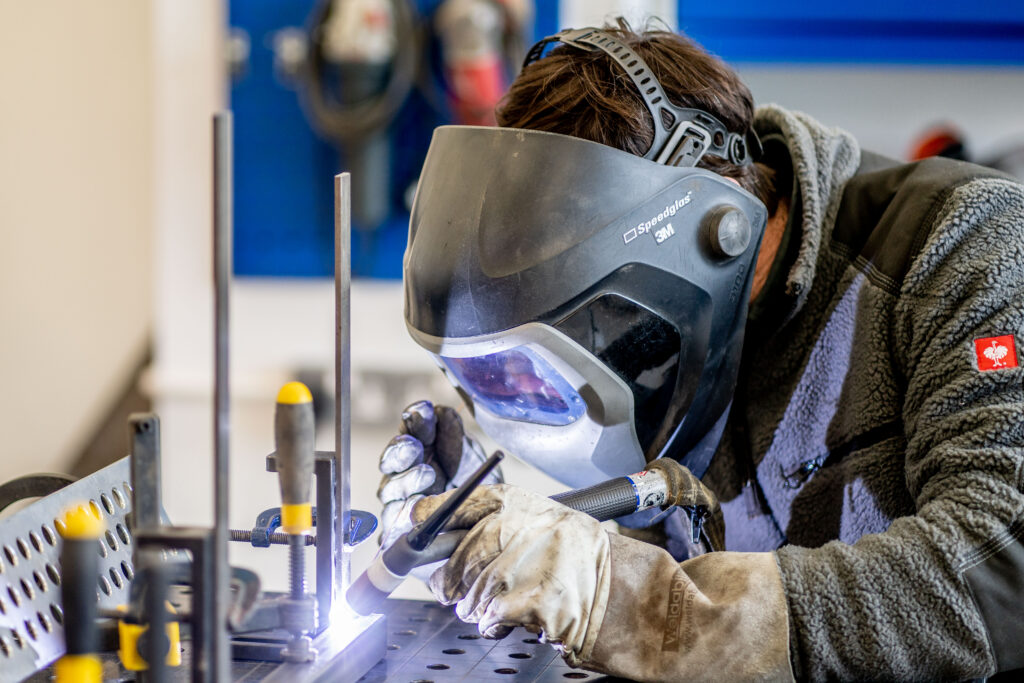
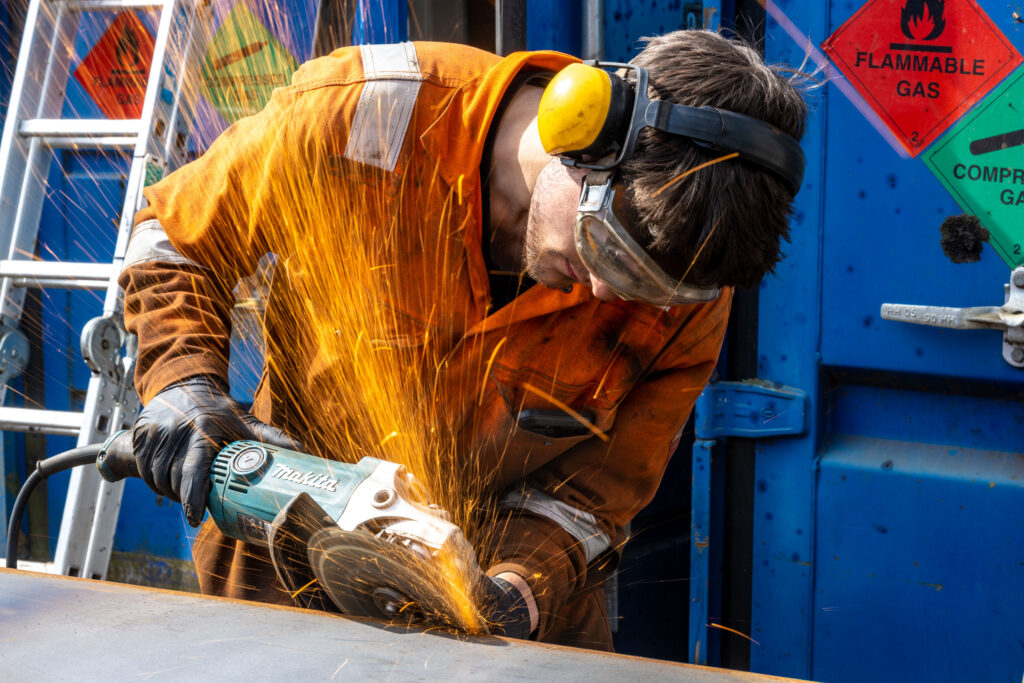
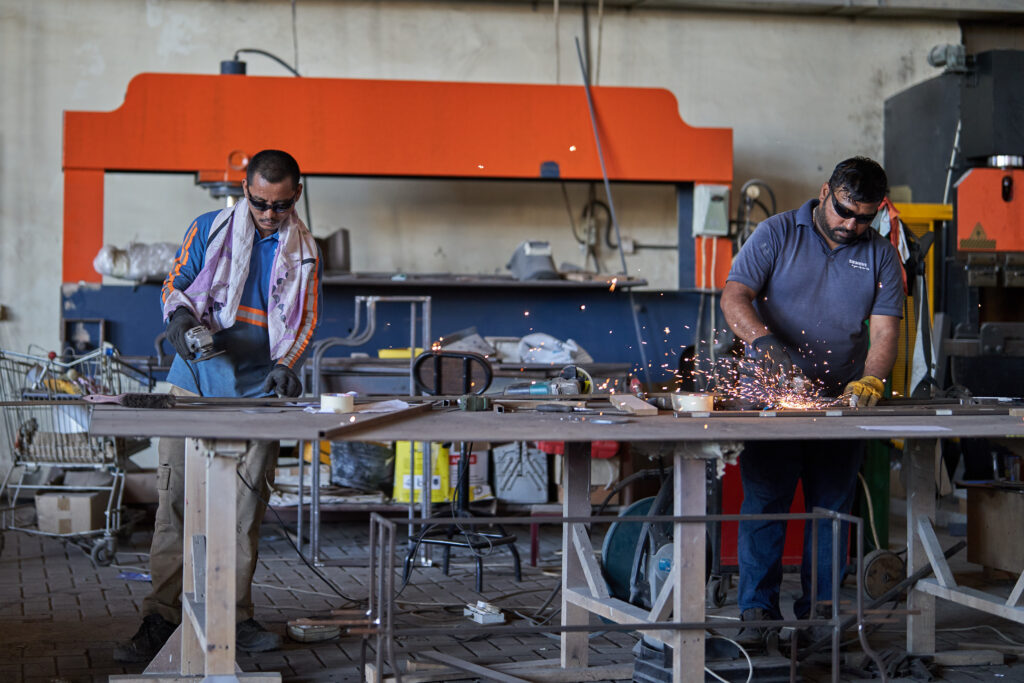
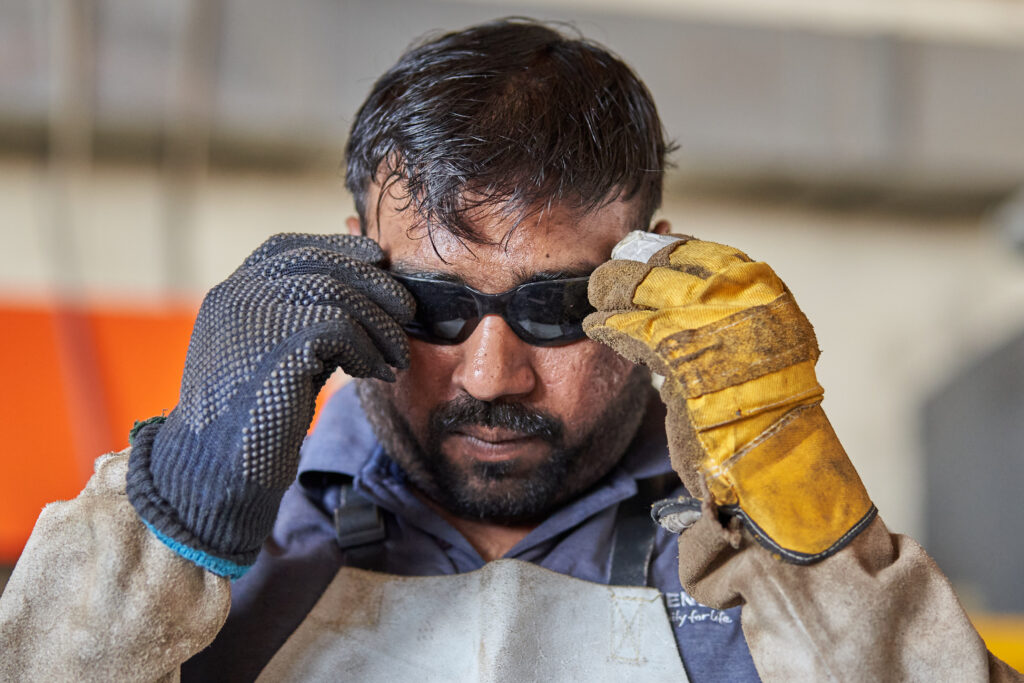
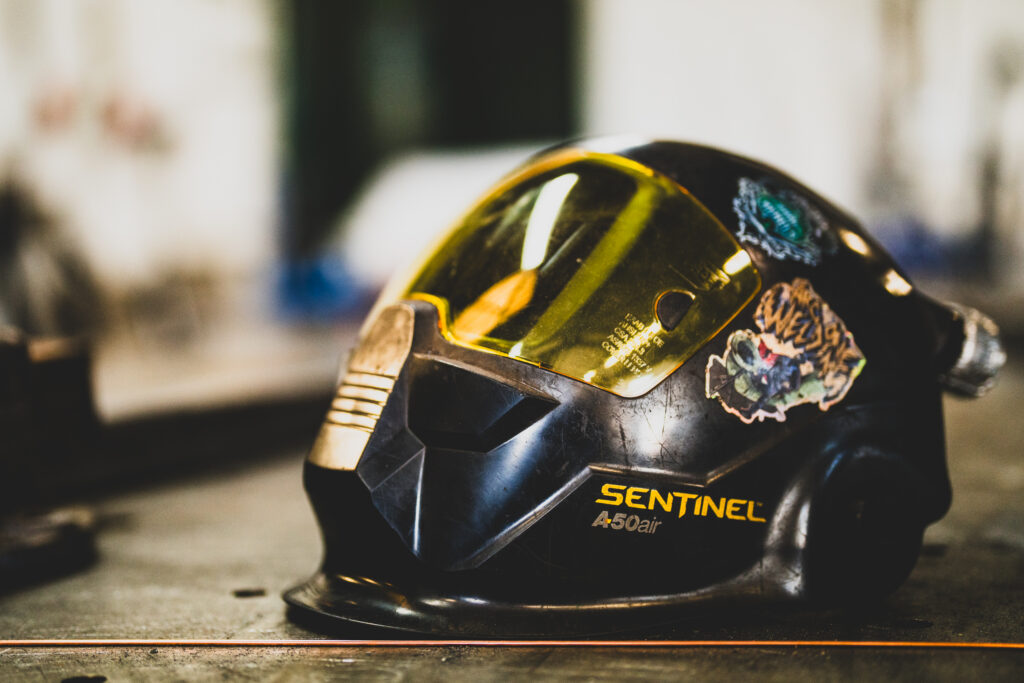
Welding photography is its own discipline, because the arc is many times brighter than everything else in the frame. Done carelessly you get a white blob in a black room and no useful information at all.
Done properly you hold detail in and around the arc, keep the trail of sparks, and still read the welder, the seam, the jig and the workshop behind them.
It is one of the most requested images in the entire sector and one of the most commonly botched, which is exactly why a good one stands out so much. Fabricators tend to get years of use from a strong welding set, spread across the homepage, capability pages, recruitment adverts, exhibition graphics and social content.
It is one of the few industrial images that works as well at three metres wide on a stand as it does as a thumbnail.
The practical side matters just as much as the technical side. Hot work areas have screens, fume extraction and restricted approach distances for a reason, and eye protection is not optional for anybody in the vicinity, photographer included.
The frame gets planned with the welder and the supervisor rather than around them, and the welder decides when they are ready to strike the arc.
There is more to hot work than welding, too. Grinding, cutting, forging, heat treatment and anything involving molten material all give you light, sparks and heat haze that the camera can use. If your workshop has a process that glows, that is your homepage image and it is worth building the shoot around it.
Food and drink production – Industrial Photography
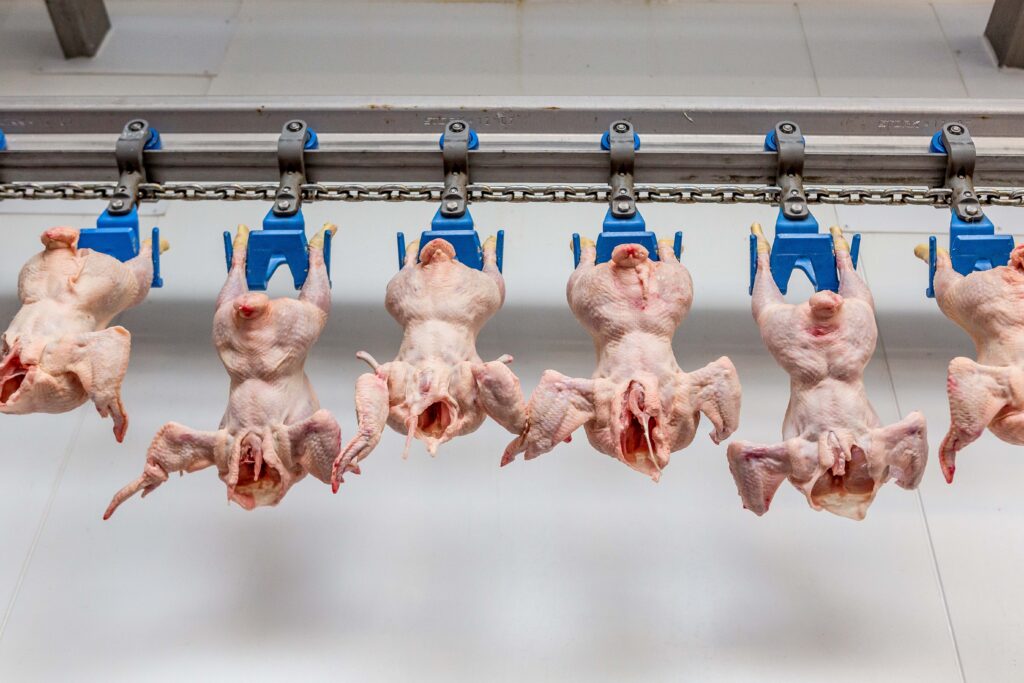
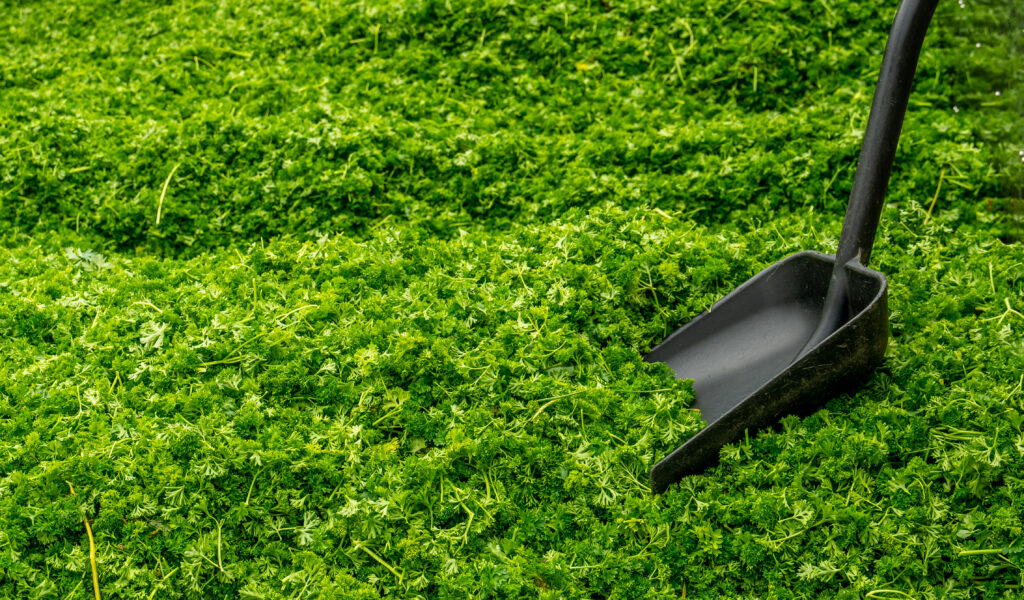
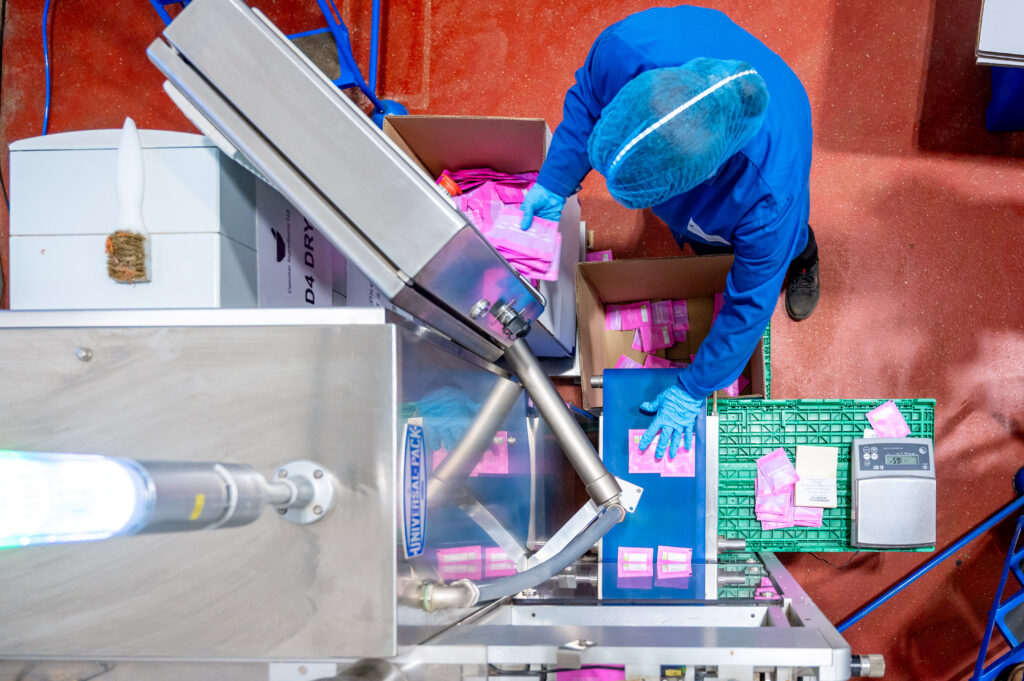
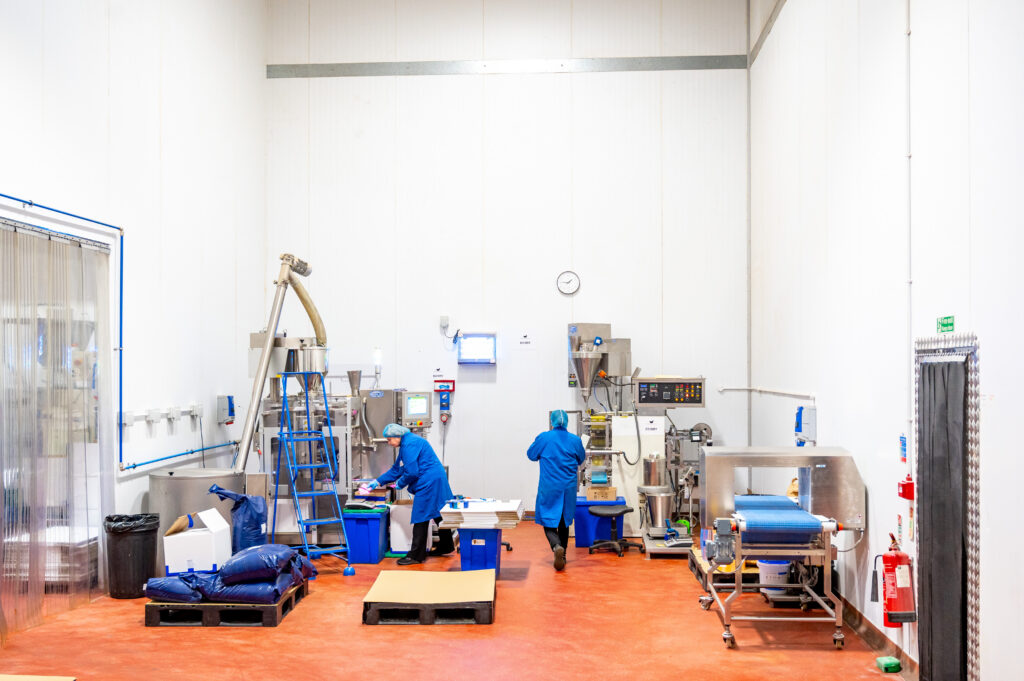
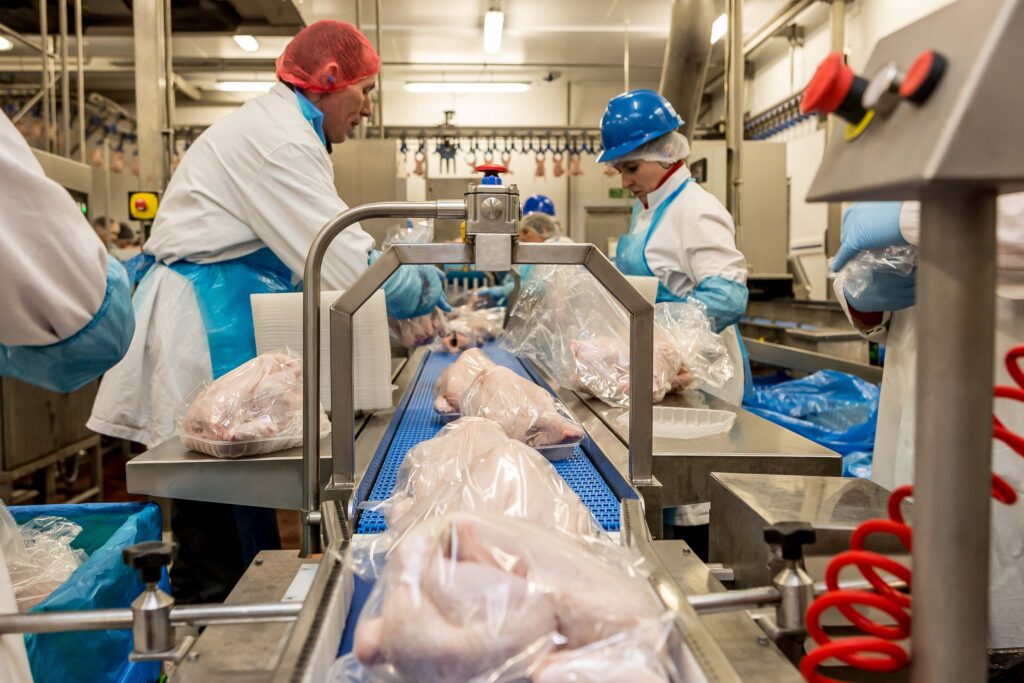
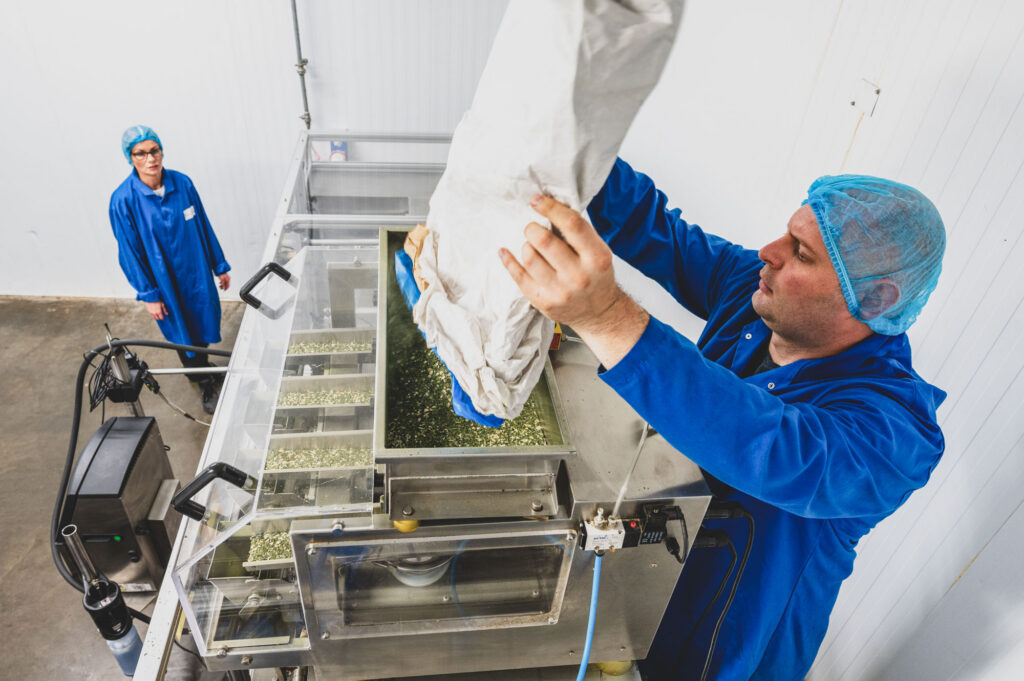
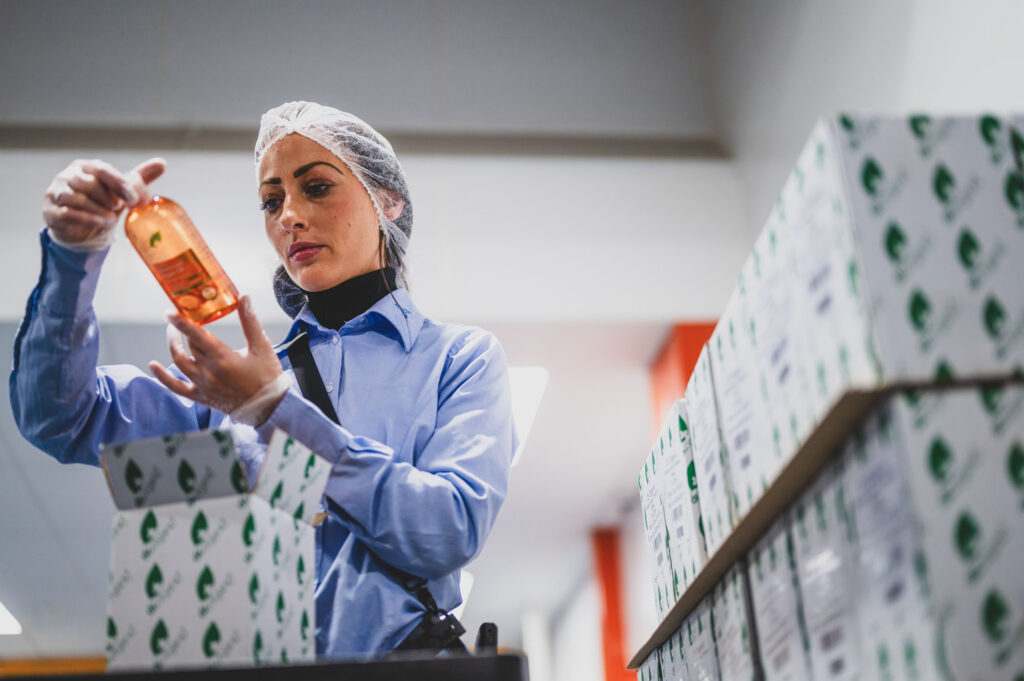
High hygiene, tight rules, often cold, often wet and usually noisy. Food is one of the most rewarding sectors to photograph and one of the most tightly controlled.
Access is the biggest constraint. Changing procedures, whites, hairnets, beard snoods, hand washing, metal detection, allergen zones and restricted areas all take time, and in some facilities the camera itself has to be considered as a foreign body risk and signed in accordingly. None of that is a problem, but it has to be planned rather than discovered on the morning.
Planning matters here more than anywhere else, because you rarely get a second pass through a production area once you have left it. I would normally do a walk round with the technical or hygiene manager first, agree exactly what can be photographed and in what order, then work through it efficiently and get out.
Visually, food production usually wants the clean and clinical treatment. Bright, accurate, tidy and legible. Stainless steel, product moving through the line, packing, coding, quality checks and people in whites. Retail buyers and auditors look at this imagery differently to the general public, and an untidy line or a piece of stray packaging in the frame reads as a housekeeping problem rather than a photographic one.
The other half of the job is the product itself. Where the process ends in something that looks good, whether that is a finished pack, a tray coming out of an oven or a bottling line running, it is worth giving that its own attention. Those frames get used constantly by sales teams and rarely exist in usable quality.
Warehousing, logistics and distribution
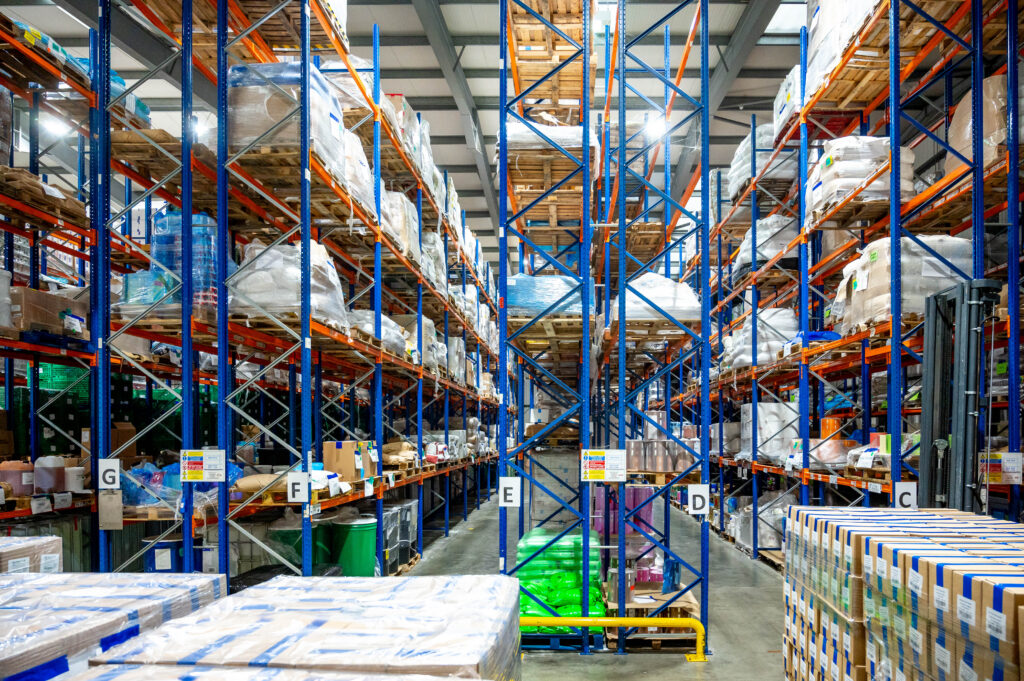
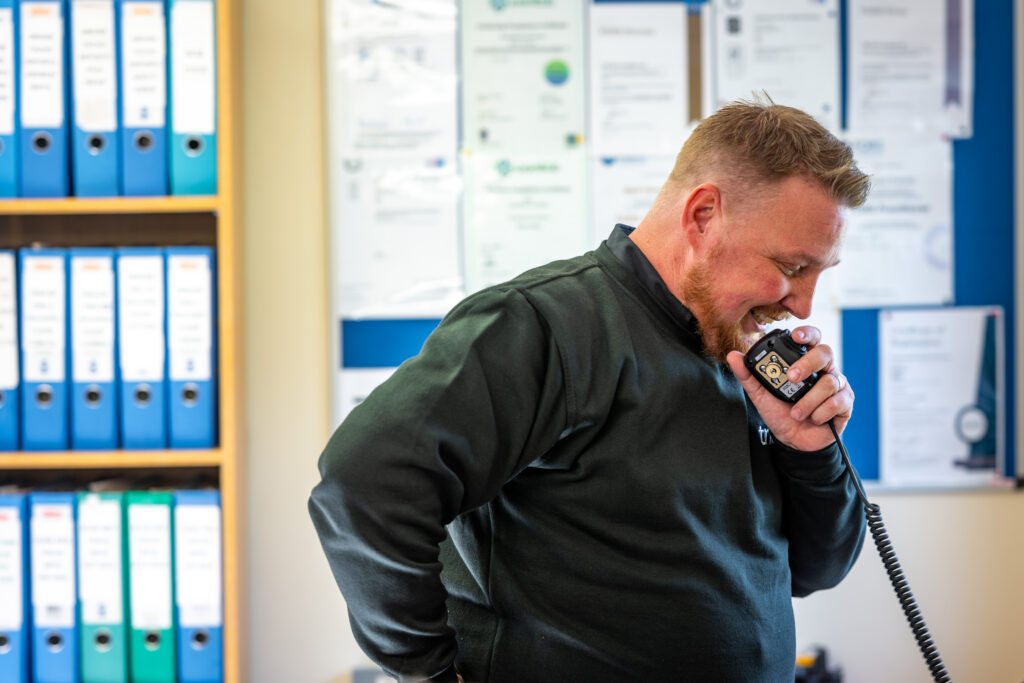
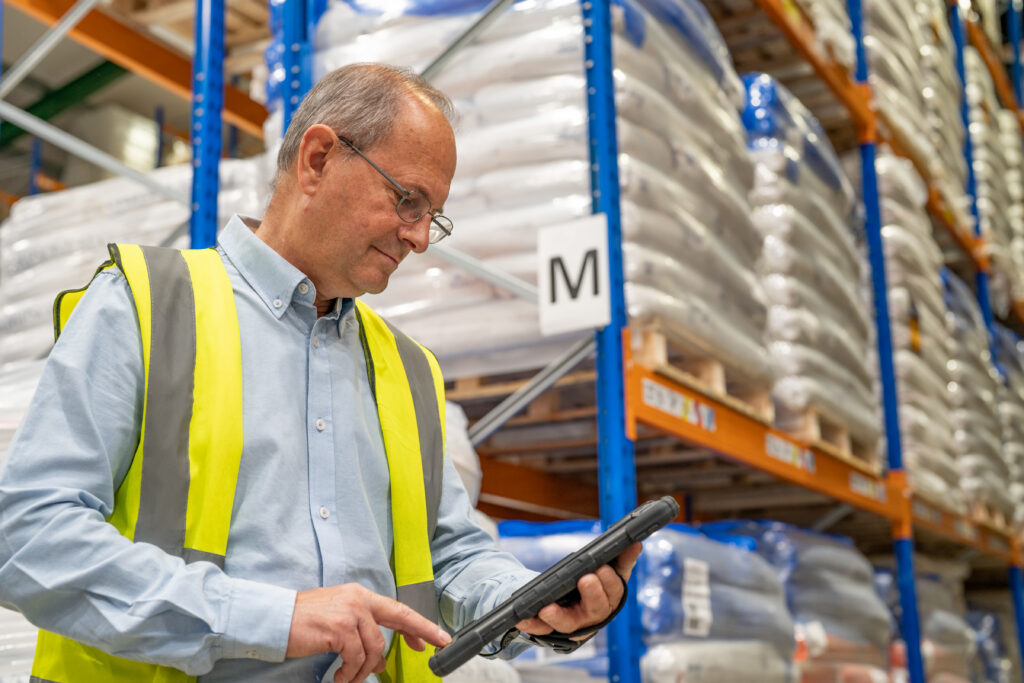
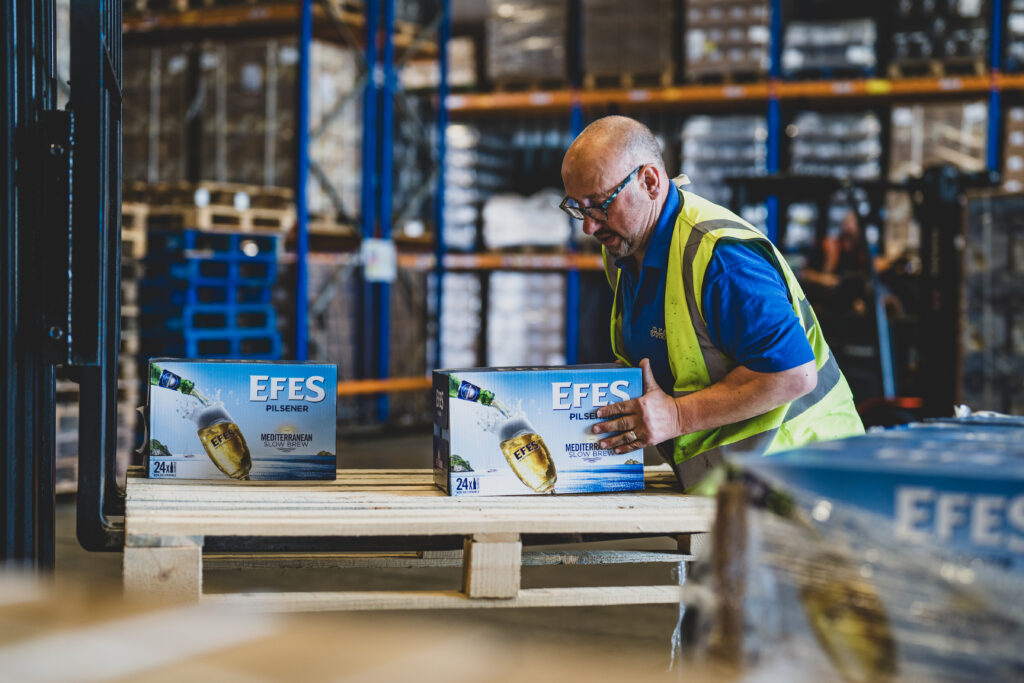
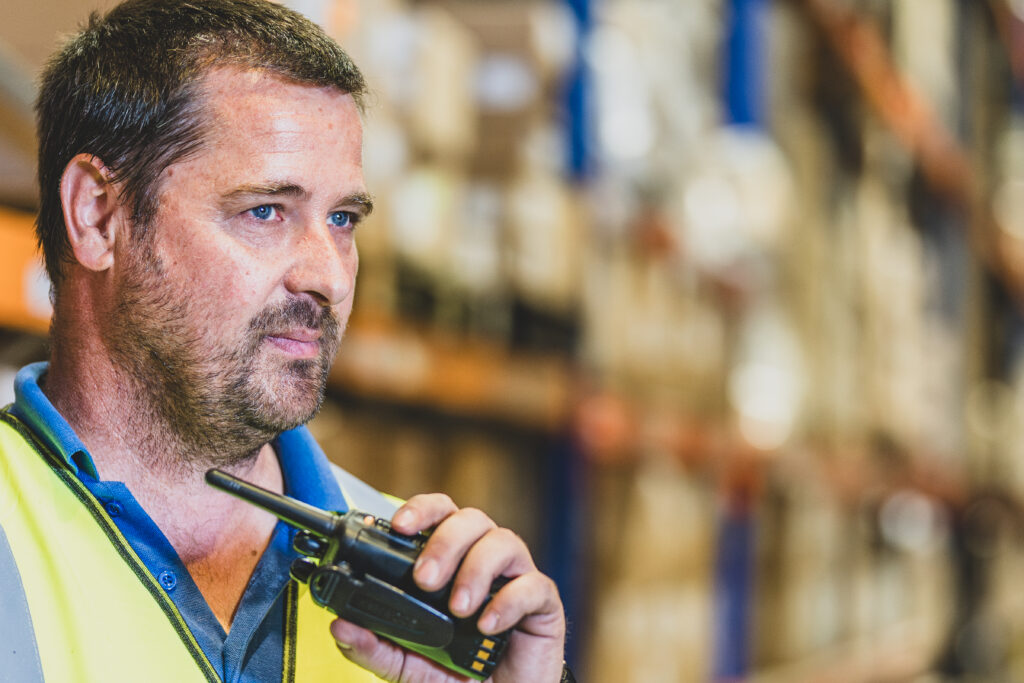
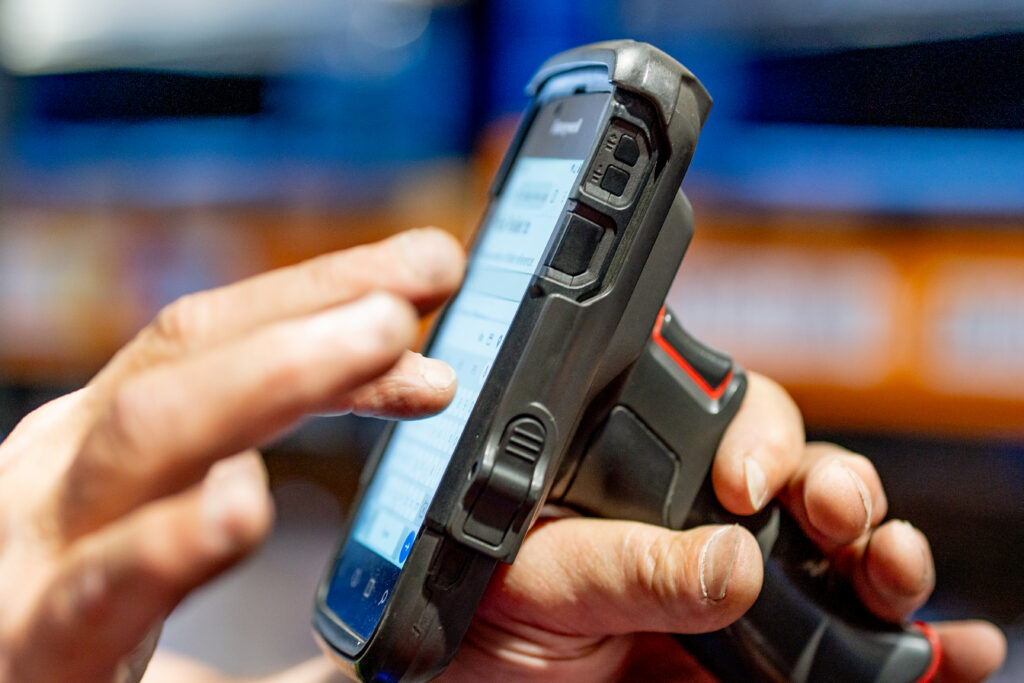
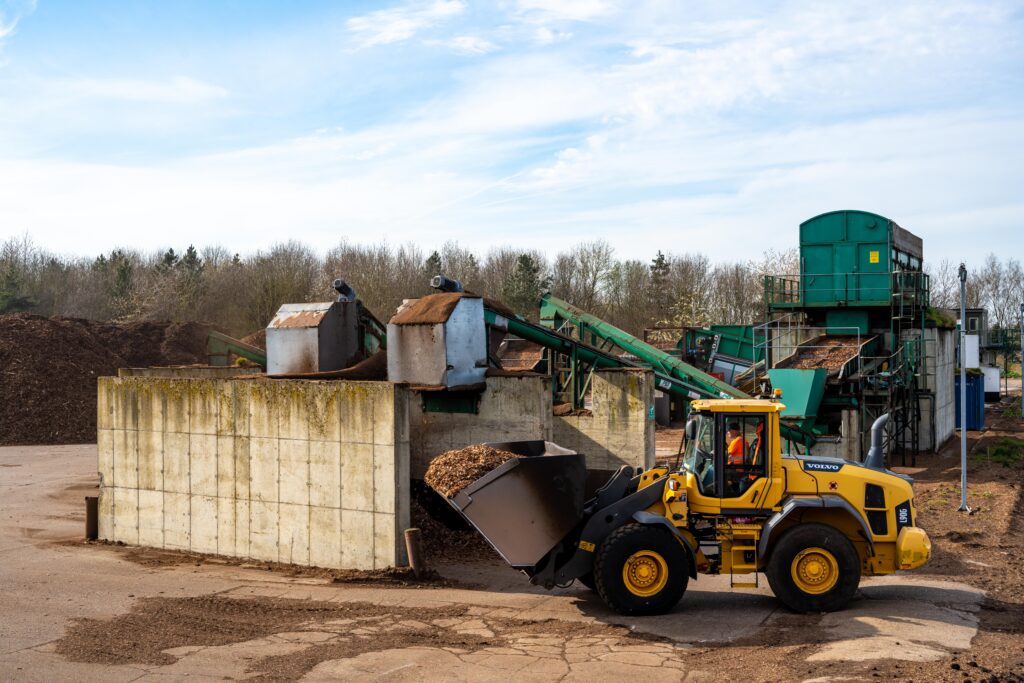
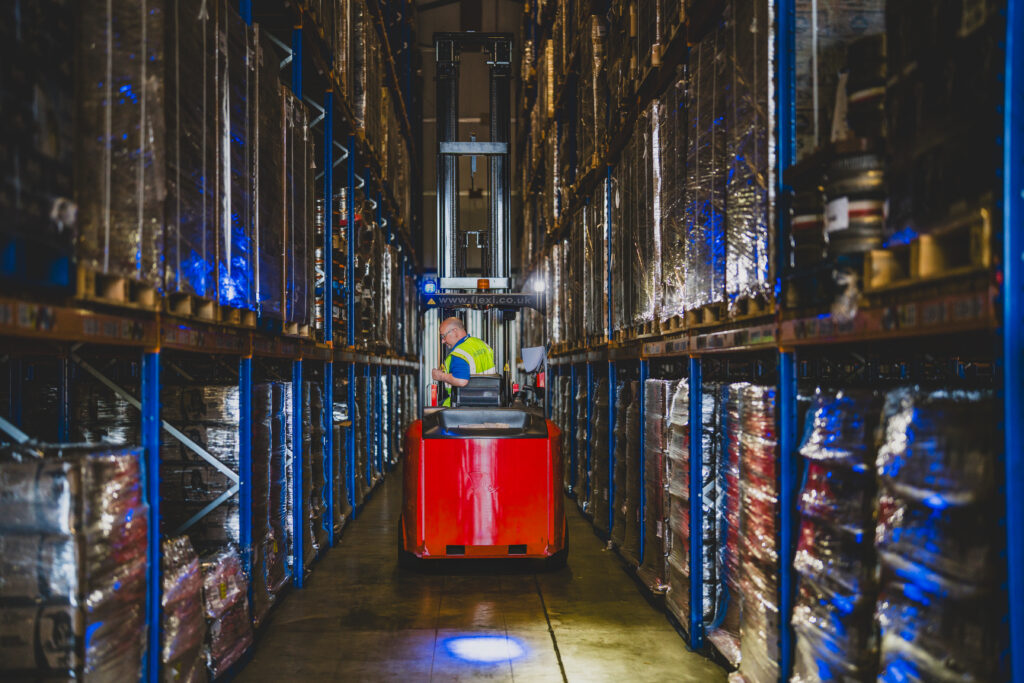
Racking, pick faces, mezzanines, mechanical handling equipment, loading bays and yard movements. Warehousing photographs well when you use its greatest asset, which is scale.
Long lines of racking, elevated shots down an aisle, high level views across the floor and vehicles working the bays all communicate capacity, and capacity is what the customer is buying. A logistics operator is usually trying to prove they can handle volume, hold stock securely and move it reliably, and the imagery should answer all three.
Safety segregation between people and plant is not negotiable and it dictates where you can stand. Pedestrian walkways, traffic routes and reversing areas are set out for a reason, and the shot list is built around them rather than the other way round. Early morning, shift changeover and quieter periods usually give the cleanest conditions and the least interference with the operation.
The details are worth gathering as well. Barcode scanning, pick and pack, labelling, wrapping, load securing and the systems side of the operation all support the claim of accuracy and process control.
If temperature controlled storage is part of the offer, that needs showing too, and cold store work needs planning for the sake of both the people and the camera.
Machine building, automation and technology using Industrial Photography
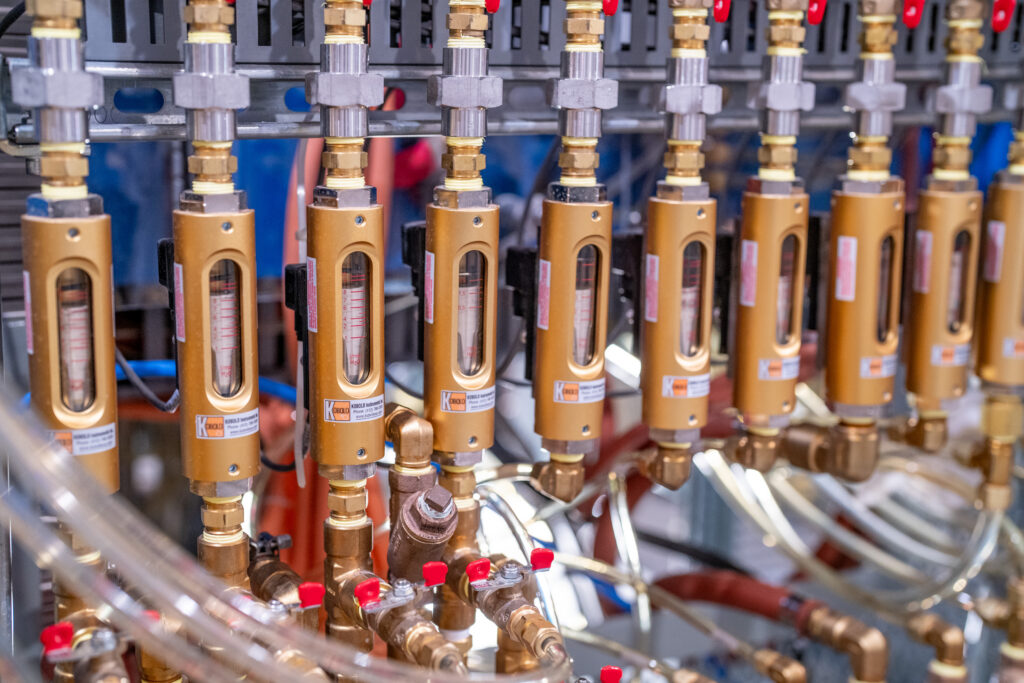
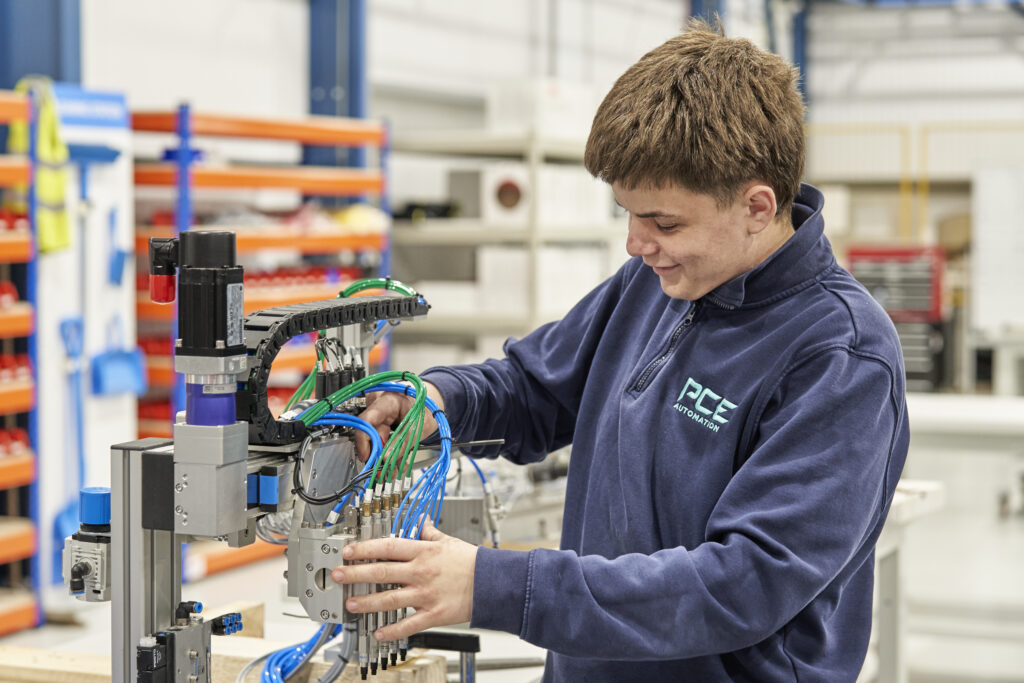
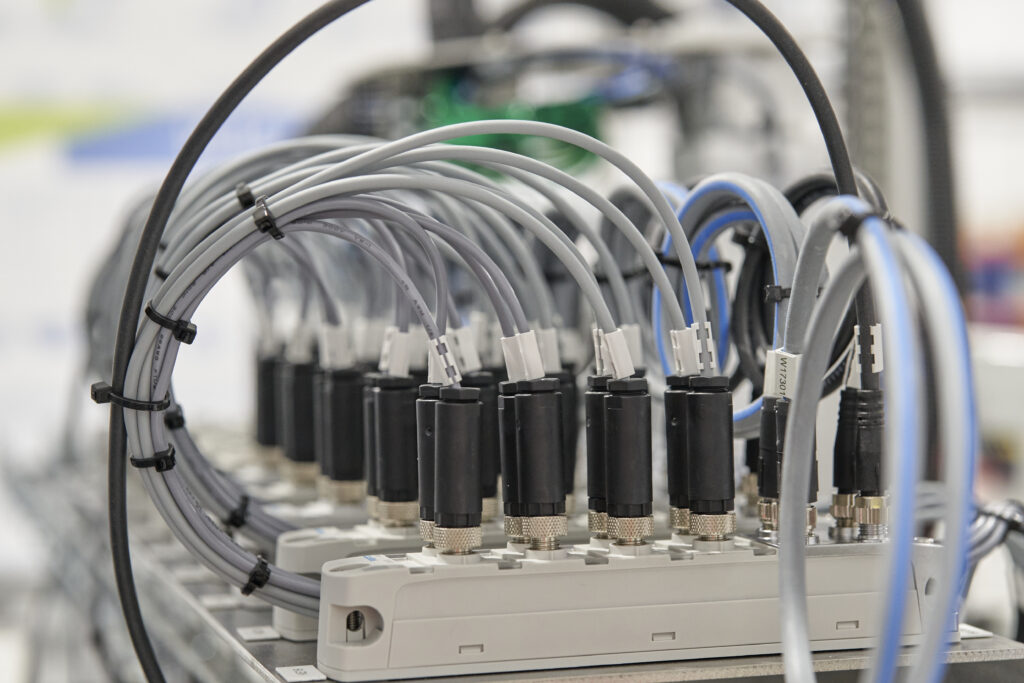
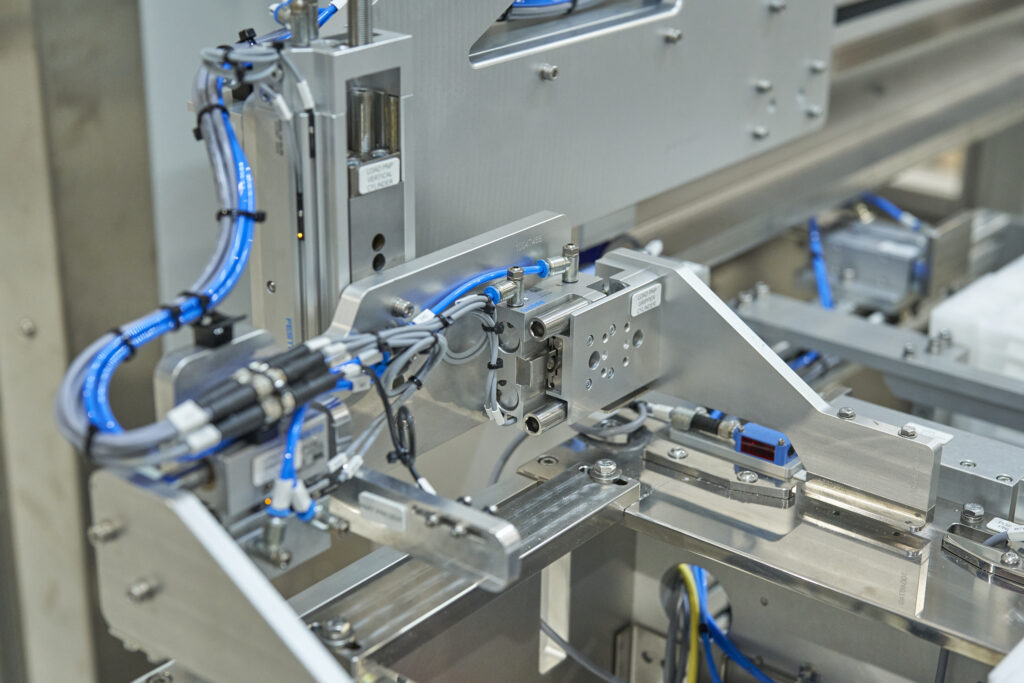
This deserves a section of its own, because photographing a company that builds machines is a different job to photographing a company that runs them.
Special purpose machinery builders, automation integrators, robotics companies and the technology firms supplying the medical and pharmaceutical sector all share the same problem.
What they sell is complicated, largely invisible to an outsider, and gone by the time anybody thinks to photograph it.
The machine that took nine months to design and build gets crated up and shipped to a customer, and what remains is a folder of phone pictures taken by an engineer under fluorescent light on the day of dispatch.
Why this work is harder to photograph than it looks
A machine under construction does not look like the finished article. For a large part of the build it is a frame, a loom of cable, half a guard and a lot of parts on a bench. Photographed carelessly it looks like a mess, which is exactly the opposite of the message.
The finished machine is the other extreme. Once it is guarded, wrapped and ready to ship, it is a large white box with a screen on the front. All the skill is on the inside where nobody can see it.
So the job is to photograph the middle, and to photograph the detail. The moment a build is far enough along to read as a machine but still open enough to show the engineering is the moment worth having, and it does not last long. That single point is why this sector benefits more than any other from a photographer visiting during the build rather than at the end of it.
What actually shows the value
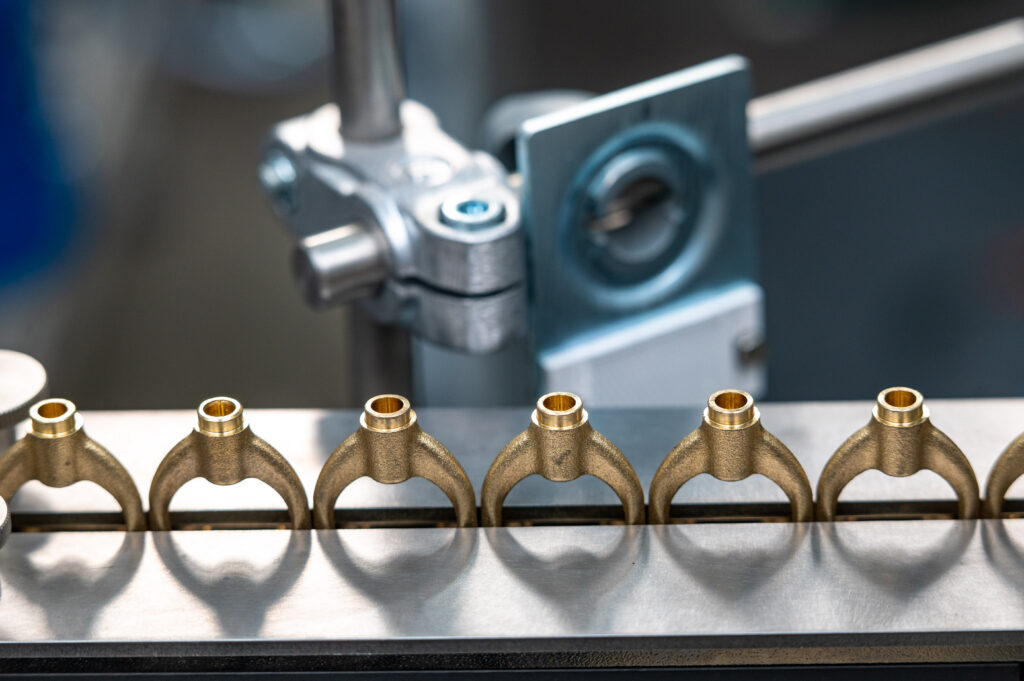
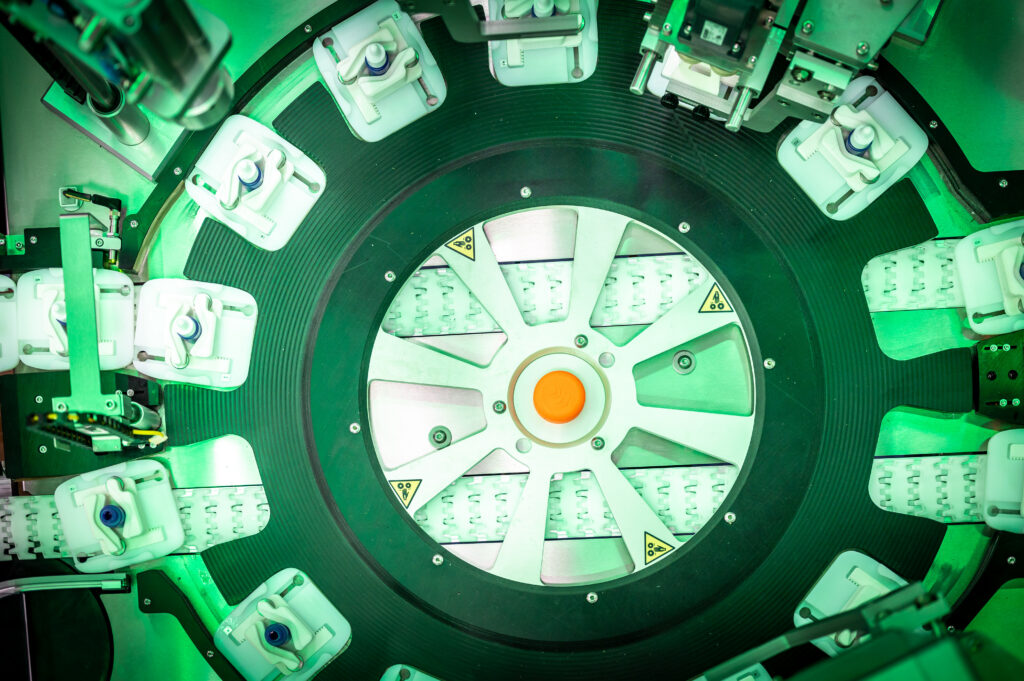
In this sector the craft is in the parts most people would walk straight past.
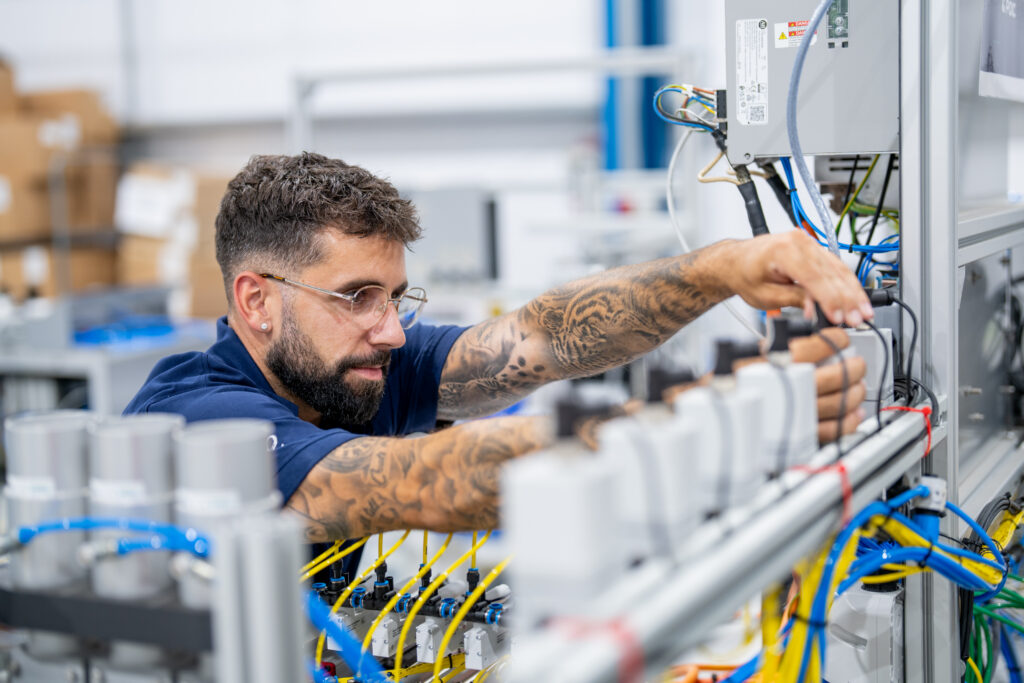
Cable management. Nothing communicates care in automation faster than a panel or a loom that has been dressed properly. Engineers know it, customers know it, and a photograph of it says more about a company’s standards than a page of copy about quality. It is the single most underrated image in machine building.
Panel build and controls. Wiring, terminals, labelling, the discipline of a well built enclosure. Controls and software are usually a large part of the value and almost never appear in the marketing, because they are hard to photograph and easy to ignore.
Machining and fabrication of the parts. Where the components are made in house, that is a separate capability worth showing on its own.
Assembly and fit up. The frame going together, tooling being aligned, pneumatics and actuators going on, the machine gradually becoming itself.
Finishing. The polishing, cleaning and detailing that happens before a machine leaves is a genuine differentiator. A builder who sends out a machine finished to a high standard should have pictures that prove it.
Testing and acceptance. Factory acceptance testing is the point at which the machine runs for the first time in front of the customer, and it is the most photogenic moment in the whole process. It is also the moment nobody books a photographer for.
The people. Design engineers at the model, controls engineers at the panel, wirers, fitters, apprentices. In a business selling engineering judgement, the engineers are the product.
The questions I get asked most
Do we have to stop production?
Almost never. The work is planned around your operation, not the other way round. Occasionally a single machine gets paused for thirty seconds for a specific frame, and only with the supervisor’s agreement. If a process genuinely cannot be interrupted, we shoot around it.
How long does a shoot take?
A focused set covering one area, some process detail and a few portraits fits into a half day. A full facility, inside and out, with people and aerial coverage, is a full day. Multi site or multi shift programmes are planned as a series rather than crammed into one visit.
Can you shoot in low light without disrupting anything?
Yes. Most industrial interiors are handled without introducing lighting at all, using the light the building and the process already produce. Where a specific image needs help, it is a small, quick addition in one position, not a rig across a working floor.
What do we get, and how quickly?
Fully edited, colour corrected, high resolution files plus web sized versions, delivered by download link. Turnaround is agreed at booking. A selection of preview images can be sent quickly if something is needed for a deadline.
Who owns the images?
You get a full commercial licence for your own use across website, print, social, tenders, exhibitions and PR. Licensing is written into the quote in plain English so there are no surprises later.
What does industrial photography cost?
Pricing is transparent and quoted per assignment based on time on site, the amount of coverage, whether aerial work is included and how many images you need finished. You get a written figure before anything is booked, and it does not move unless the brief does.
Can you film at the same time?
Yes. Stills and video are often shot on the same visit, which is the efficient way to do it when access has already been arranged and everyone is already inducted.
What do you need from us?
A contact who knows the site, a rough idea of what the images are for, and a heads up on any areas that are off limits or need an escort. Everything else is my problem.
Norfolk industrial photography, and further afield
I am based in Norwich and a large amount of this work happens across Norfolk and Suffolk, from Broadland Business Park and the Norwich Research Park out to the coast, Great Yarmouth, Thetford, King’s Lynn and the wider East Anglian manufacturing and agri sector. Being local helps on jobs that depend on weather or programme, because a rescheduled site visit is not a logistical event.
That said, industrial clients rarely have one site. I work across the whole of the UK and travel is priced openly rather than buried in the quote
For more information, why not head over to our Contact page where you can drop our team a message or simply email studio@blanc-creative.com