Professional Video Production: The Rosedale Legacy Film
Most of what I write about professional video production is aimed at businesses with something to sell.
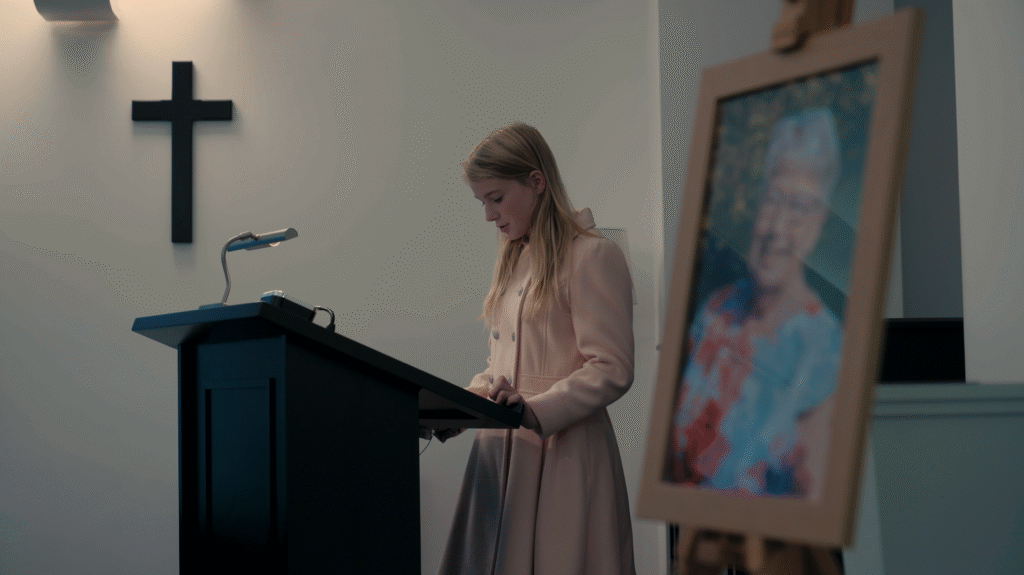
This post is about a film that had nothing to sell at all. It was made for Rosedale Funeral Home, in support of Nelson’s Journey, to explain to a child what happens at a funeral.
It is the piece of work I am proudest of, and it is also the clearest example I have of what a full production actually involves, from the first day of research to a launch night at The Assembly House in Norwich.
If you are thinking about genuinely investing in a film for your own organisation, this is what the process looks like when it is done properly.
I have kept the compassion in, because you cannot tell this story without it, but the post is here to show you the work.
Why Rosedale Funeral chose to have a professional Video Production to tell the story.
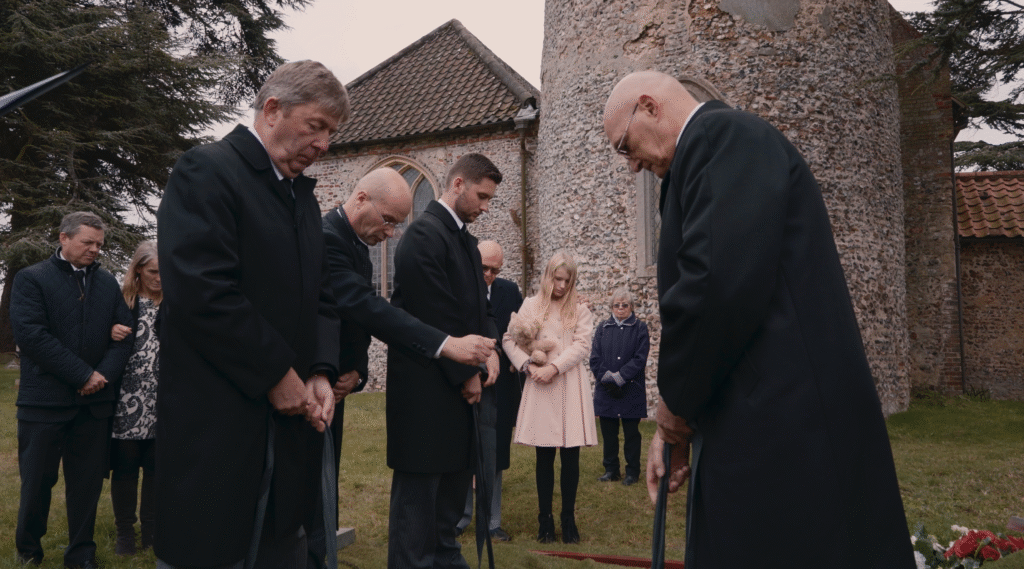
Rosedale Funeral Home have supported charities for as long as I have known them. Nelson’s Journey, the Norfolk charity that supports bereaved children and young people, is one they have stood behind for years, and the director Anne Beckett-Allen sits on its board of trustees.
Through their day to day work as funeral directors, Rosedale kept meeting the same situation. A family had lost someone. There was a child in that family.
Nobody was sure whether the child should attend the funeral, and the child could not decide because nobody had ever explained to them what a funeral was.
The idea for the film came from a young man who told Rosedale that when he walked into his mum’s funeral he had no idea what he was walking into.
So the purpose was set before I was involved. Make a film that shows what happens at a funeral through the eyes of a young person. Make it something schools can use.
Do not shy away from loss, because children can tell when adults are avoiding something. And make it work for people of all ages, because the parents and teachers watching alongside a child often need the same reassurance.
It was always intended as a legacy piece. A film that would still be doing its job years after the launch, which is exactly what has happened.
Building the scenario before writing a word
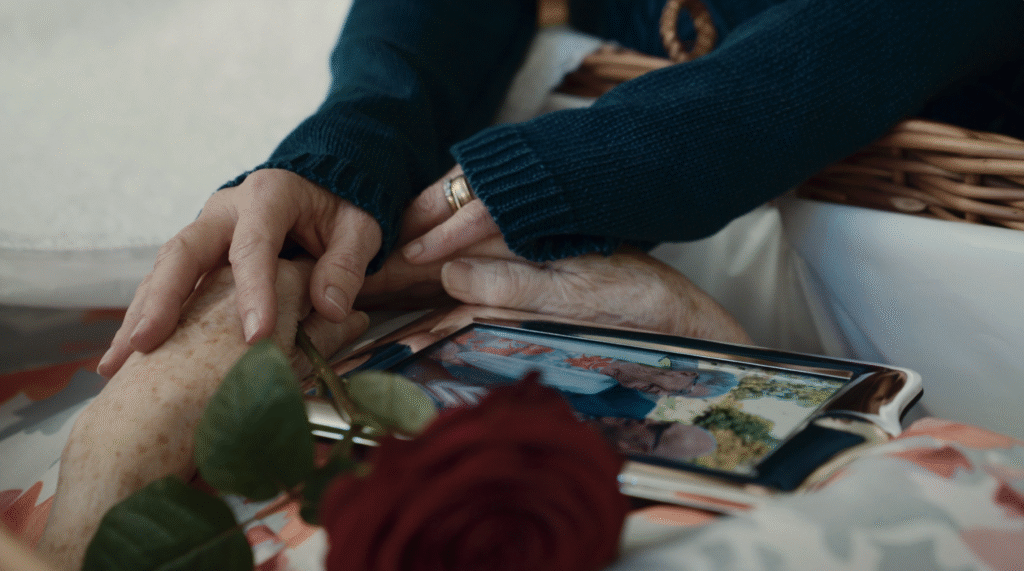
The first and longest job in this particular professional video production was research.
Days of it. I needed to understand how children of different ages think about death, what they worry about, what they are curious about but afraid to ask, and where the fear actually comes from.
These answer came from working closely with the Rosedale team. As an established funeral business, they have the most incredible experience of bereavement, with a huge backstory of contributing to charities, support services and being an absolute integral part of the local community in many towns across Norfolk including Wymondha, Beccles nd Bungay in Suffolk.
Most of their requirements were to approach the story from the unknown.
A child who does not know what the room looks like, who will be there, what the coffin is for, whether they are allowed to cry or laugh, or what happens to the coffin at the end is frightened of all of it at once. What’s a grave stone? Does it hurt when it’s placed on the grave. Questions that may seems silly to an adult, are all too real when seen through the eyes of a child. And for families, the thought of a child attending a funeral can bring with it, a number of uncertainties.
Answer those questions one at a time, in the order a child would ask them, and a funeral becomes what it is: an ordinary thing that sad people do together.
That research gave me the scenario. Not a list of facts about funerals, but a way of seeing the day from a child’s height. Everything else was built on it.
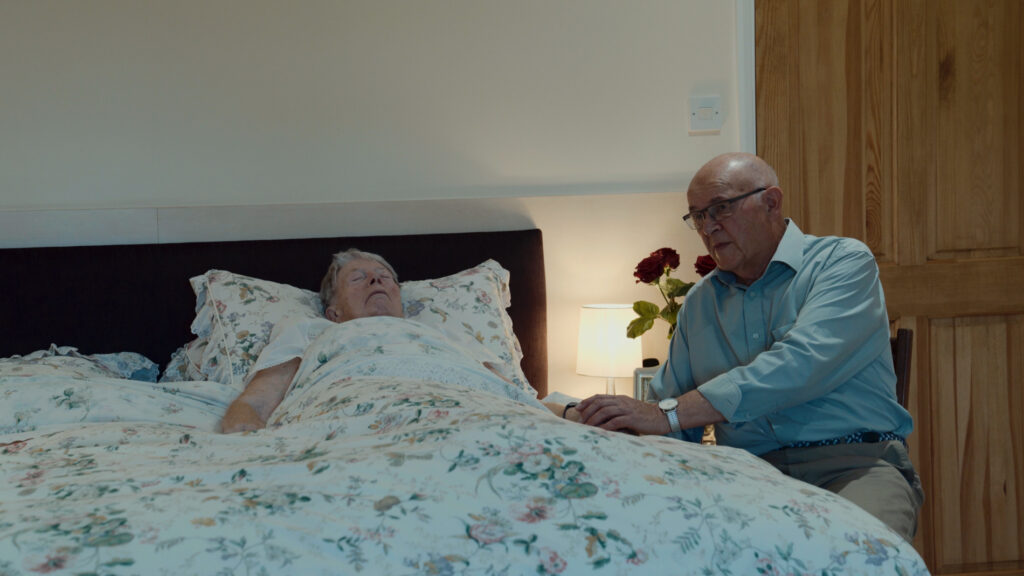
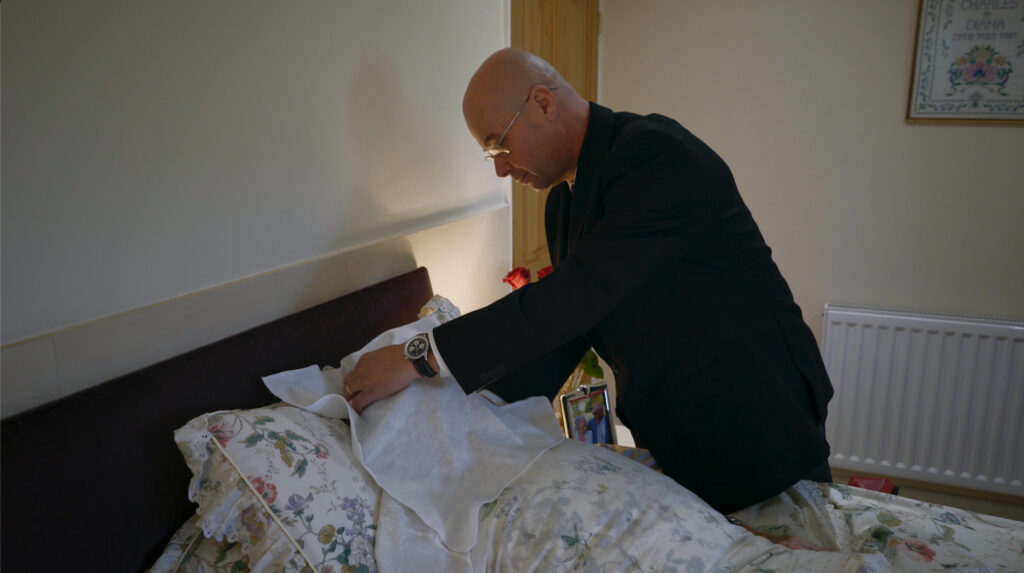
Structuring the script for professional video production
I read a good deal of what other producers publish about writing a corporate video script before I sat down to write this one, and most of the advice is sound.
Nearly everyone lands on the same working format: a two column layout with what the viewer hears on one side and what they see on the other, broken into rows that each cover a short stretch of screen time.
The point of the format is that every line of narration is tied to a picture, so nothing gets written that cannot be filmed.
Where I departed from the standard advice was the structure.
Corporate scripts are usually built around problem, solution and call to action. This film had no product and no call to action. Instead, every row of the script answered a question a child would ask, in sequence.
Where will it be. What does the room look like. Where is the person who died. Who will be there. What will people do. What do I do. What happens at the end. What happens after.
Writing to that rule meant the script could not hide behind reassurance. It had to show the thing.
The tone had to be honest without being frightening and warm without turning sentimental, and holding that balance across nine and a half minutes is much harder than across a thirty second advert.
The script went through more versions than I care to count, and several of the final changes were single words.
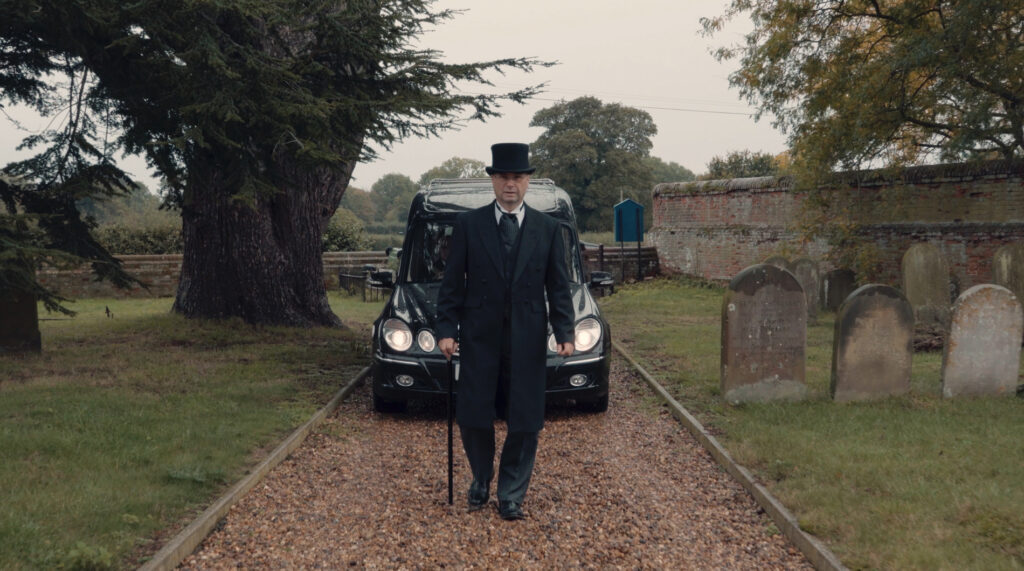
Building the shot list
The shot list is where a script becomes a plan for the day. The standard approach during a professional video production, and it is the right one, is to go through the script scene by scene, decide what each moment has to do for the story, then list every shot needed to do it, with framing, movement, location and any lighting or sound requirements. Then you reorder the whole thing by location rather than by story order, so the crew is not driving back and forth between the same two places.
For this film the shot list had one extra rule. Every shot had to be checked against the question it was answering.
If a beautiful shot did not help a child understand something, it did not go on the list.
That kept the days focused, and it meant that when we were in the edit there was very little footage that did not have a purpose.
The shot list also told me how many days we needed. Five days of filming for a nine and a half minute film sounds a lot, and for a promotional piece it would be. Here it was the minimum.
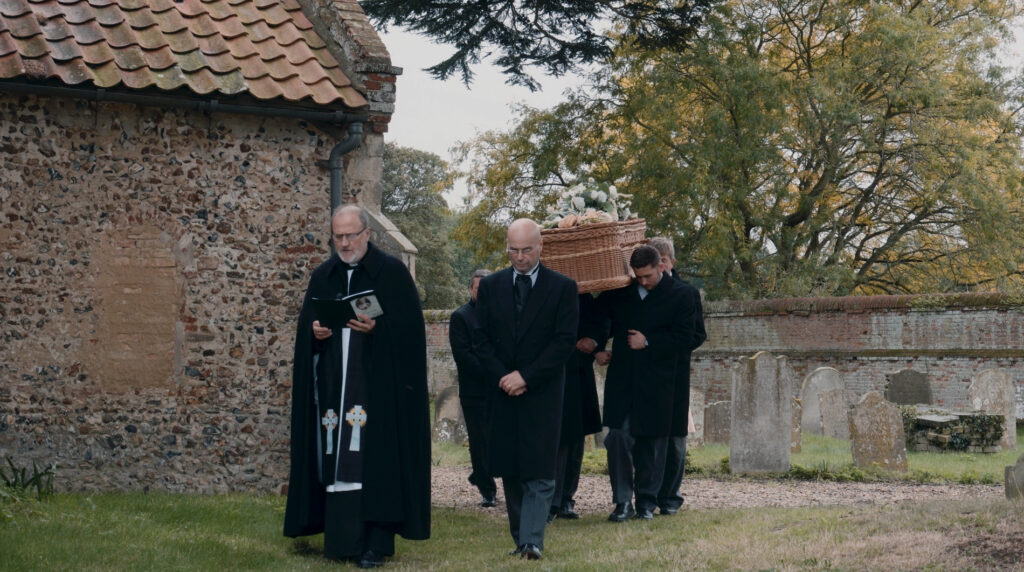
A funeral is a sequence of places and moments, each one needed setting up to feel calm and real rather than staged, and none of it could be rushed. This was not a film anyone could afford to reshoot. Continuity was paramount. Even blockbusters struggle with continuity and they employ dedicated teams to deal with this kind of problem. Ensuring people attending the wake wore the same clothes, the same jewellery, the same make-up across two shooting days. Small details that you wouldn’t maybe think mattered, but could ruin the whole look and feel of the final film.
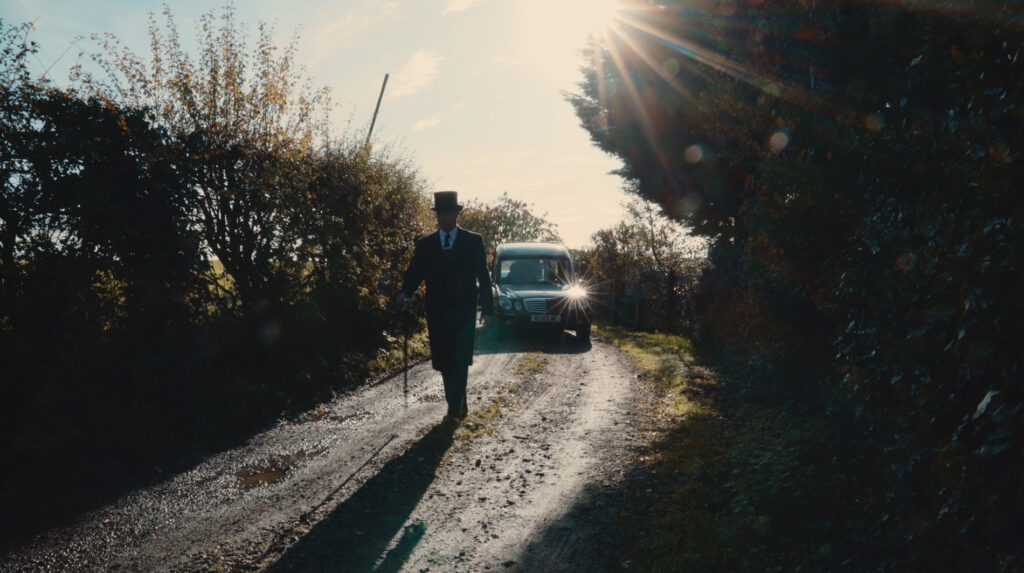
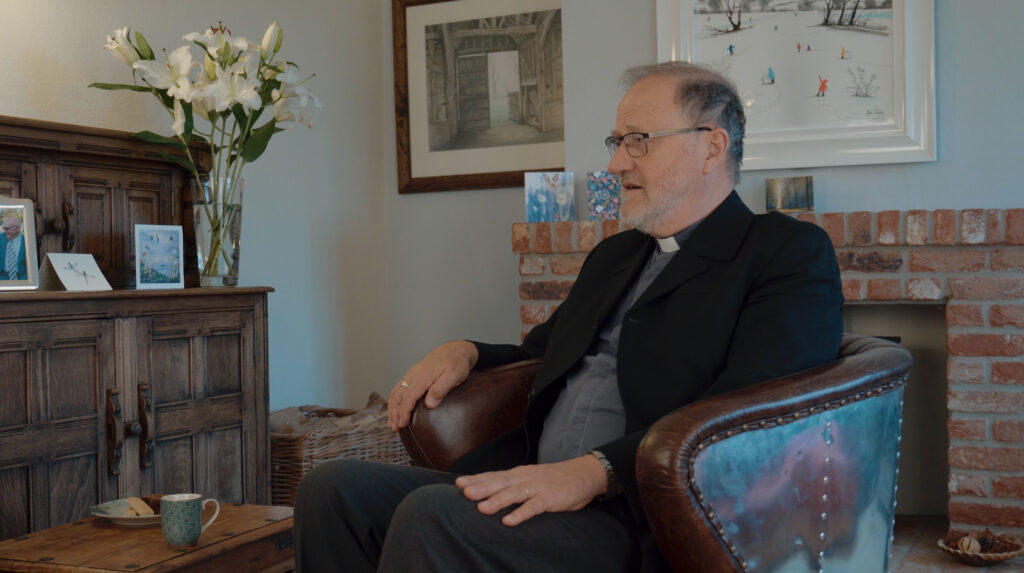
Preparing the team for your professional video production
A shoot with a crew is only as good as the briefing. Before each day everyone had the schedule, the shot list, the locations, the contacts, and a clear understanding of what the film was for.
On a project like this that last part matters more than usual. Every person on set needed to understand that the tone on the day carried through to the screen, and that the people helping us were doing so because they cared about bereaved children.
Call times, parking, access, who was meeting us where, what was needed from Rosedale’s team and when, all of it was written down and circulated.
That sounds obvious. It is also the part that separates a smooth day from a wasted one.
Contingencies, weather and extra days
Every production plan needs a plan B, and for exterior work it needs a plan C. Weather is the obvious one. A funeral on screen has to look like a normal day, and a grey drizzle can be right for one scene and wrong for the next. The practical answer was to build weather days into the schedule rather than hope. If a day could not go ahead, there was a date it moved to, and everyone knew it in advance.
The same thinking applied to people. If a contributor was unwell or a location fell through, the day had a fallback that still produced something usable. Structuring extra days into the plan costs money on paper and saves it in practice, because the alternative is a crew standing around, or worse, a scene that is filmed badly because there was no other option.
Why drone work takes longer to build in
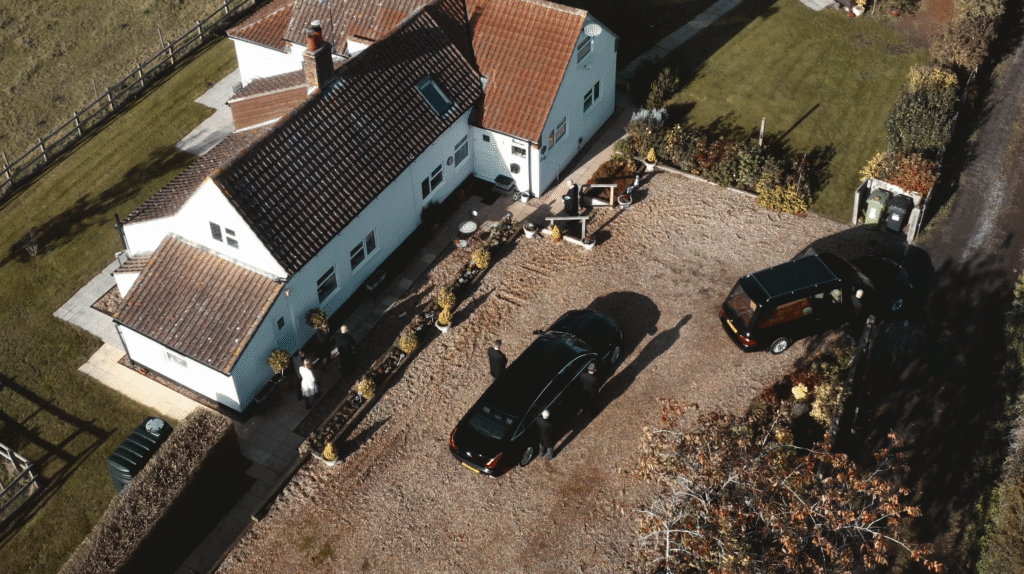
Aerial footage looks effortless on screen. It is the most planning heavy part of any shoot I do, and the time has to be built in from the start rather than bolted on.
Every flight starts with a risk assessment. Mine follow a fixed format: the site, the take off and landing zone marked on real aerial imagery rather than a sketch, hazards, the people who will be nearby, emergency procedures including what happens if an air ambulance appears, and clear go and no go conditions.
That document exists before I decide whether the drone is even coming.
Then there is the airspace. I check NOTAMs, which are the notices pilots use to flag temporary restrictions, and the permanent flight restriction zones around airports.
Norwich has an airport with its own zone, and a good deal of the city sits under it, so a flight there is a conversation with air traffic control rather than a decision made on the day.
The size and class of the aircraft decides where it can legally go.
Under the current UK rules a sub 250g drone, or one carrying a UK0 or UK1 class mark, can be flown in the A1 subcategory, which allows flight over uninvolved people but never over a crowd or gathering. Larger legacy aircraft over 250g are pushed into A3, which means staying 150 metres from residential, commercial, industrial and recreational areas.
Aircraft with a UK2 mark can be flown closer to people, but only by a pilot holding an A2 Certificate of Competency. In practice that means the aircraft I choose for a job is a legal decision as much as a creative one, and on a funeral film it also means the drone is never anywhere near mourners.
Finally there is the briefing on the day. Everyone on set knows when the aircraft is flying, where it is taking off from and landing, and who is spotting for it.
All of this is why an aerial shot that lasts eight seconds on screen can represent several hours of work before the props turn.
Rushes, naming and building the story from the storyboard
At the end of five shoot days there is a great deal of footage, and how it is handled decides whether the edit takes a week or a month.
Every card was offloaded, verified and backed up in two places before it was cleared. Every clip was named to a fixed protocol: day, camera, scene, take. That sounds like admin, and it is, but on a film where the story was built from a question by question storyboard it meant I could go straight to the shot that answered a specific question without scrubbing through hours of material. When a client later asks for a change to one section, the same naming means I can find every alternative take for that scene in minutes.
The edit itself followed the storyboard. The structure had been decided in the script, so the job was to assemble it faithfully and then be ruthless about pace. Children need time to take things in. The film moves slowly and gives each part of the day room to breathe. A lot of good footage was left out because it answered a question that was not being asked at that moment.
Narration and colour grading
The narration was recorded to the finished script and cut against the pictures, with a rough guide track used through the edit so the pacing could be judged properly before the final recording. The voice had to be calm and unhurried, with no performance in it. A child listening needed to feel they were being told something, not sold something.
The colour grade was kept soft and natural throughout. That was a deliberate choice, and it is one I point to when people ask what grading is actually for. The whole purpose of the film was to show a funeral as an ordinary, gentle thing rather than something dark. A grade that pushed towards drama, even slightly, would have undone nine minutes of careful writing.
Revisions, delivery and the launch
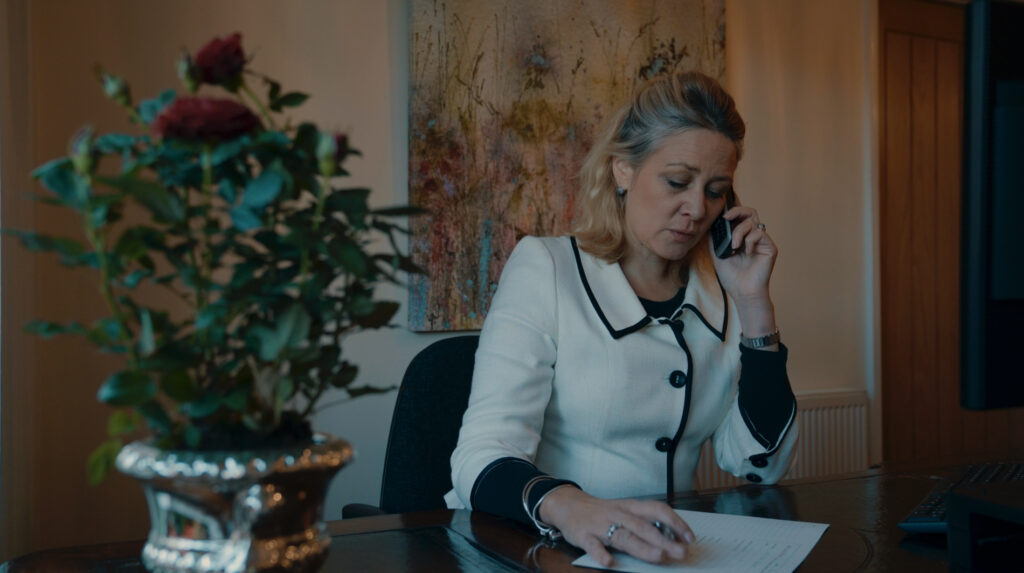
Rosedale and Nelson’s Journey reviewed the cut and revisions were made in rounds, with each round tracked against the previous version so nothing was lost and every change could be traced. On a film like this the revisions were rarely technical. They were about words, and about whether a moment landed the way it should for a child.
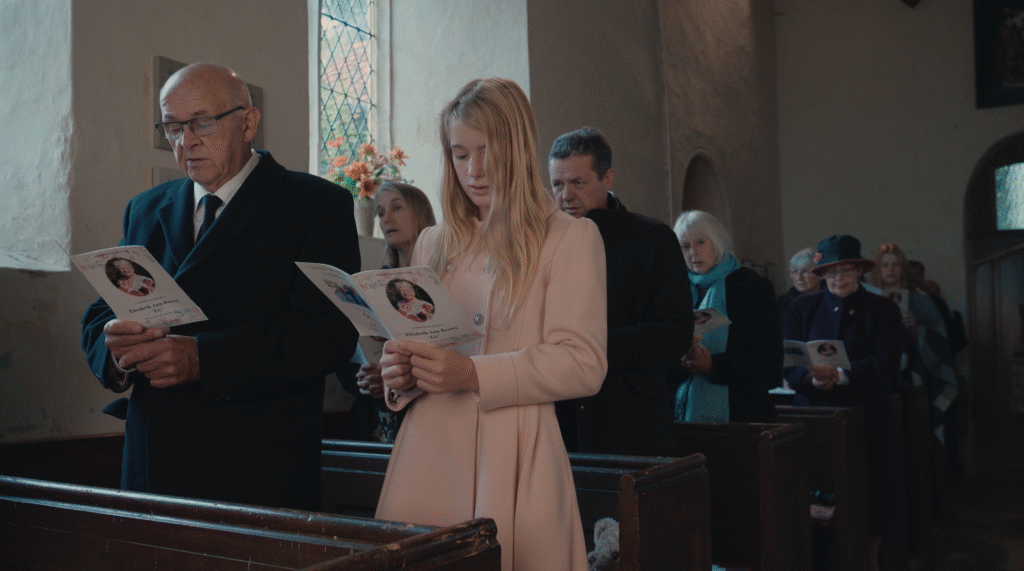
The finished film was launched at The Assembly House in Norwich, in front of the people who had made it possible. It now lives on Rosedale’s website alongside training materials for teachers and anyone else supporting a bereaved child, and it is used in schools exactly as it was intended to be. The Good Funeral Guide has since picked it out as one of the things that sets Rosedale apart.
Over 200 hours went into a film a child can watch in under ten minutes. That is not unusual for work that has to carry real weight. It is only unusual in how little of it is visible on screen.
Where Blanc Creative comes in
I have written all of this out because it is the honest answer to the question every business asks about professional video production, which is what they are actually paying for. The camera work is the visible part. The research, the script, the shot list, the briefings, the contingency days, the drone planning, the naming discipline, the grade, the narration and the revision process are what make a film work, and they are what you are buying from a video production company that takes the job seriously.
Not every film needs five shoot days or a launch night. A testimonial, a recruitment piece or a product film can be planned and delivered in a fraction of the time. But the same process applies at every scale, and it is the reason the films last.
If you have a story that needs telling properly, I would like to hear about it. You can see more of our commercial video production work, read about what video production for business really involves, or get in touch to talk it through.
Watch the film on Rosedale’s website: What happens at a funeral. Find out more about Nelson’s Journey.
Frequently asked questions about Professional Video Production
How long does professional video production take? A short business film can be planned, filmed and delivered in a few weeks. A film like the Rosedale piece, with extensive research, a scripted narrative, five shoot days and a full grade, took months. The planning stages are what set the timeline, not the filming.
Why does drone footage add so much time to a shoot? Because every flight needs a risk assessment, an airspace check, permission where a flight restriction zone applies, and a briefing on the day. The aircraft chosen also has to be legal for the location, which depends on its weight and class mark.
What is a shot list and why does it matter? A shot list is the document that turns a script into a plan for the filming day. It lists every shot, where it is filmed and what it needs, reordered by location so the crew works efficiently. It is the main reason a shoot finishes on time.
Can a film like this be used in schools? Yes. The Rosedale film was made specifically for that purpose and is supported by training materials for teachers. It was designed to be used in a classroom or with a single child.