Meta Glasses UK Law: Where You Can Film, Where You Can’t, and Why Wetherspoon Said No!
I’ve spent fourteen years pointing cameras at people for a living, and before that I spent years as a Norfolk Police sergeant dealing with the consequences when someone pointed one in the wrong direction.
So when a national pub chain tells its customers to switch off their glasses, I have a tendency to take an interest.
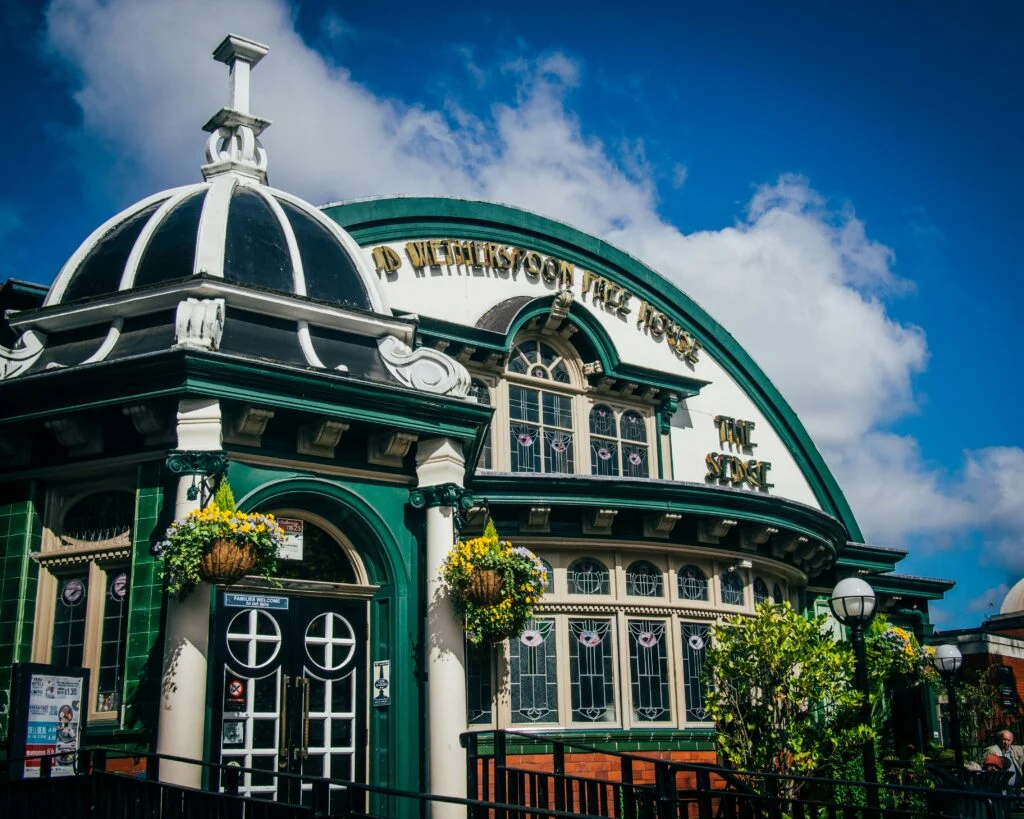
In early August 2026, JD Wetherspoon told the press that customers wearing Meta smart glasses would be asked to turn the cameras off across its 800 plus venues.
The company said its pubs already operate on the basis that you don’t film customers or staff without their permission, and that Meta glasses breach that code by allowing what it called surreptitious surveillance.
In a press release, a Wetherspoons spokesperson said:
“Like many hospitality companies, Wetherspoon has CCTV cameras for security reasons, but their use is strictly controlled by data legislation.It’s important here to
“Apart from that, the general code that applies in our pubs, and most pubs, is that you can’t film customers or employees without their permission.
“Meta glasses seem to breach this code, and common sense, by enabling surreptitious surveillance, so our instinct is to say turn off the cameras.
This is akin to our efforts to stop audible playing of videos in our pubs, which also invades people’s space.”
So, the above is a company policy decision, not a change in UK Law. But it is, the clearest sign yet that wearable cameras have moved from novelty to problem, and a lot of people are now asking a fair question: what am I actually allowed to do with these things?
Here’s the honest answer, in plain English, with the law it rests on.
What Wetherspoon has actually done
Wetherspoon hasn’t banned the glasses. It’s banned filming with them on its premises.
That distinction matters. A pub is private property that happens to be open to the public. The occupier can set conditions of entry, and “no filming” is a perfectly ordinary condition. Cinemas do it. Leisure centres do it.
Plenty of gyms do it.
The pub chain has simply applied an existing house rule to a device that makes the rule harder to police.
The company pointed out that it runs CCTV for security, but that its CCTV sits under data protection legislation and is controlled accordingly, whereas a customer’s smart glasses are not.
That’s a reasonable point. A pub’s cameras have a named controller, a retention period and a sign on the door. A stranger’s glasses have none of that.
What Meta AI glasses actually do
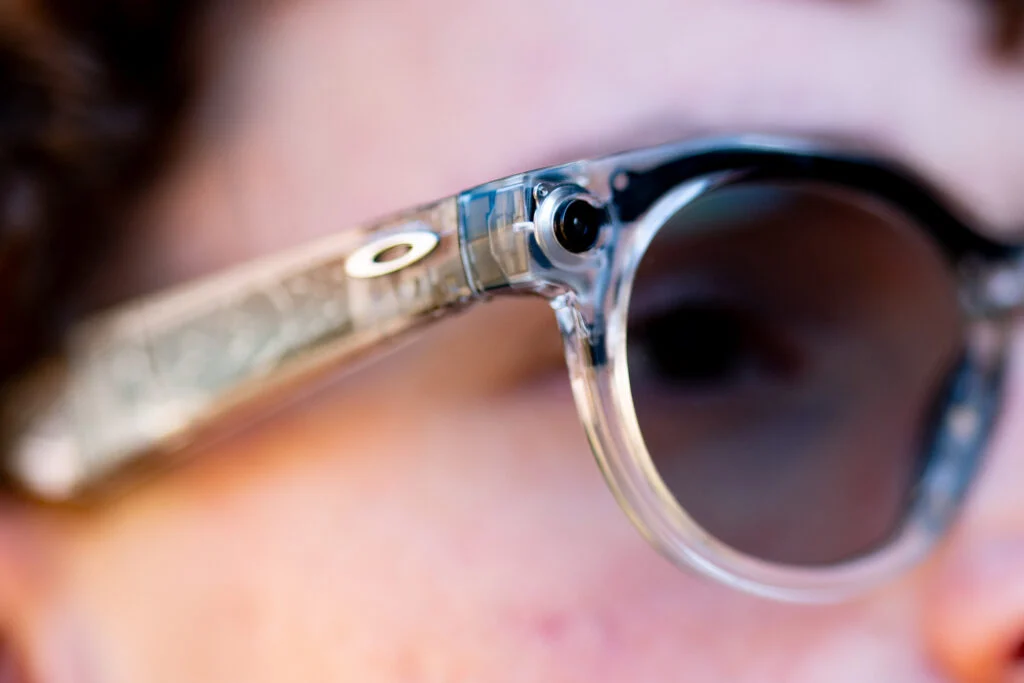
Before the law, the hardware. If you’re writing house rules or deciding whether you care, you need to know what the device is.
The current Meta AI glasses look like ordinary frames. Inside there’s a camera, microphones, open ear speakers and a link to Meta’s app and AI services.
The wearer can take stills, record video with sound, take calls, send messages, livestream to Meta’s platforms and ask the built in assistant about what the glasses can see.
There’s a small LED that lights when the device is capturing.
Meta’s own responsible use guidance tells wearers to make capture obvious, to stop if someone objects, to stay out of sensitive places and not to cover the light
Meta glasses UK law: Why the capture light isn’t the whole story
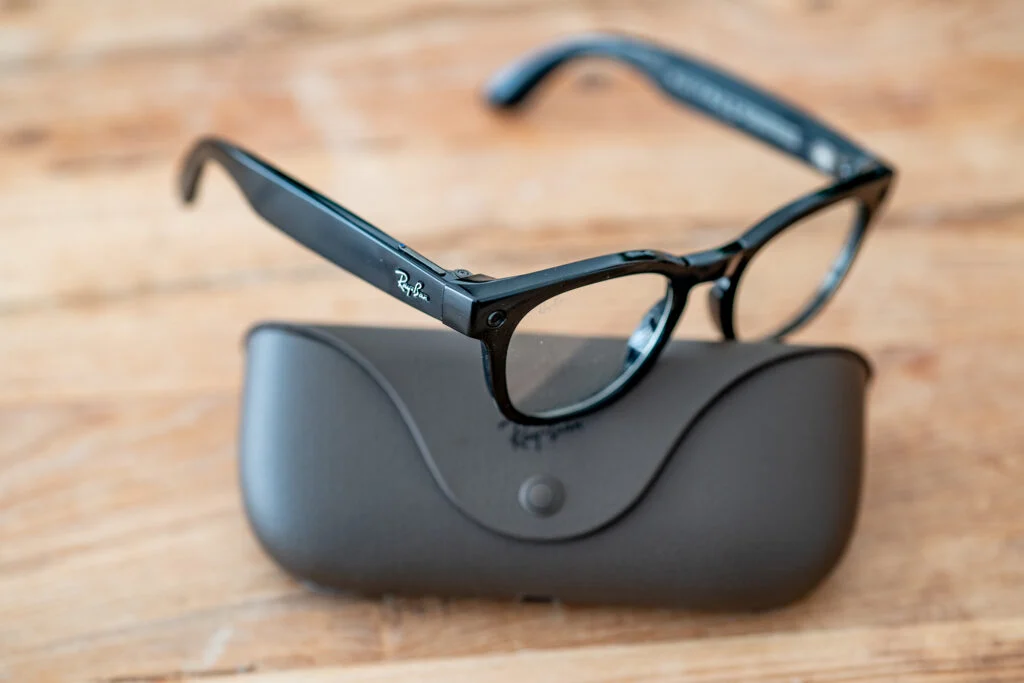
The LED tells a bystander that something is happening. It doesn’t tell them what.
It doesn’t say whether audio is being recorded alongside the picture. It doesn’t say whether the clip is going straight to a livestream.
It doesn’t say whether a still has been passed to an AI model for analysis, or whether the footage might later be seen by a human reviewer somewhere in a supply chain.
In March 2026 the Information Commissioner’s Office confirmed it was writing to Meta after reports that outsourced workers had been able to view sensitive footage captured by the glasses.
So when someone tells you the light solves the privacy issue, they’re describing a doorbell, not a doorman.
The starting point: there’s no general right not to be photographed

This surprises people, so let’s be clear about it.
In England and Wales there’s no law that stops you photographing or filming a person in a public place.
No release form is required. No permission is required. If you’re standing on a public highway and someone walks through your frame, you haven’t broken any law by pressing the shutter.
The courts have also confirmed that English law recognises no freestanding image right, so being identifiable in a photograph doesn’t by itself create a claim.
That’s the baseline. Everything else in this article is an exception to it, and there are a lot of exceptions.
Public places

Streets, parks, beaches, town squares. Shooting from public land is lawful. The device doesn’t change that. Glasses, phone, mirrorless body with a 70 to 200, the starting position is identical.
What changes the picture is context. The courts have repeatedly held that a photograph taken in public can still be actionable depending on who was photographed, what they were doing, why you were doing it and what happened to the image afterwards.
Cases involving the children of J K Rowling and Paul Weller both turned on that reasoning, and the European Court has held that broadcasting footage of a person in acute distress can breach their private life rights even though the events happened in the street.
Put simply, “it happened in public” is a good defence to some claims and no defence at all to others.
Private land that’s open to the public

Pubs, shops, shopping centres, railway stations, stadiums, hospitals, museums, most business parks.
These feel public. Legally they aren’t in UK Law.
The occupier controls what happens on the land. They can prohibit filming including Meta Glasses as a condition of entry, and they can withdraw permission for you to be there at all.
What staff can and can’t do
Staff or security can ask you to stop filming. They can ask you to leave. If you don’t leave within a reasonable time, you become a trespasser and reasonable force may be used to remove you.
What they cannot do is seize your glasses, take your phone, demand your passcode or make you delete anything. Your footage is your property. UK Law doesn’t cover this unless there is some very specific legislation in place.
There’s no power for a shop worker or a door supervisor to compel deletion, and taking your device off you without consent may itself be an offence. They can’t take your Meta Glasses.
If you refuse to stop
You’ll be asked to leave, and if you stay you may be removed and potentially arrested for a public order or trespass related matter depending on how it develops. Nobody’s day improves at this point. Take the glasses off, finish your pint or don’t, and move on.
Where the law really bites: data protection
This is the part almost everyone gets wrong, including some professionals who should know better.
If a person is identifiable in your footage, that footage is personal data. Recording it, storing it, uploading it, editing it and publishing it are all processing under the UK GDPR. That doesn’t automatically make it unlawful. It means a framework applies.
The domestic purposes exemption, and where it runs out – UK Law
The UK GDPR doesn’t apply to processing carried out by an individual for purely personal or household purposes.
Photographs of your mates at a barbecue, a video of your kids at the beach, holiday clips kept on your phone. That’s outside the regime, and the ICO has said as much about wearable cameras since the Google Glass era.
The exemption is narrower than people assume. The leading authority is a case called Ryneš, where a man installed a home security camera that also captured the public footpath and the house opposite. The court held the household exemption didn’t apply once the recording extended into public space.
Smart glasses make that boundary mobile. A wearable camera goes with you into shops, workplaces, pavements and other people’s lives. The moment your use moves beyond genuinely private activity, the exemption starts to fall away.
When you become a data controller
Once you’re outside the household exemption you’re a controller, and you need a lawful basis under Article 6, fairness, transparency, data minimisation, a retention limit, security, and the ability to honour requests for access and erasure.
In practice, that catches:
- content creators filming strangers for social media, especially if the account is monetised
- anyone building a following on footage of members of the public
- filming that’s connected to a business, a campaign or a cause
- repeated recording of a neighbour, a colleague or an ex partner
- anything captured at work, on behalf of an employer
Consent is rarely workable with passers by. Legitimate interests is available in principle, but it requires a purpose test, a necessity test and a balancing test, and it won’t stretch to cover indiscriminate audio capture, covert filming in sensitive settings, or publication designed to humiliate someone for entertainment.
If you’re an organisation issuing these to staff
Then you’re firmly in scope. Expect to need a data protection impact assessment, a documented lawful basis, an Article 9 condition if special category data is likely, staff and visitor notices, restrictions on audio and AI processing, retention rules, access controls, deletion procedures and training.
Continuous recording by delivery drivers, security officers, estate agents, care workers, teachers or enforcement staff isn’t lawful simply because it’s operationally convenient. That’s the mistake I’d expect to see most often over the next two years.
Places where recording crosses from awkward into criminal
The glasses are lawful to own and lawful to wear. Certain uses are not.
Toilets, changing rooms and private acts
Section 67 of the Sexual Offences Act 2003 covers operating equipment to observe or record someone doing a private act for sexual gratification, without their consent. Section 67A covers upskirting and similar recording. There has already been a UK guilty plea involving smart glasses and non consensual recording of a sexual encounter.
Separate offences under section 66B of the same Act, inserted by the Online Safety Act 2023, cover sharing or threatening to share intimate images without consent. Since February 2026, section 138 of the Data (Use and Access) Act 2025 has covered creating or requesting the creation of purported intimate images of adults, which brings AI generated material into scope.
The Crime and Policing Act 2026 adds further UK law measures in this area.
There’s no version of this where the capture light or a set of terms and conditions helps you.
Children and Meta Glasses

Where children are involved the exposure is severe. For indecent image offences a child is anyone under 18, the test of indecency is objective, and “making” an image can include downloading, storing or receiving it. Pseudo photographs, including AI generated ones, are caught.
Schools, swimming pools, sports clubs, youth groups, soft play, changing areas. Take them off. If you’re working professionally in those environments, you need written permissions and a safeguarding policy before you arrive, not after.
Courts and tribunals
Section 41 of the Criminal Justice Act 1925 restricts photography in court. Section 9 of the Contempt of Court Act 1981 covers unauthorised sound recording. Section 85B of the Courts Act 2003 deals with unauthorised recording or transmission of certain proceedings.
There’s also a live example of the wider problem. In a 2026 High Court case, a judge rejected a witness’s evidence after finding he’d been coached through smart glasses linked to his phone while giving evidence.
Hospitals, clinics, places of worship, protests and support groups
Nobody has to be undressed for this to go wrong. Footage from these settings may reveal health, religion, political opinion, trade union membership, sexual orientation or disability.
That’s special category data under Article 9, and the bar for processing it lawfully is high.
Meta Glasses Behind the wheel. UK Law doesn’t cover these implicitly.
There’s no offence written specifically for wearing Meta Glasses and driving.
The mobile phone regulations are drafted around handheld devices, so they don’t map neatly onto something on your face.
That isn’t a green light. If your attention is on a viewfinder, a voice command or an incoming call rather than the road, careless or dangerous driving are both in play, and insurers take a dim view of footage that proves you were distracted.
Harassment, stalking and doing it repeatedly. Meta Glasses UK Law
One photograph is a photograph. A pattern is something else.
The Protection from Harassment Act 1997 covers harassment, stalking, and stalking causing serious alarm or distress.
Prosecution guidance lists watching, spying, following and publishing material about a person as stalking behaviours.
Add coercive control under the Serious Crime Act 2015 where there’s an intimate or family relationship, and technology assisted monitoring sits squarely inside the statutory framework.
If someone demands money to take a video down, that may be blackmail under section 21 of the Theft Act 1968.
A BBC report in May 2026 described a woman covertly filmed in a London shopping centre being told that removal was available as a paid service.
That’s not a customer service policy. That’s a demand with menaces, and it should be reported as one.
Meta glasses UK Law. How does it compare to filming on a phone
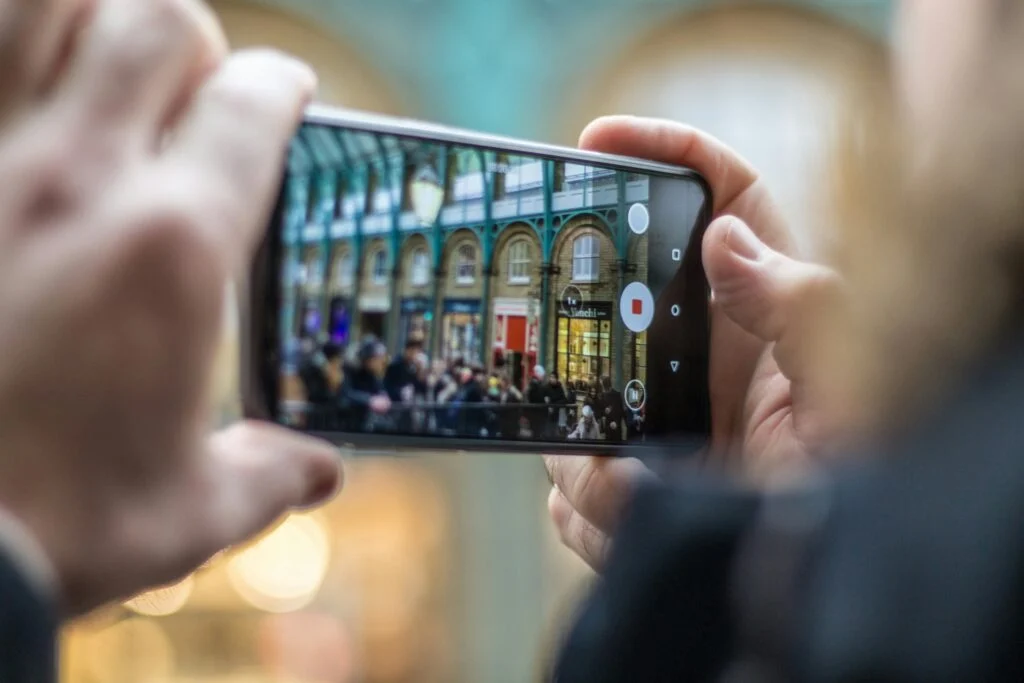
This is the question I get asked most, so here it is properly.
In law, they’re the same device The Sexual Offences Act doesn’t care what the equipment looks like. It says “equipment”. The UK GDPR doesn’t care either. Harassment law doesn’t care. If you can’t do it with a phone, you can’t do it with glasses.
Anyone telling you the glasses occupy a legal grey area has misunderstood the position. The statutes are drafted around conduct and purpose, not form factor.
In practice, three things differ. A raised phone is a universally understood signal. Everyone in the vicinity can see it and respond, by moving, objecting, or turning away.
Glasses remove that signal. A small LED on a frame is not equivalent notice, and that gap goes directly to the fairness and transparency principles in data protection law.
If a court or the ICO ever assesses whether your processing was fair, the fact that nobody could reasonably tell they were being recorded will count against you.
Duration and volume. A phone is a deliberate act with an obvious start and stop. Glasses invite ambient capture.
More footage, less intention behind each clip, and far more incidental people in it.
Data minimisation becomes almost impossible to demonstrate.
Audio and AI. Most people filming on a phone are thinking about the picture. Glasses capture sound as a matter of course and may pass what they see to an AI model. Conversations, background chatter, a name being read out at a pharmacy counter. That’s a category of data most phone users never accidentally collect.
The short version
Same law. Worse optics. Higher risk of getting it wrong without meaning to.
Audio, the part everyone forgets
There’s no blanket UK law against recording a conversation you’re part of. Individuals aren’t caught by the interception regime the way service providers are.
But audio makes everything heavier. Recorded conversation is personal data about everyone speaking. It’s far more likely to capture health, financial or family information than a silent clip. It’s far more likely to be treated as intrusive. And in a workplace it can amount to a breach of trust and confidence with real consequences, whatever the criminal position.
If you’re wearing these things in public and you don’t need the sound, don’t collect it.
If you shoot professionally
A few things I’d hold to, and do hold to.
Get written permission for private land before the shoot, not on the day. Location owners are almost always fine with it when asked in advance and almost never fine with it when a security guard has to make the decision.
Keep a lawful basis you can articulate. For commercial work that’s usually legitimate interests, documented, with a balancing test on file.
For anything touching health, religion, politics or children, get consent properly and keep the record.
Be visible. I’ve never had a problem on a job where the camera was obvious and I introduced myself.
Almost every complaint in this field starts with someone realising after the fact that they were recorded.
Have a deletion process. If a member of the public asks to be removed from footage that isn’t essential to the job, remove them. It costs nothing and it’s the right answer.
Don’t rely on the domestic exemption. If you’re getting paid, it doesn’t apply to you.
If you’ve been filmed and you’re not happy
Ask the wearer to stop and to delete the footage. Meta’s own guidance tells users to stop when asked, so you’re on solid ground.
If it’s already online, use the platform’s reporting route and consider a subject access request or an erasure request to whoever published it. If they’re a controller, they have to respond.
If the footage is intimate, if it involves a child, if it’s part of a pattern of behaviour, or if someone is asking for money to take it down, that’s a police matter and not a civil one.
Report it. If the concern is about how a company is handling the data, the ICO takes complaints from members of the public.
Take a photograph of the person if you safely can, note the time and place, and keep the account you saw it on. T
he BBC case earlier this year stalled partly because there wasn’t enough information to work with.
Meta Glasses UK Law. The rules I actually work to.
- In a private venue, ask first. Every time.
- If someone objects, stop. Argument won, situation lost.
- No cameras of any kind in toilets, changing rooms, treatment rooms or anywhere people undress.
- Around children, permissions in writing or the camera stays in the bag.
- If I don’t need audio, I don’t record audio.
- If I’d be uncomfortable explaining the recording to the person in it, I don’t make it.
None of that is complicated. Most of the trouble I’ve seen, in both careers, came from people who never asked themselves the seventh question.
Frequently asked questions
Are Meta glasses banned in the UK?
No. They’re legal to buy, own and wear. Individual venues can and do ban filming with them on their premises, which is what Wetherspoon has done across its pubs.
Can I wear Meta glasses in a pub?

You can wear them. In a Wetherspoon pub you’ll be asked to switch the cameras off, and other venues are likely to follow. If you refuse, you can be asked to leave.
Do I need permission to film someone in public in the UK?
Not to take the picture. There’s no general right not to be photographed in a public place. What you then do with the footage, particularly publishing it or using it commercially, can bring data protection and privacy law into play.
Can a shop or pub stop me filming?
Yes. Private land open to the public is still private land, and the occupier can make no filming a condition of entry. They can ask you to stop and ask you to leave.
Can staff or security make me delete footage?
No. There’s no power for staff or security to seize your device or compel deletion. Only a court can order that.
Is it illegal to record audio without consent in the UK?
Not as a general rule for a private individual recording a conversation they’re part of. But recorded audio is personal data about everyone in it, and using or publishing it can breach data protection law, employment obligations or harassment law depending on the circumstances.
Are Meta glasses treated differently from a phone in law?
No. The relevant UK law statutes are written around conduct, not equipment. The practical difference is that glasses give bystanders far less notice, which makes fairness and transparency much harder to satisfy.
Can police make me delete photographs?
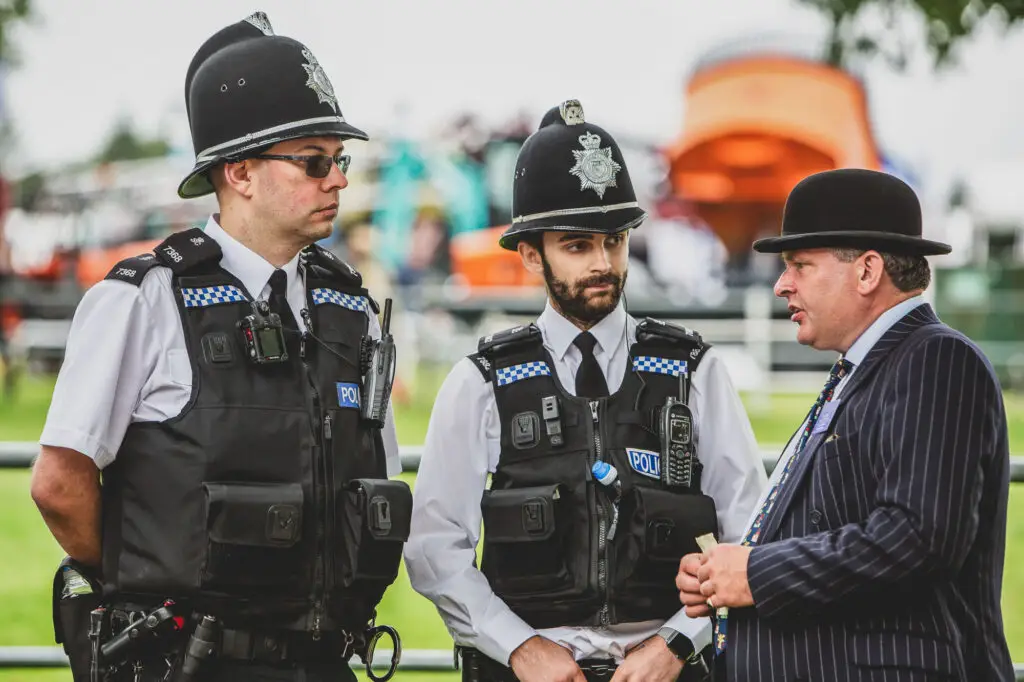
No. Officers have no power to require deletion of images or to view them without a specific legal basis. If a device is seized under a warrant or a statutory power, that’s a different question.
A note on jurisdiction and advice.
Most of the case law and several of the offences referred to here apply to England and Wales. Scotland and Northern Ireland have their own criminal provisions in some of these areas, notably voyeurism, so check the local position if that’s where you’re working. Data protection applies across the whole of the UK.
I’m a commercial photographer, not a solicitor. This is a working practitioner’s summary of where the law sits as at August 2026, written to help people make sensible decisions.
It isn’t legal advice, and this area is changing quickly.
If something has gone wrong or a lot is riding on the answer, get proper advice.
We’ve been asked by many of our visitors if we can put together a whole series on Photography Law and Video Law, so we’ve put together a whole section on this interesting and controversial subject.
If you’d like to know more about your rights, then head over to our Photography Law page and take a look.
Important: please read
This article is provided for general information only. It is not legal advice and must not be relied upon as legal advice.
I am a professional photographer, not a solicitor or barrister, and I am not qualified to advise on the law. Nothing in this article creates a professional or advisory relationship of any kind between me, Lee Blanchflower trading as Blanc Creative, and any reader.
The content reflects my own general understanding as at August 2026 and relates to the law in England and Wales. The position in Scotland and Northern Ireland differs in a number of respects. Legislation, guidance and case law change frequently, and provisions referred to here may be amended, repealed or brought into force on different dates after publication. Summaries are necessarily simplified and omit exceptions, defences and qualifications that could be important in your circumstances.
You should not take, or refrain from taking, any action on the basis of this article. If you have a specific question or a live problem, take advice from a qualified solicitor and check the current legislation directly at legislation.gov.uk, together with the relevant guidance from the Civil Aviation Authority, the Information Commissioner’s Office and the Crown Prosecution Service.
To the fullest extent permitted by law, I and Lee Blanchflower, accept no liability for any loss, damage, cost or expense arising from any use of, or reliance on, the information in this article, or from any errors or omissions in it. Any links to external sites are provided for convenience only and I take no responsibility for their content or accuracy.