UK drone rules changed on 1 January 2026. Here is what to ask before you book an operator.
The biggest shake up of UK drone regulation since the rules were written came into force at the start of this year, and almost nobody outside the industry noticed.
That is fine for most people. It is less fine if you are the marketing manager signing off a drone shoot over your own site, because a fair amount of the sales patter you will hear from operators is now out of date.
Here is what actually changed, in plain English, and the questions worth asking.
The registration threshold dropped
Before this year, the line was 250 grams. Below it, no test, no registration. That line is now 100 grams.
Anyone flying a drone of 100 grams or more outdoors needs a Flyer ID, which means passing the CAA’s online theory test. If you own the aircraft and it weighs between 100 and 250 grams and has a camera on it, you also need an Operator ID, which is the registration that has to be displayed on the aircraft itself.
In practice this pulled a lot of small camera drones into scope that were previously outside it. If someone turns up to your site with a very small drone and tells you it does not need registering because it is under 250 grams, that has not been true since January.
There is now a UK class marking system
The old EU class marks have been replaced by a UK system running from UK0 up to UK6. The class mark tells you what the aircraft has been built to do and therefore where it is allowed to fly.
EU C class marked drones are still recognised as equivalent until the end of 2027. Drones with no class mark at all, meaning most kit bought before this year, remain perfectly legal but are governed by their weight rather than by a class, and are described as legacy aircraft.
Alongside that, the operating categories were simplified into three: A1 for flights over people, A2 for flights near people, and A3 for flights well away from people.
UK Drone Rules 2026 . The bit that matters most on a commercial site
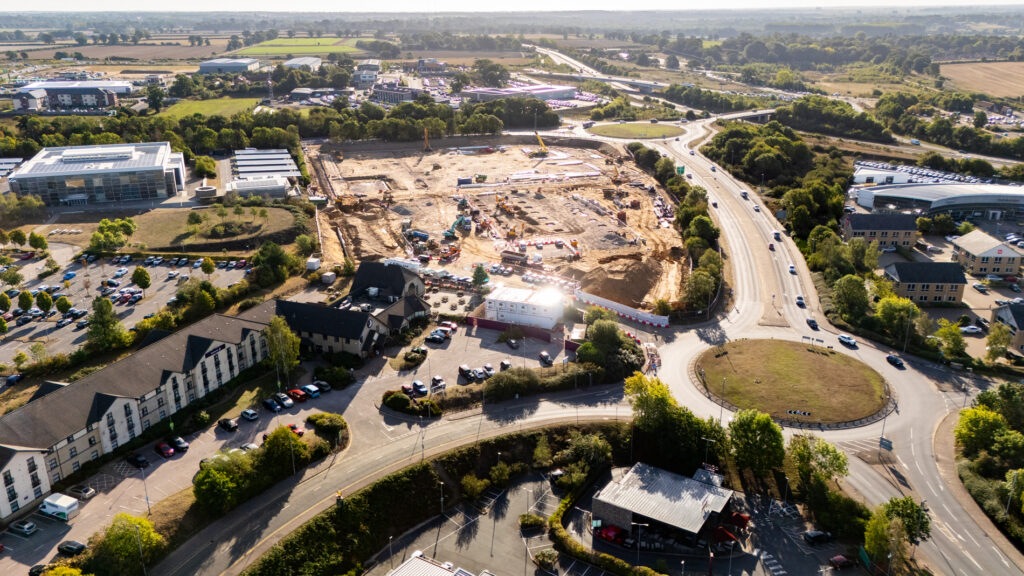
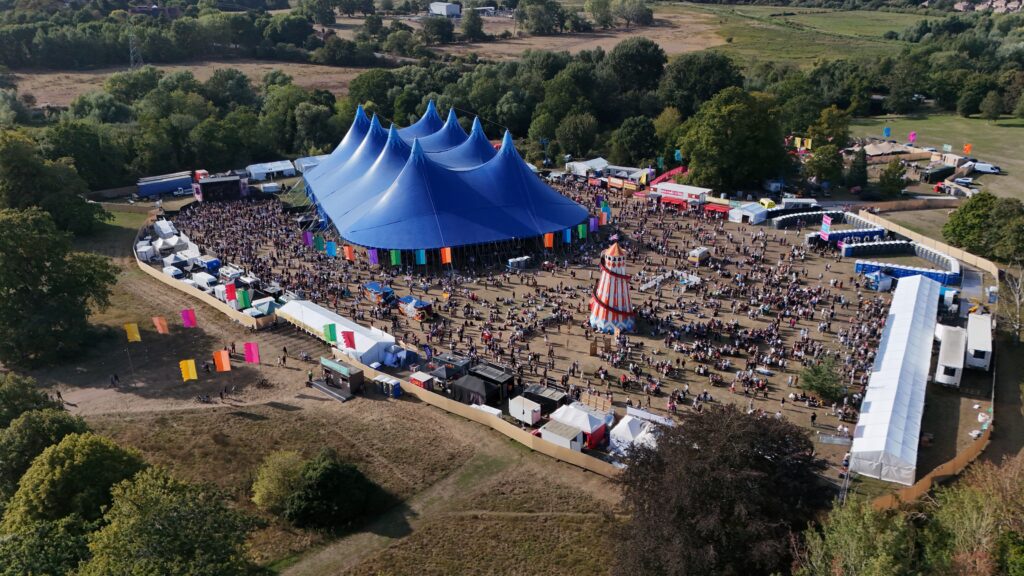
A1 permits flying over people. It does not permit flying over crowds. Here’s a dedicated blog on that very subject. That distinction is the single most important thing for anyone booking aerial coverage of a busy site, an open day or an event, and it is not negotiable in the open category regardless of how good the pilot is or how small the aircraft is.
A2 is the middle ground, and here the class mark earns its keep. A UK2 marked aircraft flown by a pilot holding an A2 Certificate of Competency can come in to 30 metres horizontally from uninvolved people, or 5 metres in low speed mode.
A legacy aircraft under 2 kilograms with the same certificate is typically held at 50 metres. Same pilot, same qualification, very different separation distance, purely because of what the aircraft is certified to do.
The practical consequence for you is counter intuitive. The drone that can legally get closest to your people and your building is often the smallest one on the shelf, not the biggest. Choosing the aircraft for the site rather than for the spec sheet is most of the job.
A few other UK Drone Rules. Changes worth knowing about
Remote ID has started. UK class marked aircraft now broadcast their operator details in flight. That widens in January 2028 to cover legacy aircraft over 100 grams with cameras, which will eventually make almost every drone in UK airspace traceable while it is flying.
Night flying now requires a green flashing light on most aircraft. Useful to know if you want dusk or evening coverage of a lit building, because it is entirely doable and the light on the aircraft is not a problem in the footage.
On the training side, the GVC has moved to legacy status and the newer RPC framework is taking over as the route for specific category operations. If an operator quotes you a qualification you have not heard of, that is probably why.
The questions to ask
UK Drone Rules need tpo be followed. It’s mandatory. If you are commissioning drone work, this is the short list. Any operator worth booking will answer all of it without hesitating.
Can you send me your Operator ID and Flyer ID? Both are checkable. The Operator ID should be physically on the aircraft.
What are you flying, and what class or weight is it? This tells you how close it can legally get to your staff and your neighbours, which is usually the real constraint on what the footage will look like.
What is your insurance and can I see the certificate? For commercial aerial work you want to see the policy, the level of cover and the dates. Mine sits at 10 million pounds per occurrence and I send the certificate with the proposal rather than waiting to be asked.
Will I get a site specific risk assessment before the day? Not a generic template with your name in the header. It should name your site, mark the take off and landing zone on actual aerial imagery, reference your own site plan, and list the airspace constraints that apply to your postcode. If you have a health and safety department, they will want this and they will want it before you sign anything. UK Drone Rules are what we work round. AEVery assessment is bespoke, thorough, documented in plain English and sent to the client before we fly.
Have you checked the airspace for my location? Norfolk has a lot going on above it. Military danger areas, hospital helicopter sites, aerodromes and, this year, notified satellite navigation jamming activity. A pre flight NOTAM check should be standard, and on a recurring site it should be repeated on the morning of every flight rather than done once.
What happens if you cannot fly? Weather and airspace both stop jobs. You want to know in advance how a stand down is handled and what it costs you, and you want the reason for the decision in writing.
UK Drone Rules 2026. Why any of this helps you
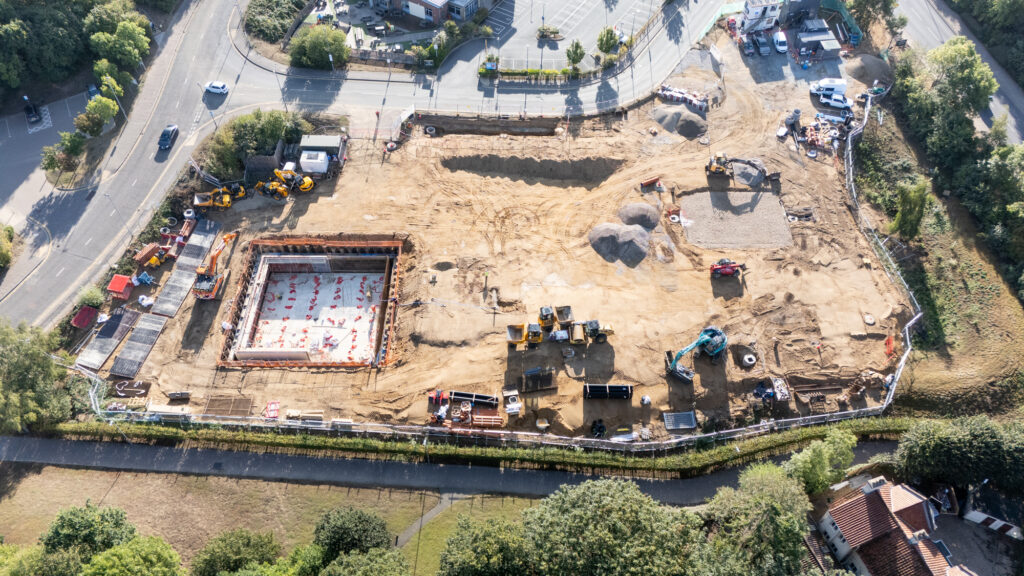
Regulation is not the interesting part of aerial work. The footage is. But the rules are what decide how close the camera can get, what time of day it can be there, and whether the job goes ahead at all on the date in your diary. An operator who understands them turns up with a plan that fits your site. One who does not turns up with a bigger drone and a smaller list of options.
If you want a straight answer on whether your site is flyable and what the useful angles actually are, send me the postcode and I will look at it properly before quoting.
Hire a Drone Operator in Norfolk
If you want to know more about UK Drone Rules and general information, then we’ve written a number of informative articles that can be found on the Blanc Creative website on our Commercial Drone Photography and Drone Videography page.
If you’d like to book a commercial drone flight, please reach out to our team on M: 07871 364041 or email Lee Directly on E: studio@blanc-creative.com
Blanc Creative would love to work with you on your drone project.